Department of Environmental Microbiology, Eawag-Swiss Federal Institute of Aquatic Science and Technology, Dübendorf, Switzerland.
Department of Environmental Systems Science, Institute of Biogeochemistry and Pollutant Dynamics, ETH Zürich, Zürich, Switzerland.
ISME J. 2018 May;12(5):1344-1359. doi: 10.1038/s41396-018-0070-8. Epub 2018 Feb 7.
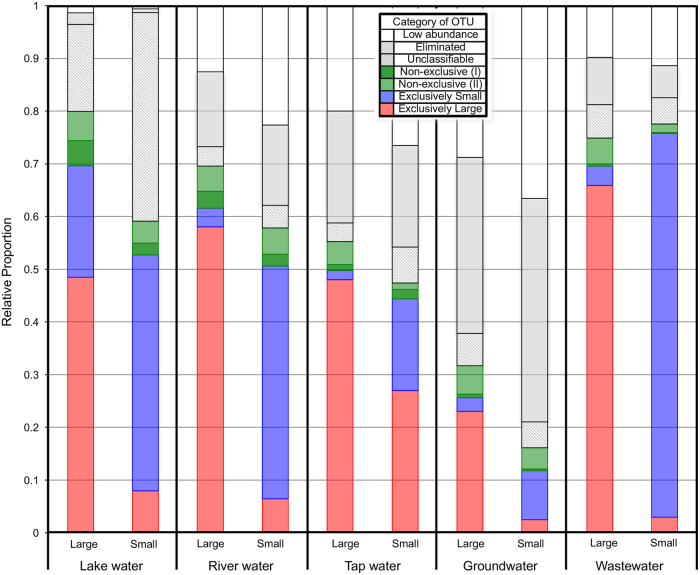
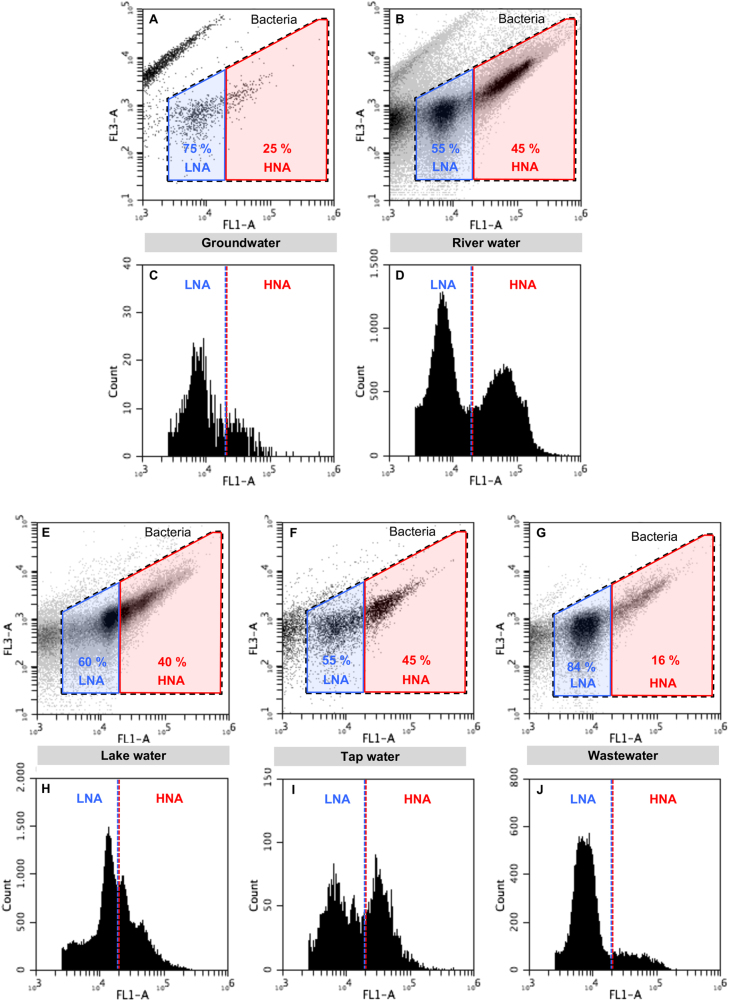
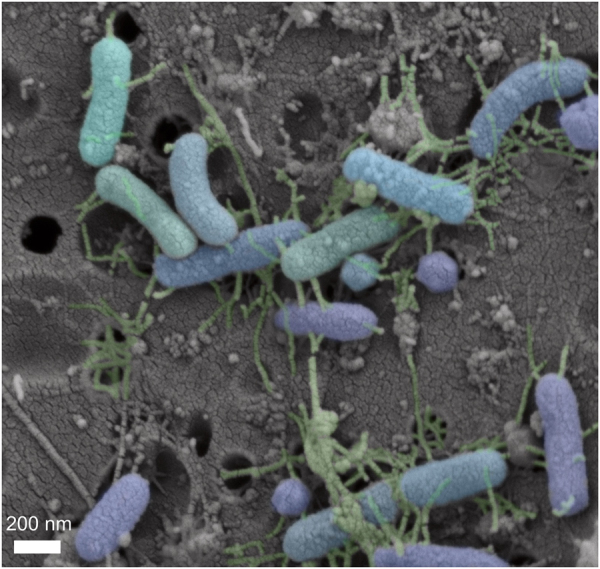
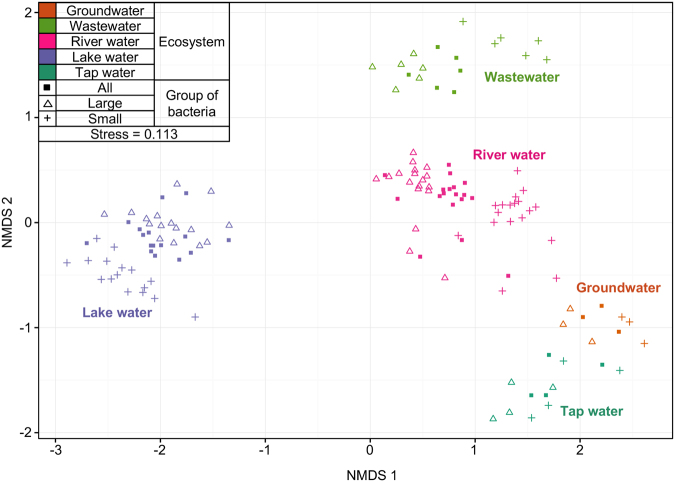
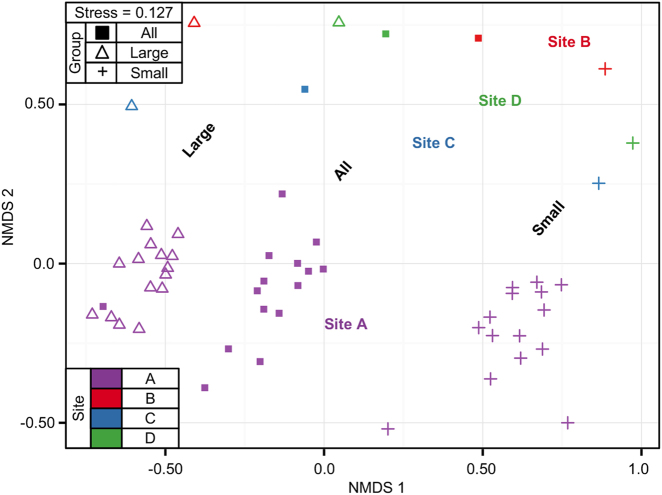
Here we used flow cytometry (FCM) and filtration paired with amplicon sequencing to determine the abundance and composition of small low nucleic acid (LNA)-content bacteria in a variety of freshwater ecosystems. We found that FCM clusters associated with LNA-content bacteria were ubiquitous across several ecosystems, varying from 50 to 90% of aquatic bacteria. Using filter-size separation, we separated small LNA-content bacteria (passing 0.4 µm filter) from large bacteria (captured on 0.4 µm filter) and characterized communities with 16S amplicon sequencing. Small and large bacteria each represented different sub-communities within the ecosystems' community. Moreover, we were able to identify individual operational taxonomical units (OTUs) that appeared exclusively with small bacteria (434 OTUs) or exclusively with large bacteria (441 OTUs). Surprisingly, these exclusive OTUs clustered at the phylum level, with many OTUs appearing exclusively with small bacteria identified as candidate phyla (i.e. lacking cultured representatives) and symbionts. We propose that LNA-content bacteria observed with FCM encompass several previously characterized categories of bacteria (ultramicrobacteria, ultra-small bacteria, candidate phyla radiation) that share many traits including small size and metabolic dependencies on other microorganisms.
在这里,我们使用流式细胞术(FCM)和过滤与扩增子测序相结合的方法,来确定各种淡水生态系统中小低核酸(LNA)含量细菌的丰度和组成。我们发现,与 LNA 含量细菌相关的 FCM 聚类在几个生态系统中普遍存在,占水生细菌的 50%到 90%不等。通过使用过滤尺寸分离,我们将小 LNA 含量细菌(通过 0.4μm 过滤器)与大细菌(被 0.4μm 过滤器捕获)分离,并通过 16S 扩增子测序对群落进行了特征描述。小细菌和大细菌在生态系统的群落中各自代表不同的亚群落。此外,我们还能够识别出仅与小细菌(434 个 OTU)或仅与大细菌(441 个 OTU)相关的单个操作分类单元(OTU)。令人惊讶的是,这些独特的 OTU 在门水平上聚类,许多仅与小细菌相关的 OTU 被鉴定为候选门(即缺乏培养代表)和共生菌。我们提出,用 FCM 观察到的 LNA 含量细菌包含了几个以前被描述的细菌类别(超微细菌、超小细菌、候选门辐射),它们具有许多共同的特征,包括小尺寸和对其他微生物的代谢依赖性。