Chung Y C, Kruyer A, Yao Y, Feierman E, Richards A, Strickland S, Norris E H
Patricia and John Rosenwald Laboratory of Neurobiology and Genetics, The Rockefeller University, New York, NY, USA.
J Thromb Haemost. 2016 Jul;14(7):1442-52. doi: 10.1111/jth.13340. Epub 2016 Jun 13.
Essentials Evidence suggests a comorbidity between hyperhomocysteinemia (HHC) and Alzheimer's disease (AD). Homocysteine (HC) could affect the β-amyloid (Aβ)-fibrinogen interaction in AD pathology. AD patients with concomitant HHC have increased fibrin and Aβ deposits in their brains. HC contributes to AD pathology via the Aβ-fibrinogen interaction.
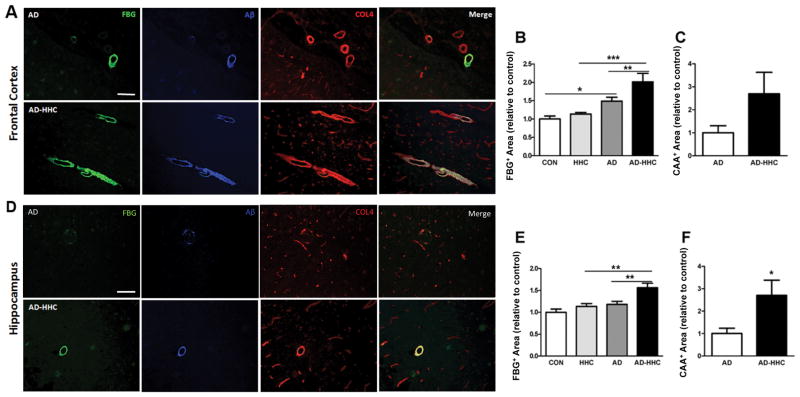
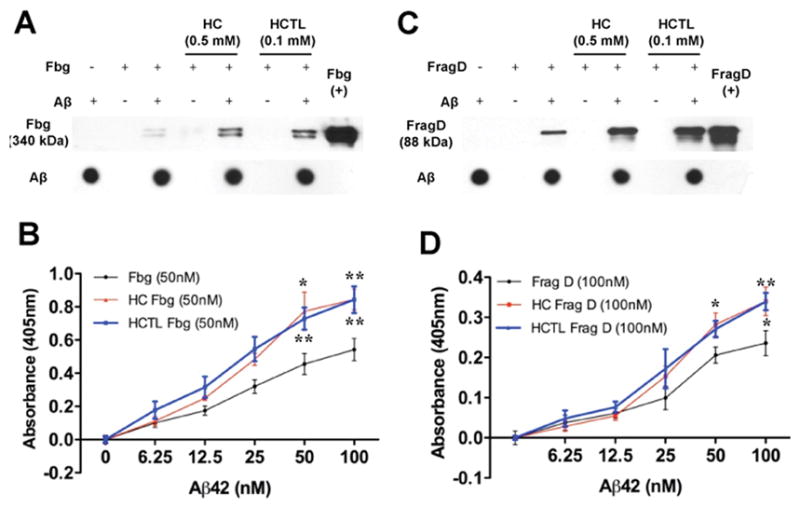
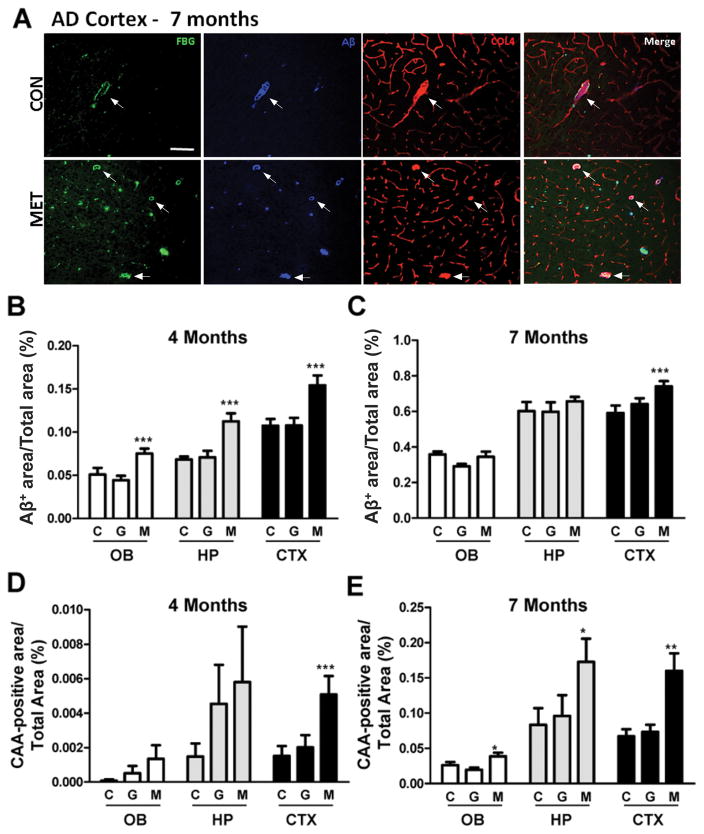
Background Accumulating clinical evidence suggests that hyperhomocysteinemia (HHC) is correlated with Alzheimer's disease (AD) and vascular dementia. Objective This study was carried out to elucidate the specific role of elevated homocysteine (HC) levels in AD pathophysiology. Methods Immunohistochemistry was used to examine β-amyloid (Aβ) deposition along blood vessels, also known as cerebral amyloid angiopathy (CAA), fibrin(ogen) deposition, and their correlation to each other in the brains of AD patients with and without HHC. To study AD-HHC co-morbidity in detail, an AD mouse model was administered a high methionine diet for several months. Parenchymal Aβ plaques, CAA-positive vessels and fibrin deposits were then assessed by immunohistochemistry at different stages of AD progression. Memory deficits were evaluated with contextual fear conditioning and the Barnes maze. Additionally, the effect of HC and its metabolite, homocysteine thiolactone (HCTL), on the Aβ-fibrinogen interaction was analyzed by pull-down, ELISA and fibrin clot formation and fibrinolysis assays in vitro. Results We found increased fibrin(ogen) levels and Aβ deposits in the blood vessels and brain parenchyma of AD patients with HHC. We demonstrate that HC and HCTL enhance the interaction between fibrinogen and Aβ, promote the formation of tighter fibrin clots and delay clot fibrinolysis. Additionally, we show that diet-induced HHC in an AD mouse model leads to severe CAA and parenchymal Aβ deposition, as well as significant impairments in learning and memory. Conclusions These findings suggest that elevated levels of plasma HC/HCTL contribute to AD pathology via the Aβ-fibrin(ogen) interaction.
重要证据表明高同型半胱氨酸血症(HHC)与阿尔茨海默病(AD)之间存在共病关系。同型半胱氨酸(HC)可能会影响AD病理过程中的β-淀粉样蛋白(Aβ)-纤维蛋白原相互作用。伴有HHC的AD患者大脑中纤维蛋白和Aβ沉积增加。HC通过Aβ-纤维蛋白原相互作用促进AD病理过程。
背景 越来越多的临床证据表明高同型半胱氨酸血症(HHC)与阿尔茨海默病(AD)和血管性痴呆相关。目的 本研究旨在阐明同型半胱氨酸(HC)水平升高在AD病理生理中的具体作用。方法 采用免疫组织化学法检测有或无HHC的AD患者大脑中沿血管的β-淀粉样蛋白(Aβ)沉积,即脑淀粉样血管病(CAA)、纤维蛋白(原)沉积及其相互关系。为详细研究AD-HHC共病情况,给AD小鼠模型喂食高蛋氨酸饮食数月。然后通过免疫组织化学在AD进展的不同阶段评估实质Aβ斑块、CAA阳性血管和纤维蛋白沉积。用情境恐惧条件反射和巴恩斯迷宫评估记忆缺陷。此外,通过体外下拉、酶联免疫吸附测定(ELISA)以及纤维蛋白凝块形成和纤维蛋白溶解测定,分析HC及其代谢产物同型半胱氨酸硫内酯(HCTL)对Aβ-纤维蛋白原相互作用的影响。结果 我们发现伴有HHC的AD患者血管和脑实质中的纤维蛋白(原)水平及Aβ沉积增加。我们证明HC和HCTL增强纤维蛋白原与Aβ之间的相互作用,促进形成更紧密的纤维蛋白凝块并延迟凝块纤维蛋白溶解。此外,我们表明在AD小鼠模型中饮食诱导的HHC导致严重的CAA和实质Aβ沉积,以及学习和记忆的显著受损。结论 这些发现表明血浆HC/HCTL水平升高通过Aβ-纤维蛋白(原)相互作用促进AD病理过程。