Buck Christopher B, Van Doorslaer Koenraad, Peretti Alberto, Geoghegan Eileen M, Tisza Michael J, An Ping, Katz Joshua P, Pipas James M, McBride Alison A, Camus Alvin C, McDermott Alexa J, Dill Jennifer A, Delwart Eric, Ng Terry F F, Farkas Kata, Austin Charlotte, Kraberger Simona, Davison William, Pastrana Diana V, Varsani Arvind
Lab of Cellular Oncology, NCI, NIH, Bethesda, Maryland, United States of America.
Lab of Viral Diseases, NIAID, NIH, Bethesda, Maryland, United States of America.
PLoS Pathog. 2016 Apr 19;12(4):e1005574. doi: 10.1371/journal.ppat.1005574. eCollection 2016 Apr.
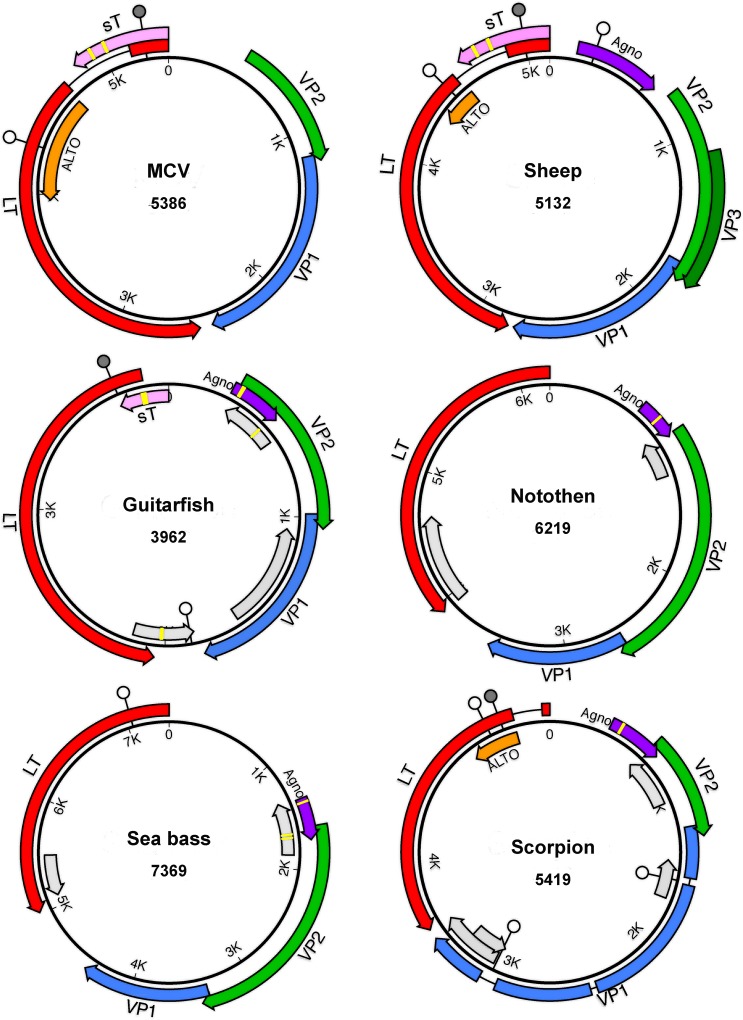
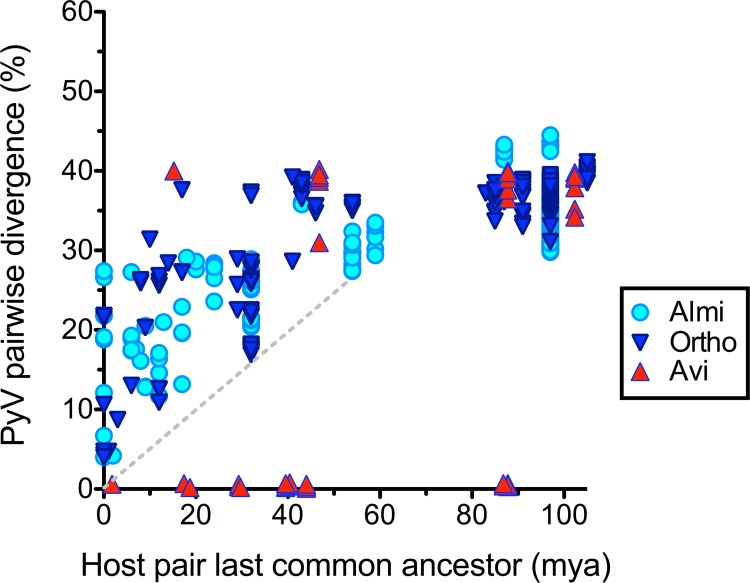
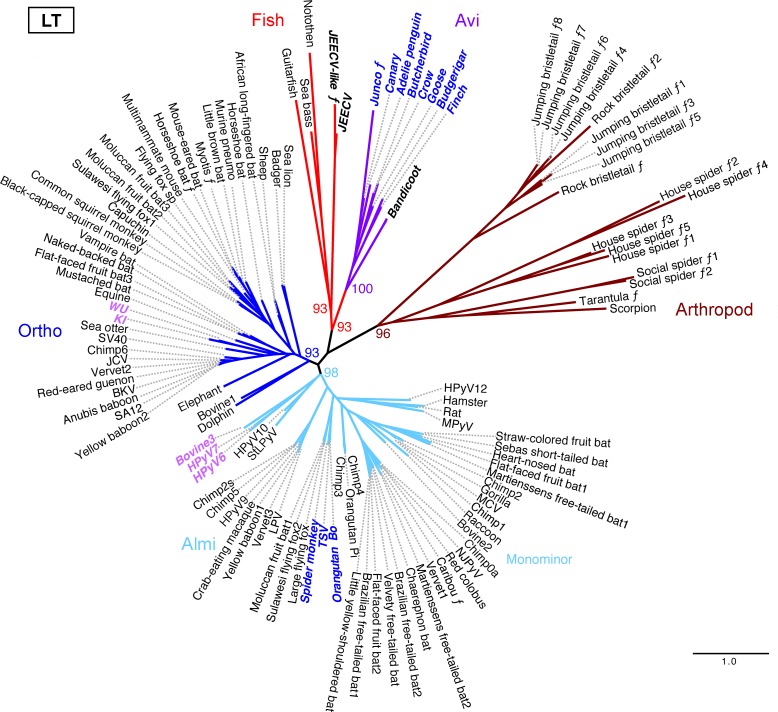
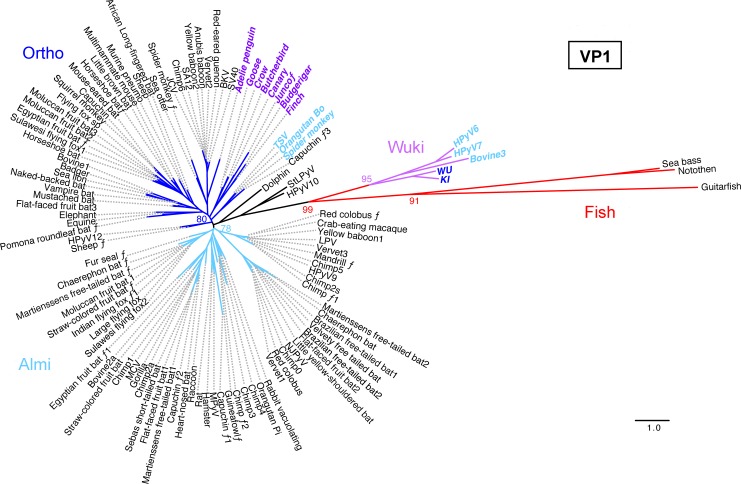
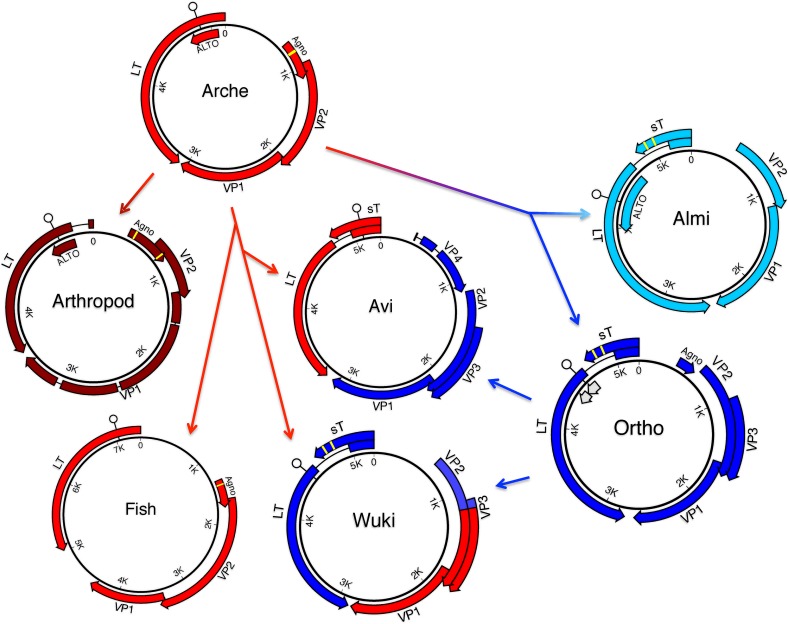
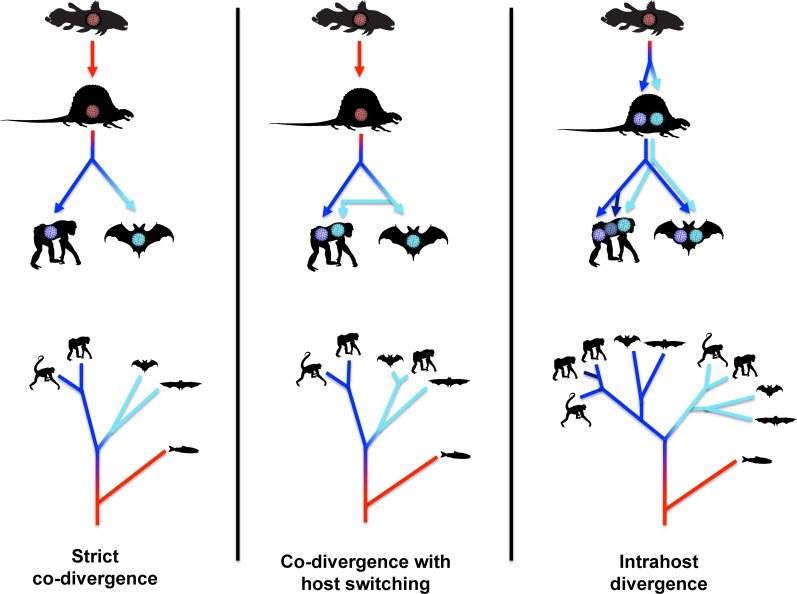
Polyomaviruses are a family of DNA tumor viruses that are known to infect mammals and birds. To investigate the deeper evolutionary history of the family, we used a combination of viral metagenomics, bioinformatics, and structural modeling approaches to identify and characterize polyomavirus sequences associated with fish and arthropods. Analyses drawing upon the divergent new sequences indicate that polyomaviruses have been gradually co-evolving with their animal hosts for at least half a billion years. Phylogenetic analyses of individual polyomavirus genes suggest that some modern polyomavirus species arose after ancient recombination events involving distantly related polyomavirus lineages. The improved evolutionary model provides a useful platform for developing a more accurate taxonomic classification system for the viral family Polyomaviridae.
多瘤病毒是一类已知可感染哺乳动物和鸟类的DNA肿瘤病毒。为了探究该病毒家族更深入的进化史,我们结合了病毒宏基因组学、生物信息学和结构建模方法,来识别和表征与鱼类和节肢动物相关的多瘤病毒序列。基于这些不同的新序列进行的分析表明,多瘤病毒与它们的动物宿主已经共同进化了至少5亿年。对单个多瘤病毒基因的系统发育分析表明,一些现代多瘤病毒物种是在涉及远缘多瘤病毒谱系的古代重组事件之后出现的。改进后的进化模型为开发一个更准确的多瘤病毒科病毒分类系统提供了一个有用的平台。