Brim Svetlana, Groschup Martin H, Kuczius Thorsten
Institute for Hygiene, University of Münster, Robert Koch-Strasse 41, 48149 Münster, Germany.
Friedrich-Loeffler-Institute (FLI), Institute for Novel and Emerging Infectious Diseases, Boddenblick 5a, 17493 Greifswald, Insel Riems, Germany.
PLoS One. 2016 Apr 19;11(4):e0153931. doi: 10.1371/journal.pone.0153931. eCollection 2016.
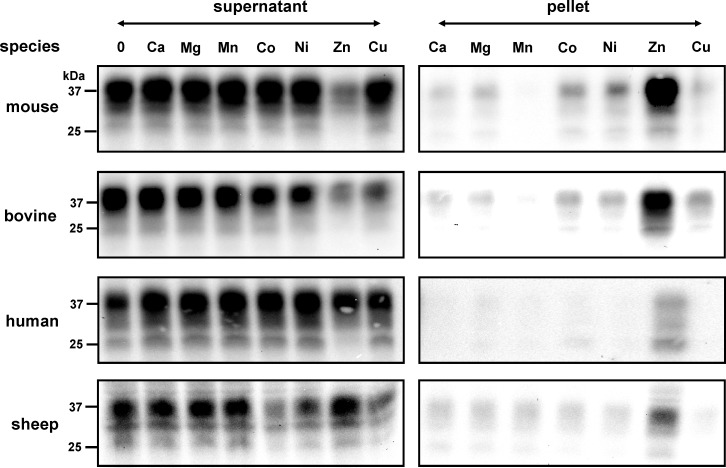
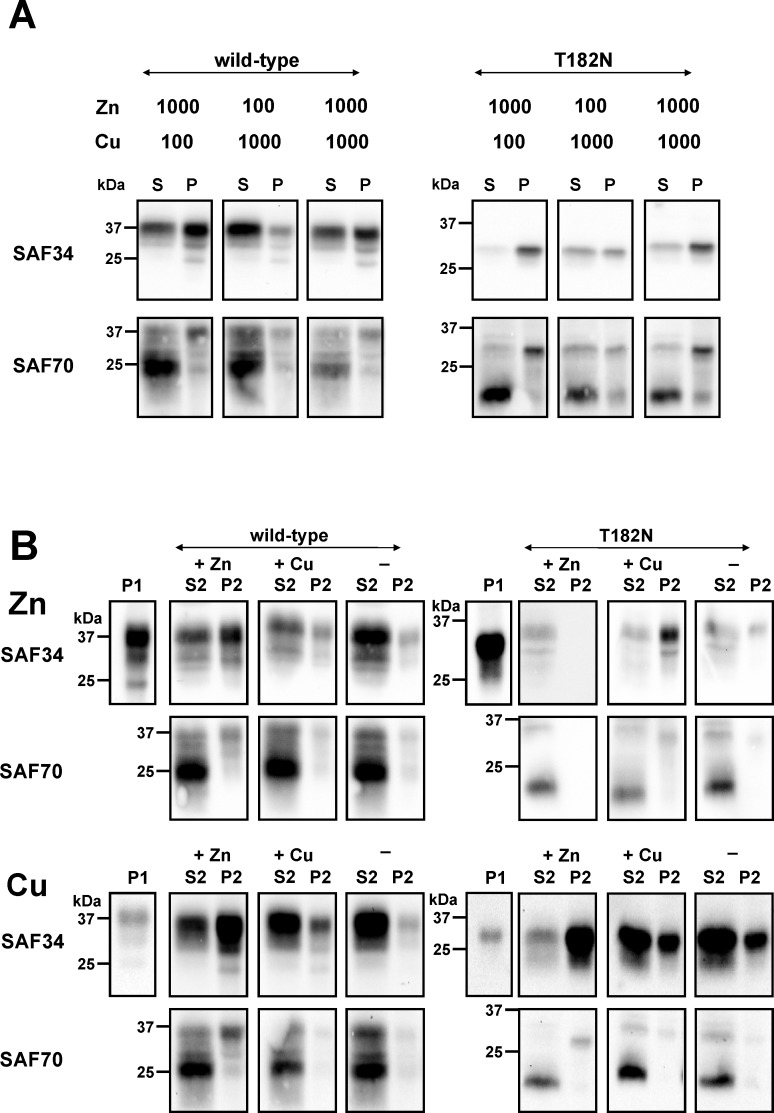
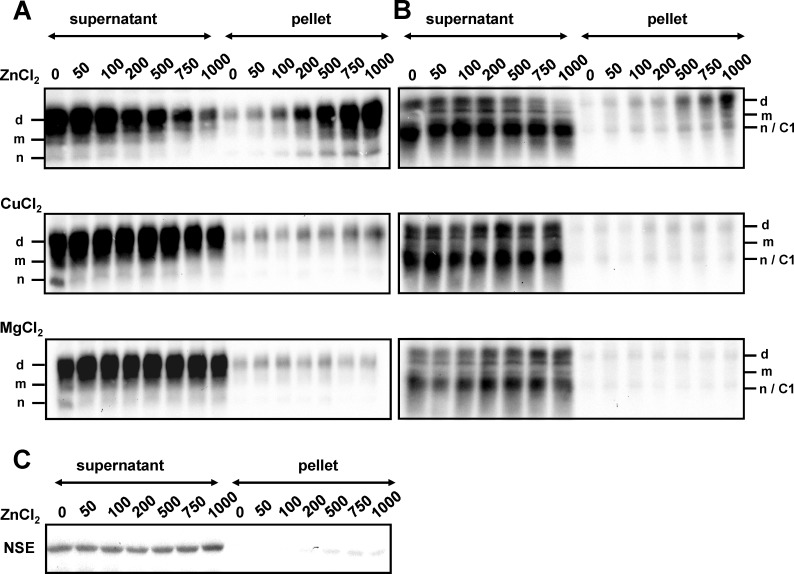
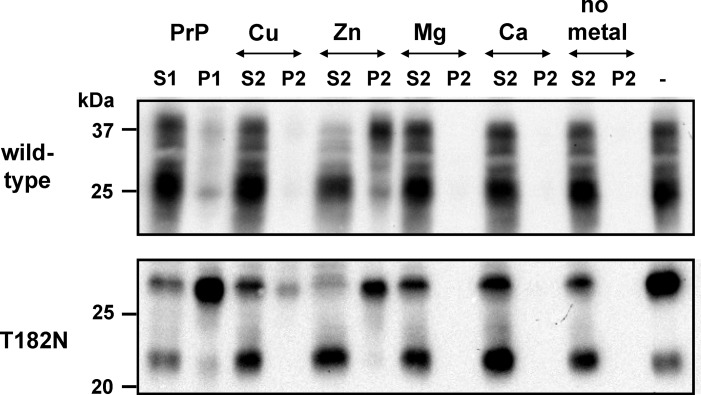
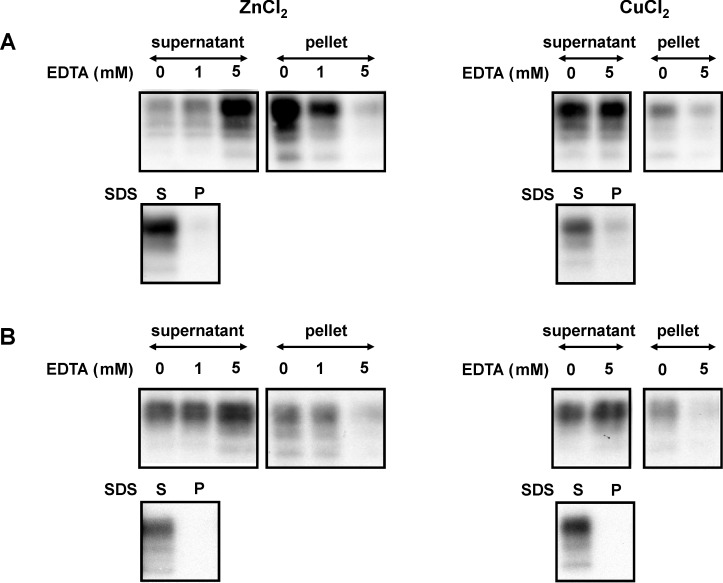
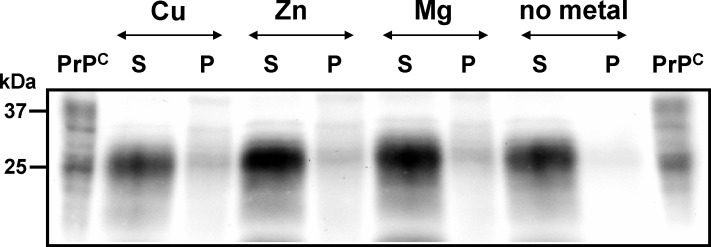
Prion diseases are characterized biochemically by protein aggregation of infectious prion isoforms (PrPSc), which result from the conformational conversion of physiological prion proteins (PrPC). PrPC are variable post-translationally modified glycoproteins, which exist as full length and as aminoterminally truncated glycosylated proteins and which exhibit differential detergent solubility. This implicates the presence of heterogeneous phenotypes, which overlap as protein complexes at the same molecular masses. Although the biological function of PrPC is still enigmatic, evidence reveals that PrPC exhibits metal-binding properties, which result in structural changes and decreased solubility. In this study, we analyzed the yield of PrPC metal binding affiliated with low solubility and changes in protein banding patterns. By implementing a high-speed centrifugation step, the interaction of zinc ions with PrPC was shown to generate large quantities of proteins with low solubility, consisting mainly of full-length glycosylated PrPC; whereas unglycosylated PrPC remained in the supernatants as well as truncated glycosylated proteins which lack of octarepeat sequence necessary for metal binding. This effect was considerably lower when PrPC interacted with copper ions; the presence of other metals tested exhibited no effect under these conditions. The binding of zinc and copper to PrPC demonstrated differentially soluble protein yields within distinct PrPC subtypes. PrPC-Zn2+-interaction may provide a means to differentiate glycosylated and unglycosylated subtypes and offers detailed analysis of metal-bound and metal-free protein conversion assays.
朊病毒疾病的生化特征是感染性朊病毒异构体(PrPSc)的蛋白质聚集,这是由生理性朊病毒蛋白(PrPC)的构象转变导致的。PrPC是翻译后可变修饰的糖蛋白,以全长形式和氨基末端截短的糖基化蛋白形式存在,并且表现出不同的去污剂溶解性。这意味着存在异质表型,它们在相同分子量下作为蛋白质复合物重叠。尽管PrPC的生物学功能仍然不明,但证据表明PrPC具有金属结合特性,这会导致结构变化和溶解性降低。在本研究中,我们分析了与低溶解性相关的PrPC金属结合产量以及蛋白质条带模式的变化。通过实施高速离心步骤,显示锌离子与PrPC的相互作用会产生大量低溶解性蛋白质,主要由全长糖基化PrPC组成;而未糖基化的PrPC以及缺乏金属结合所需八肽重复序列的截短糖基化蛋白则保留在上清液中。当PrPC与铜离子相互作用时,这种效应要低得多;在这些条件下,测试的其他金属的存在没有影响。锌和铜与PrPC的结合在不同的PrPC亚型中表现出不同的可溶性蛋白质产量。PrPC-Zn2+相互作用可能提供一种区分糖基化和未糖基化亚型的方法,并为金属结合和无金属蛋白质转化分析提供详细分析。