State Key Laboratory of Virology, College of Life Sciences, Wuhan University, Wuhan, 430072, China.
Sci Rep. 2018 Aug 22;8(1):12603. doi: 10.1038/s41598-018-30770-6.
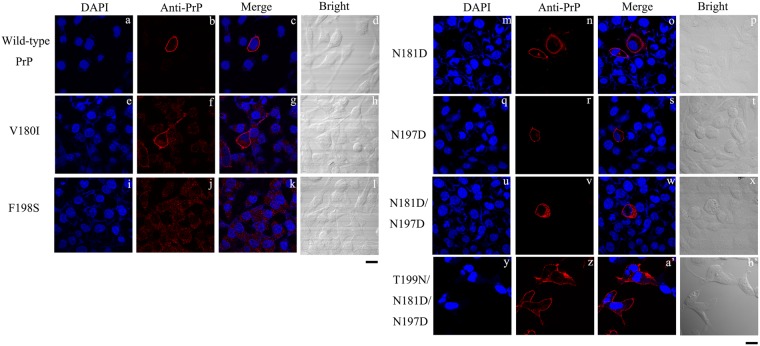
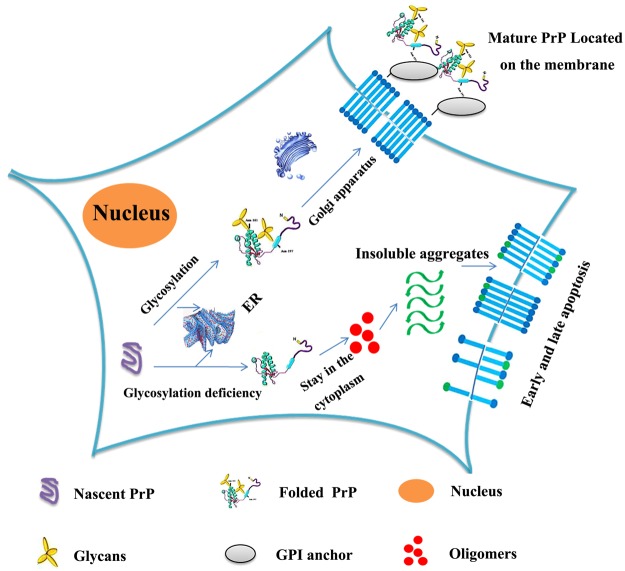
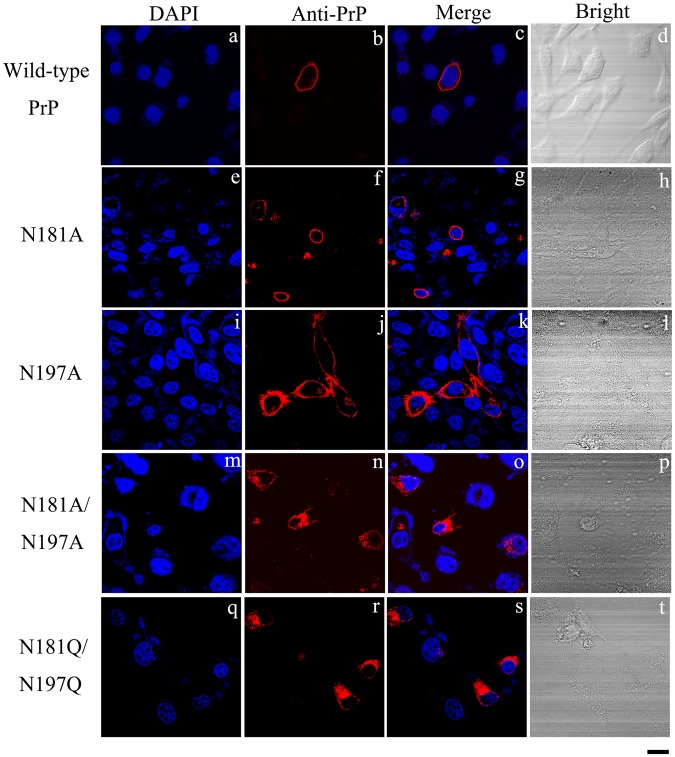
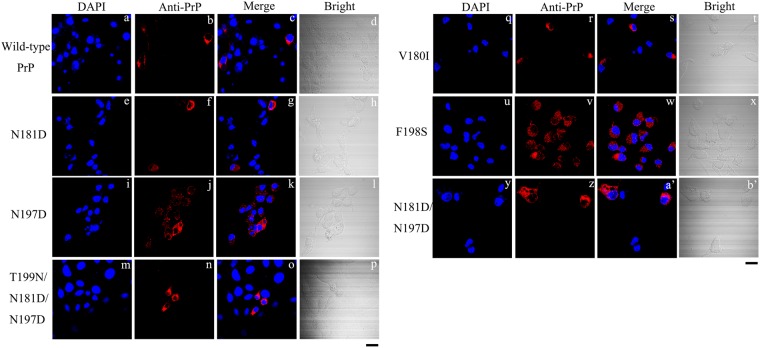
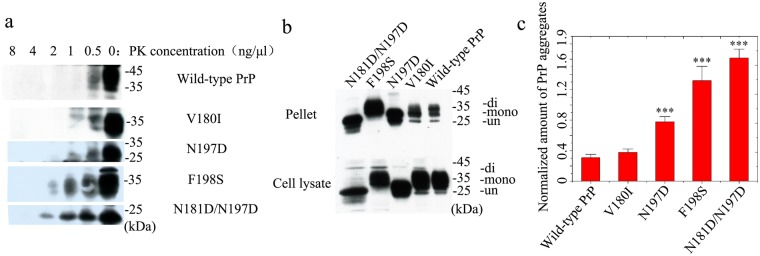
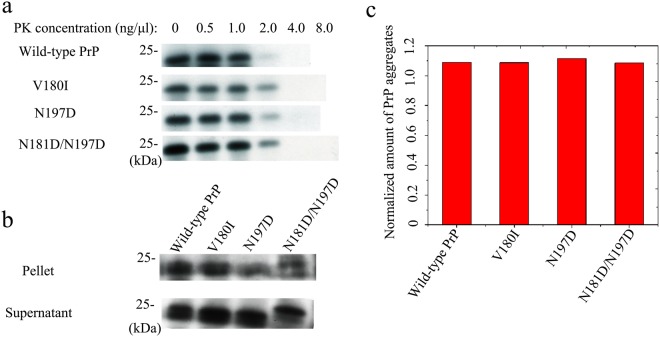
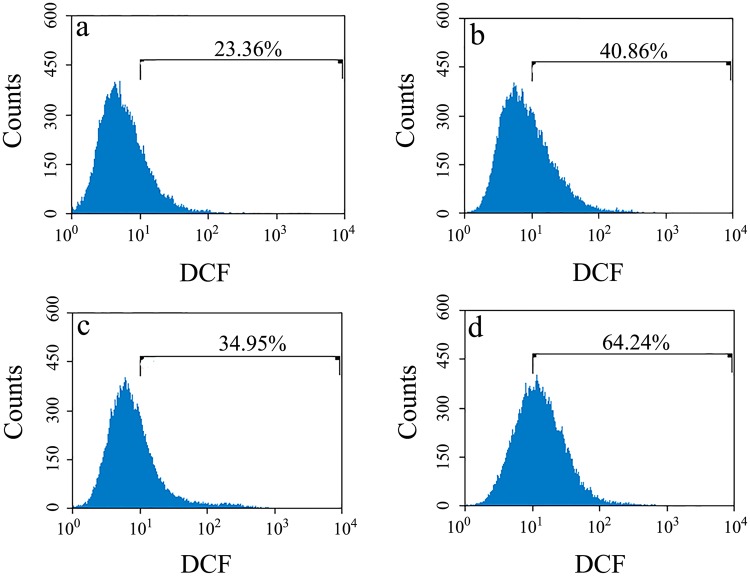
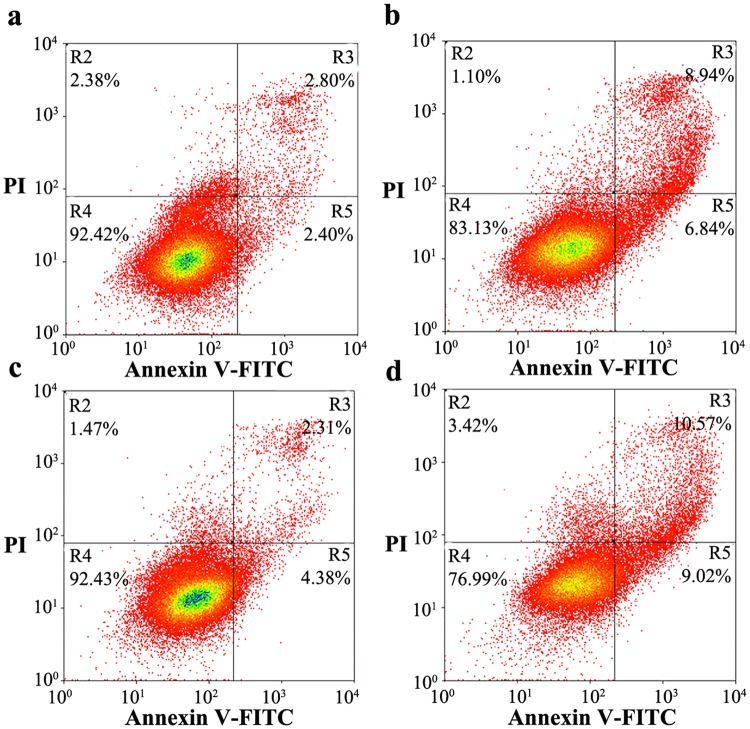
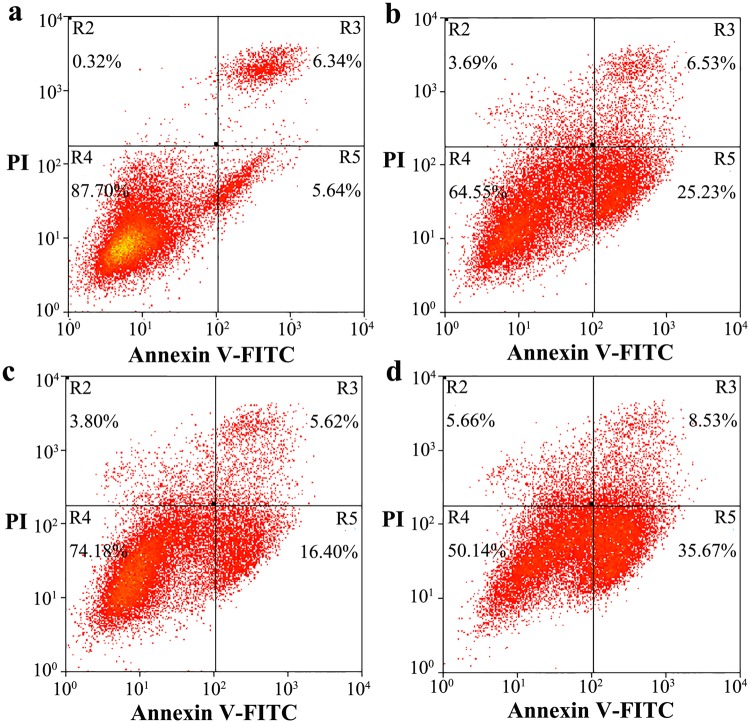
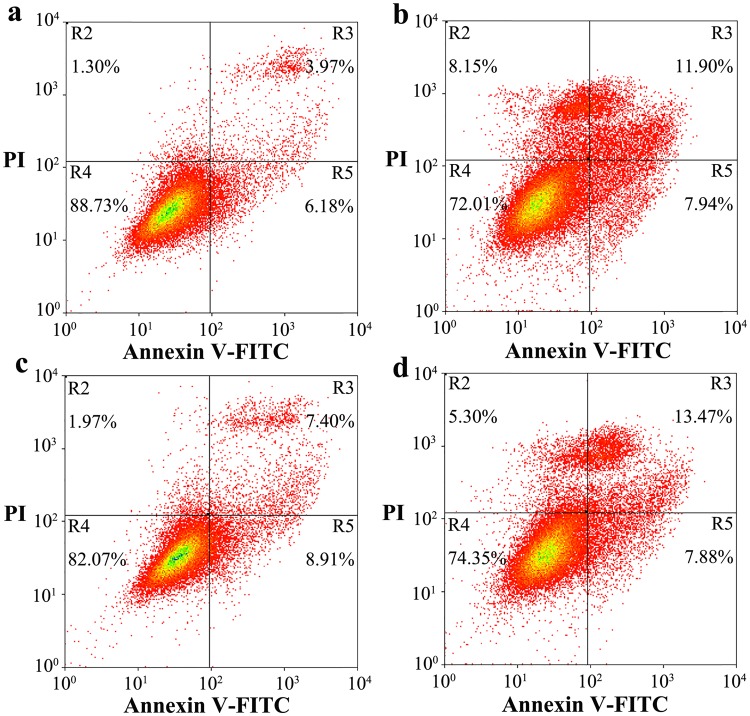
Prion diseases are primarily caused by the misfolding of prion proteins in humans, cattle, sheep, and cervid species. The effects of glycosylation on prion protein (PrP) structure and function have not been thoroughly elucidated to date. In this study, we attempt to elucidate the effects of glycosylation on the aggregation and toxicity of human PrP. As revealed by immunocytochemical staining, wild-type PrP and its monoglycosylated mutants N181D, N197D, and T199N/N181D/N197D are primarily attached to the plasma membrane. In contrast, PrP F198S, a pathological mutant with an altered residue within the glycosylation site, and an unglycosylated PrP mutant, N181D/N197D, primarily exist in the cytoplasm. In the pathological mutant V180I, there is an equal mix of membranous and cytoplasmic PrP, indicating that N-linked glycosylation deficiency impairs the correct localization of human PrP at the plasma membrane. As shown by immunoblotting and flow cytometry, human PrP located in the cytoplasm displays considerably greater PK resistance and aggregation ability and is associated with considerably higher cellular ROS levels than PrP located on the plasma membrane. Furthermore, glycosylation deficiency enhances human PrP cytotoxicity induced by MG132 or the toxic prion peptide PrP 106-126. Therefore, we propose that glycosylation acts as a necessary cofactor in determining PrP localization on the plasma membrane and that it significantly inhibits the aggregation of human PrP and decreases its cytotoxicity.
朊病毒病主要由人类、牛、羊和鹿种中朊蛋白的错误折叠引起。到目前为止,糖基化对朊蛋白(PrP)结构和功能的影响还没有被彻底阐明。在这项研究中,我们试图阐明糖基化对人 PrP 聚集和毒性的影响。免疫细胞化学染色显示,野生型 PrP 及其单糖基化突变体 N181D、N197D 和 T199N/N181D/N197D 主要附着在质膜上。相比之下,PrP F198S,一种具有糖基化位点改变残基的病理突变体,和一种未糖基化的 PrP 突变体 N181D/N197D,主要存在于细胞质中。在病理突变体 V180I 中,存在膜和细胞质 PrP 的等量混合,表明 N 连接糖基化缺陷会损害人 PrP 在质膜上的正确定位。免疫印迹和流式细胞术显示,位于细胞质中的人 PrP 显示出相当大的 PK 抗性和聚集能力,并与相当高的细胞 ROS 水平相关,而位于质膜上的 PrP 则没有。此外,糖基化缺陷增强了 MG132 或毒性朊病毒肽 PrP 106-126 诱导的人 PrP 细胞毒性。因此,我们提出糖基化是决定 PrP 在质膜上定位的必要辅助因子,它显著抑制人 PrP 的聚集并降低其细胞毒性。