Montagnani Valentina, Benelli Matteo, Apollo Alessandro, Pescucci Chiara, Licastro Danilo, Urso Carmelo, Gerlini Gianni, Borgognoni Lorenzo, Luzzatto Lucio, Stecca Barbara
Core Research Laboratory, Istituto Toscano Tumori, Florence, Italy.
Diagnostic Genetics Unit, Careggi University Hospital, Florence, Italy.
Oncotarget. 2016 May 24;7(21):30365-78. doi: 10.18632/oncotarget.8758.
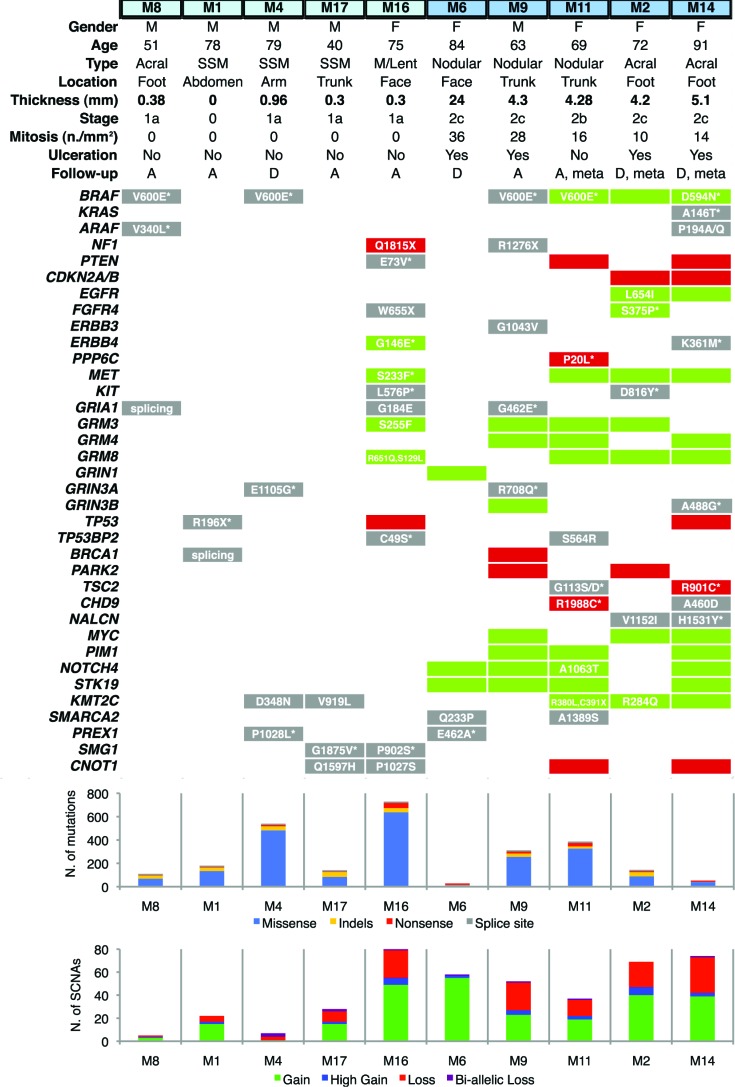
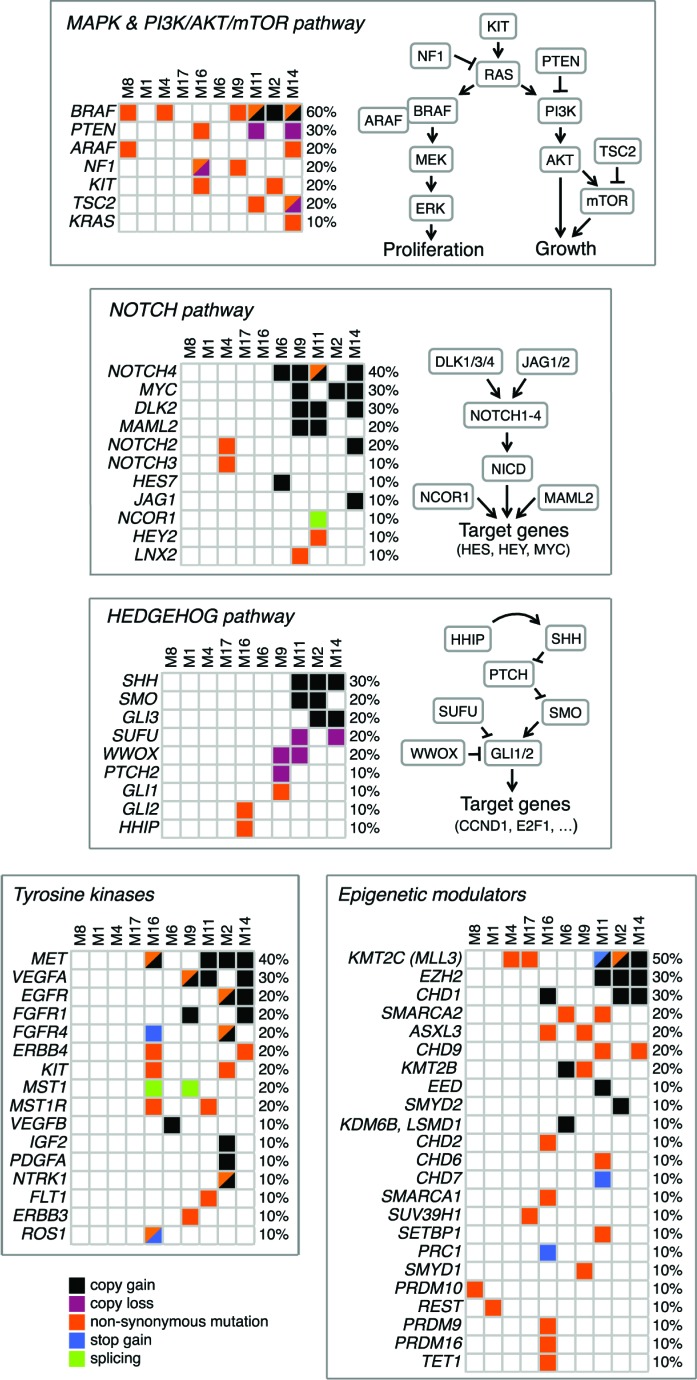
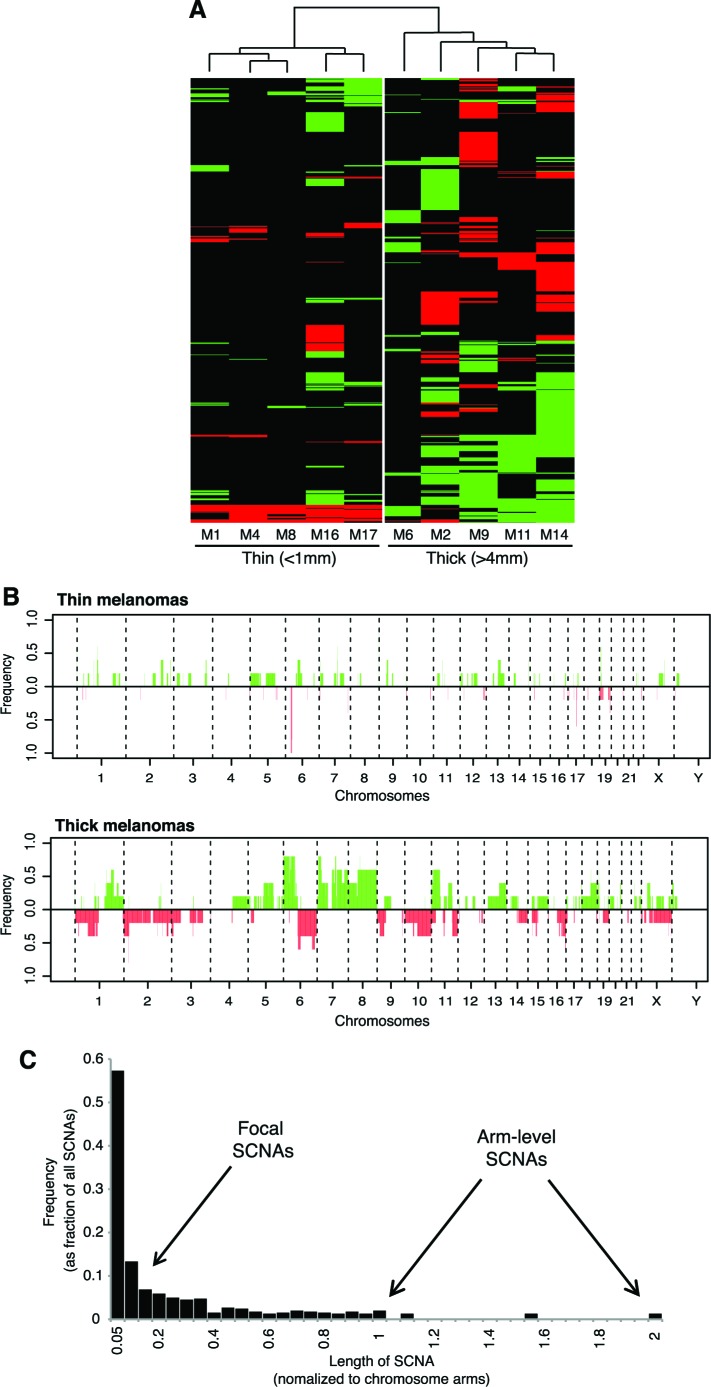
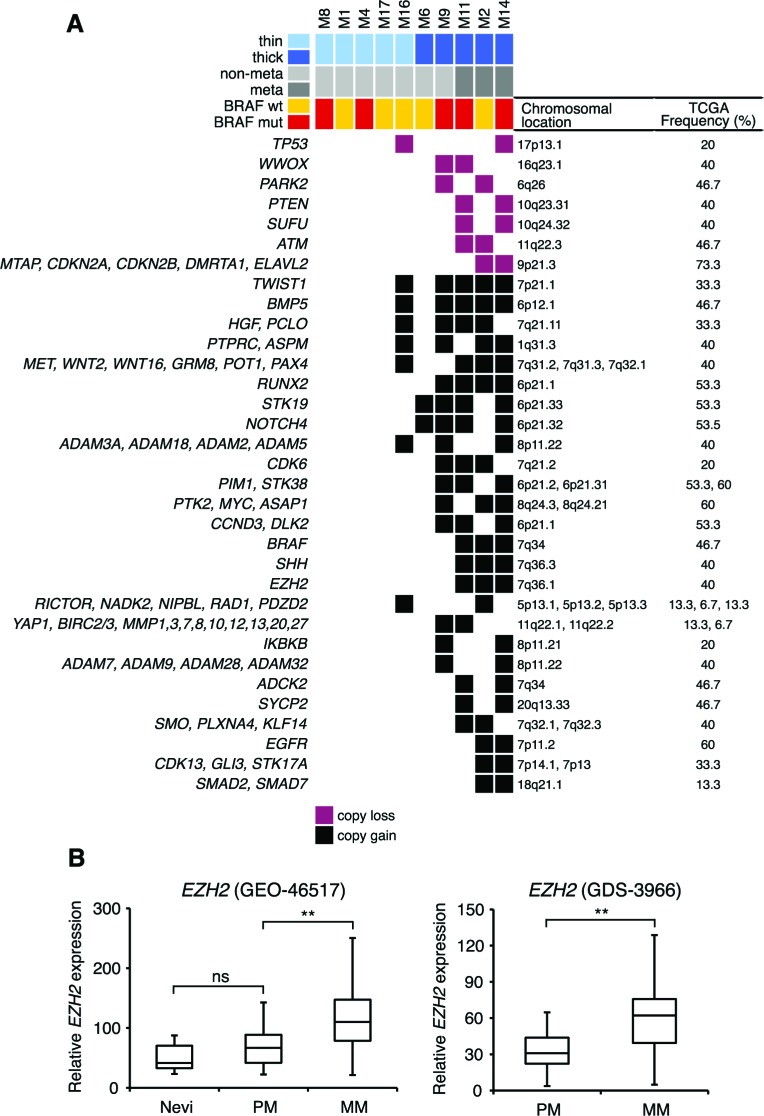
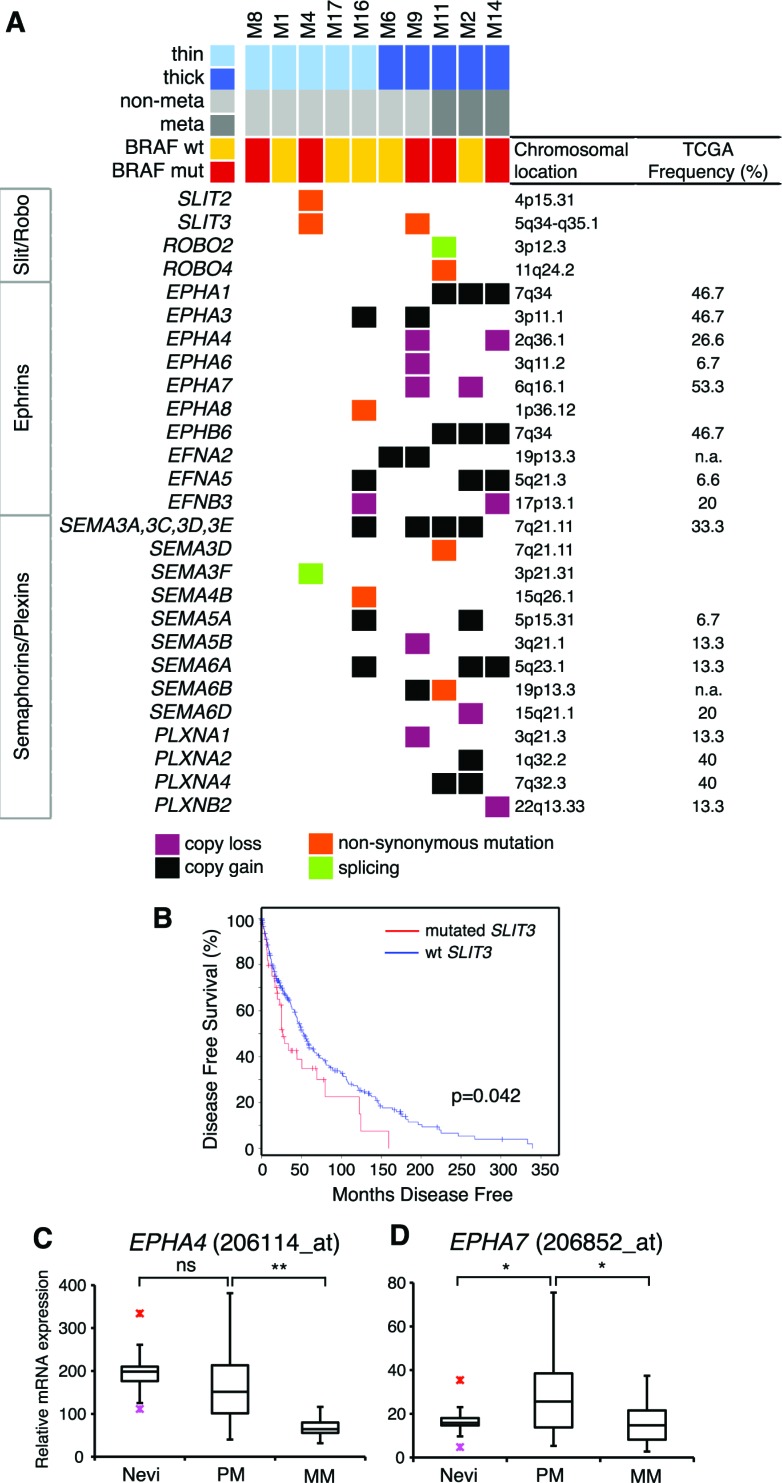
Cutaneous melanoma is one of the most aggressive type of skin tumor. Early stage melanoma can be often cured by surgery; therefore current management guidelines dictate a different approach for thin (<1mm) versus thick (>4mm) melanomas. We have carried out whole-exome sequencing in 5 thin and 5 thick fresh-frozen primary cutaneous melanomas. Unsupervised hierarchical clustering analysis of somatic copy number alterations (SCNAs) identified two groups corresponding to thin and thick melanomas. The most striking difference between them was the much greater abundance of SCNAs in thick melanomas, whereas mutation frequency did not significantly change between the two groups. We found novel mutations and focal SCNAs in genes that are embryonic regulators of axon guidance, predominantly in thick melanomas. Analysis of publicly available microarray datasets provided further support for a potential role of Ephrin receptors in melanoma progression. In addition, we have identified a set of SCNAs, including amplification of BRAF and ofthe epigenetic modifier EZH2, that are specific for the group of thick melanomas that developed metastasis during the follow-up. Our data suggest that mutations occur early during melanoma development, whereas SCNAs might be involved in melanoma progression.
皮肤黑色素瘤是最具侵袭性的皮肤肿瘤类型之一。早期黑色素瘤通常可通过手术治愈;因此,当前的管理指南针对薄型(<1mm)与厚型(>4mm)黑色素瘤规定了不同的治疗方法。我们对5例薄型和5例厚型新鲜冷冻原发性皮肤黑色素瘤进行了全外显子组测序。对体细胞拷贝数改变(SCNA)进行无监督层次聚类分析,确定了与薄型和厚型黑色素瘤相对应的两组。它们之间最显著的差异是厚型黑色素瘤中SCNA的丰度要高得多,而两组之间的突变频率没有显著变化。我们在轴突导向的胚胎调节基因中发现了新的突变和局灶性SCNA,主要存在于厚型黑色素瘤中。对公开可用的微阵列数据集的分析进一步支持了Ephrin受体在黑色素瘤进展中的潜在作用。此外,我们还确定了一组SCNA,包括BRAF和表观遗传修饰因子EZH2的扩增,这些是随访期间发生转移的厚型黑色素瘤组所特有的。我们的数据表明,突变在黑色素瘤发展的早期发生,而SCNA可能参与黑色素瘤的进展。