Riverso M, Montagnani V, Stecca B
Core Research Laboratory-Istituto Toscano Tumori, Florence, Italy.
Department of Oncology, Careggi University Hospital, Florence, Italy.
Oncogene. 2017 Jun 8;36(23):3322-3333. doi: 10.1038/onc.2016.481. Epub 2017 Jan 9.
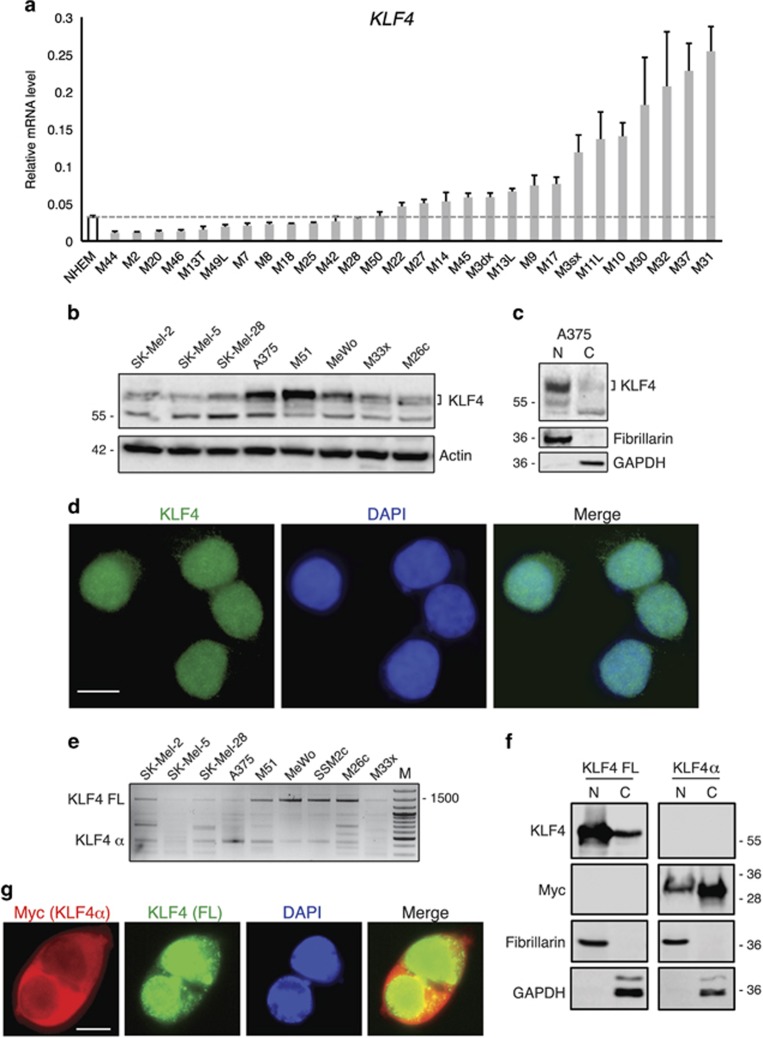
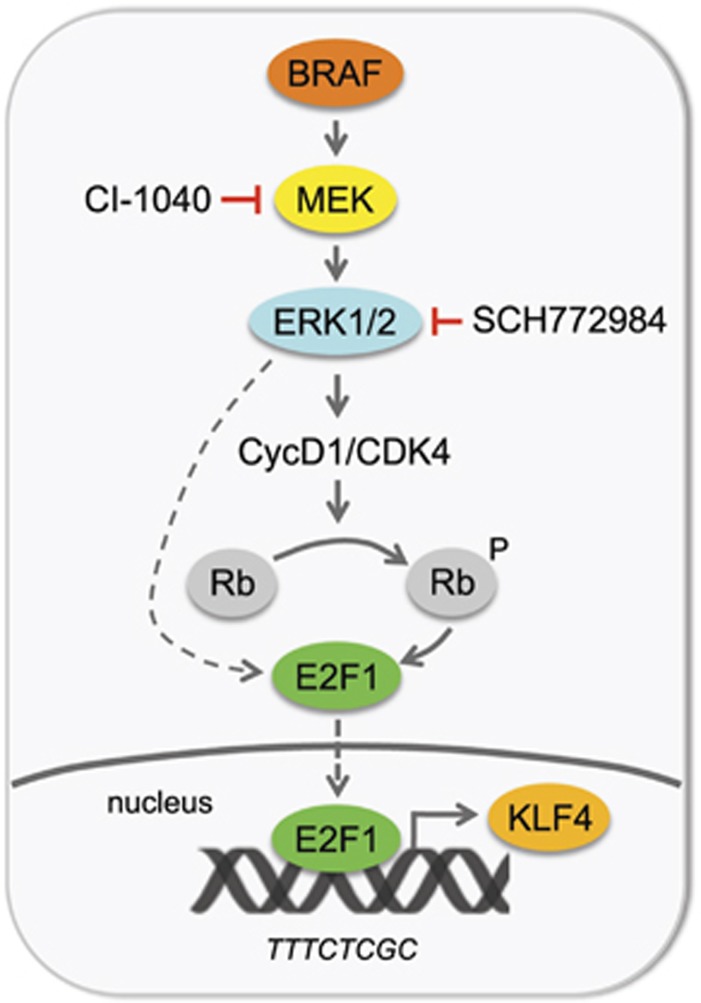
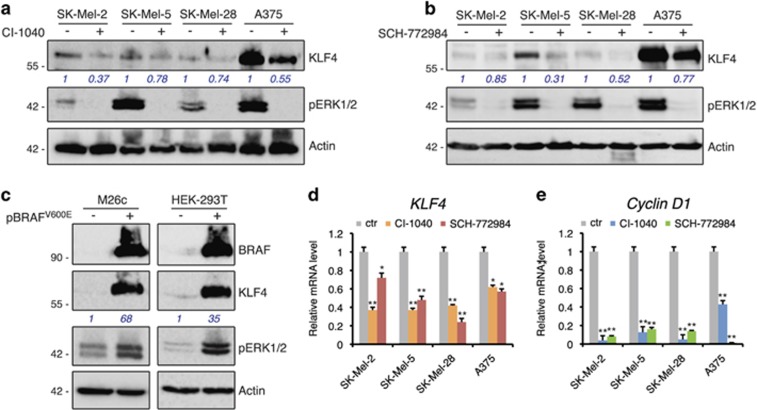
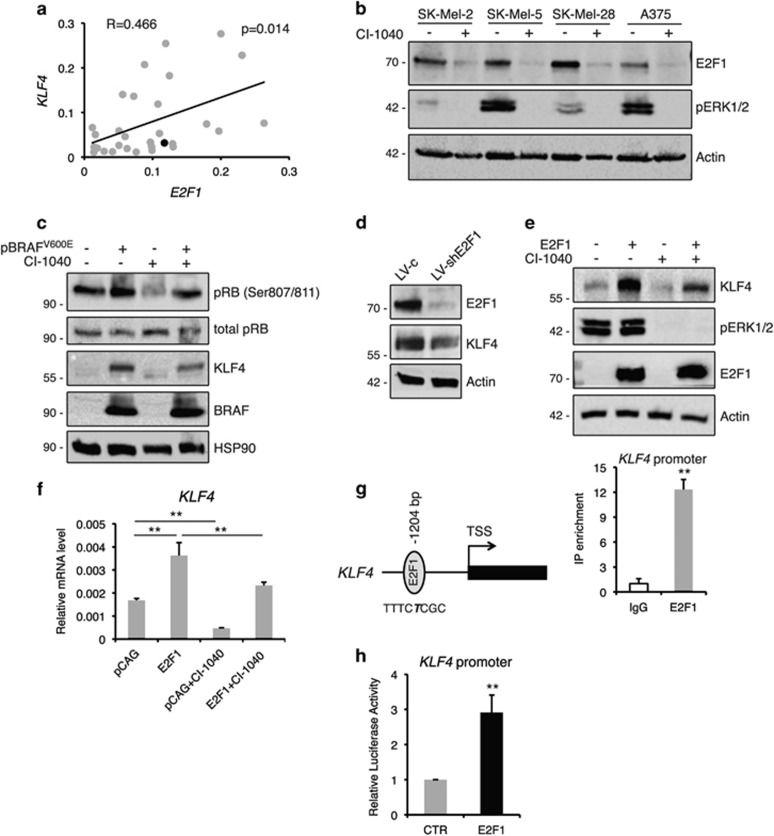
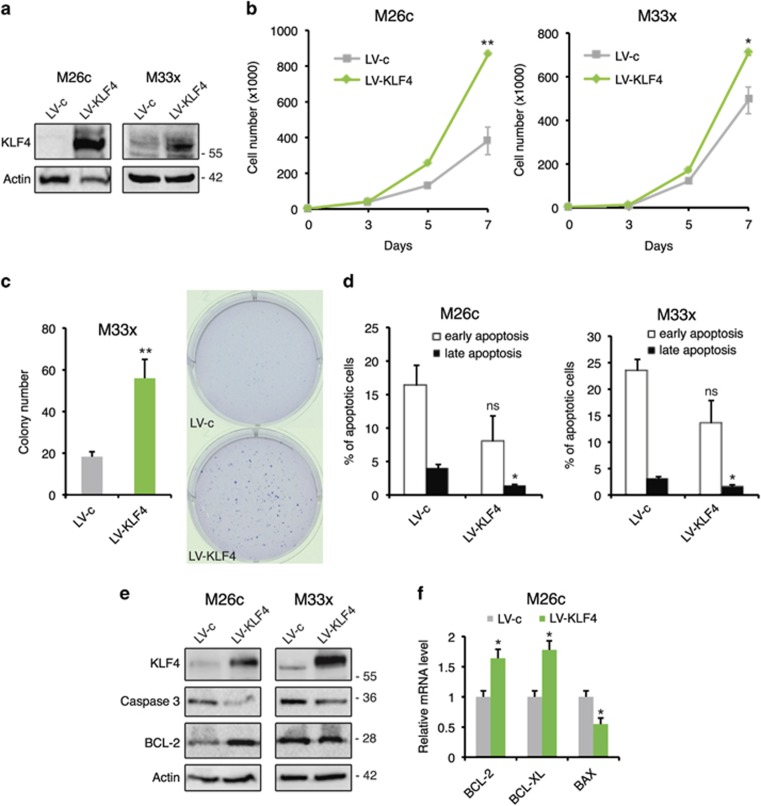
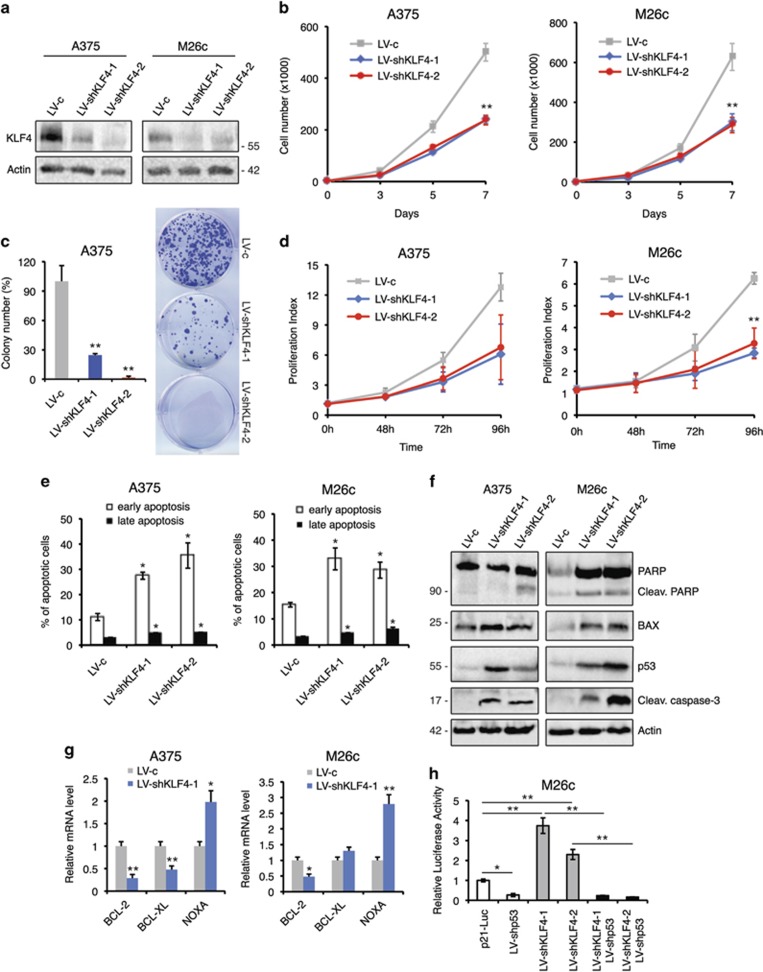
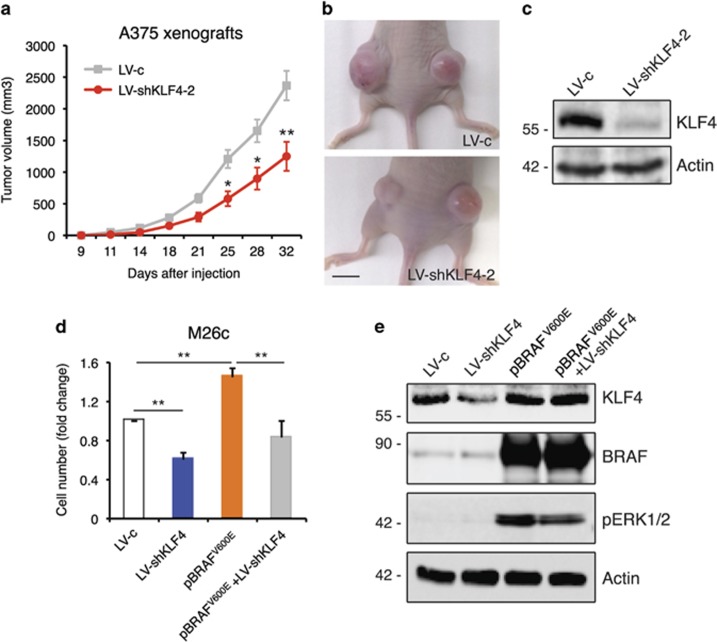
Melanoma is the most lethal form of skin cancer and treatment of metastatic melanoma remains challenging. BRAF/MEK inhibitors show only temporary benefit due the occurrence of resistance and immunotherapy is effective only in a subset of patients. To improve patient survival, there is a need to better understand molecular mechanisms that drive melanoma growth and operate downstream of the mitogen activated protein kinase (MAPK) signaling. The Krüppel-like factor 4 (KLF4) is a zinc-finger transcription factor that plays a critical role in embryonic development, stemness and cancer, where it can act either as oncogene or tumor suppressor. KLF4 is highly expressed in post-mitotic epidermal cells, but its role in melanoma remains unknown. Here, we address the function of KLF4 in melanoma and its interaction with the MAPK signaling pathway. We find that KLF4 is highly expressed in a subset of human melanomas. Ectopic expression of KLF4 enhances melanoma cell growth by decreasing apoptosis. Conversely, knock-down of KLF4 reduces melanoma cell proliferation and induces cell death. In addition, depletion of KLF4 reduces melanoma xenograft growth in vivo. We find that the RAS/RAF/MEK/ERK signaling positively modulates KLF4 expression through the transcription factor E2F1, which directly binds to KLF4 promoter. Overall, our data demonstrate the pro-tumorigenic role of KLF4 in melanoma and uncover a novel ERK1/2-E2F1-KLF4 axis. These findings identify KLF4 as a possible new molecular target for designing novel therapeutic treatments to control melanoma growth.
黑色素瘤是皮肤癌中最致命的一种形式,转移性黑色素瘤的治疗仍然具有挑战性。由于耐药性的出现,BRAF/MEK抑制剂仅显示出暂时的益处,而免疫疗法仅对一部分患者有效。为了提高患者生存率,有必要更好地了解驱动黑色素瘤生长并在丝裂原活化蛋白激酶(MAPK)信号传导下游起作用的分子机制。Krüppel样因子4(KLF4)是一种锌指转录因子,在胚胎发育、干性和癌症中起关键作用,在这些过程中它既可以作为癌基因,也可以作为肿瘤抑制因子。KLF4在有丝分裂后的表皮细胞中高度表达,但其在黑色素瘤中的作用仍然未知。在这里,我们研究了KLF4在黑色素瘤中的功能及其与MAPK信号通路的相互作用。我们发现KLF4在一部分人类黑色素瘤中高度表达。KLF4的异位表达通过减少细胞凋亡来增强黑色素瘤细胞的生长。相反,敲低KLF4会降低黑色素瘤细胞的增殖并诱导细胞死亡。此外,KLF4的缺失会减少黑色素瘤异种移植在体内的生长。我们发现RAS/RAF/MEK/ERK信号通过转录因子E2F1正向调节KLF4的表达,E2F1直接结合到KLF4启动子上。总体而言,我们的数据证明了KLF4在黑色素瘤中的促肿瘤作用,并揭示了一条新的ERK1/2-E2F1-KLF4轴。这些发现确定KLF4为设计控制黑色素瘤生长的新型治疗方法的一个可能的新分子靶点。