Unudurthi Sathya D, Wu Xiangqiong, Qian Lan, Amari Foued, Onal Birce, Li Ning, Makara Michael A, Smith Sakima A, Snyder Jedidiah, Fedorov Vadim V, Coppola Vincenzo, Anderson Mark E, Mohler Peter J, Hund Thomas J
The Dorothy M. Davis Heart and Lung Research Institute, The Ohio State University Wexner Medical Center, Columbus, OH Department of Biomedical Engineering, College of Engineering, The Ohio State University, Columbus, OH.
Department of Molecular Virology, Immunology & Medical Genetics, The Ohio State University Wexner Medical Center, Columbus, OH.
J Am Heart Assoc. 2016 Apr 20;5(4):e002865. doi: 10.1161/JAHA.115.002865.
Two-pore K(+) channels have emerged as potential targets to selectively regulate cardiac cell membrane excitability; however, lack of specific inhibitors and relevant animal models has impeded the effort to understand the role of 2-pore K(+) channels in the heart and their potential as a therapeutic target. The objective of this study was to determine the role of mechanosensitive 2-pore K(+) channel family member TREK-1 in control of cardiac excitability.
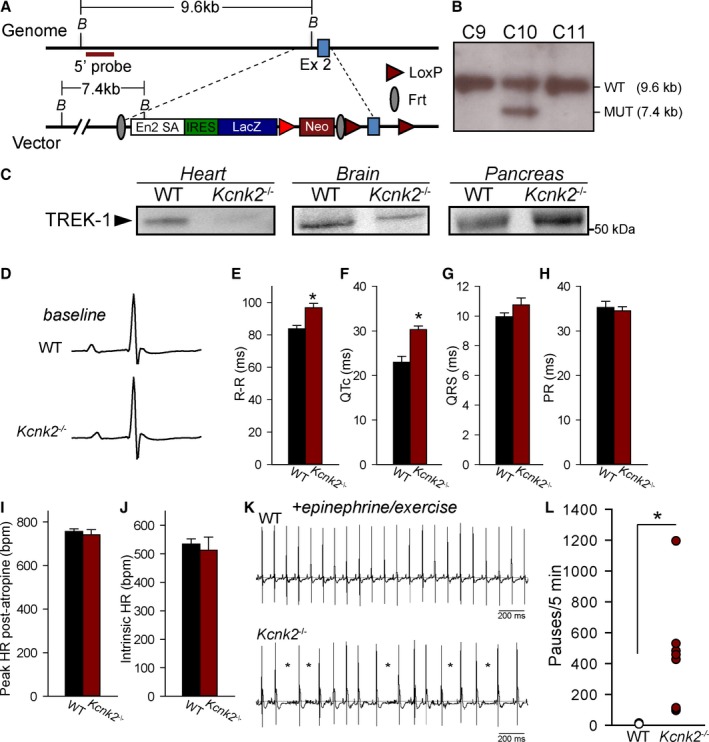
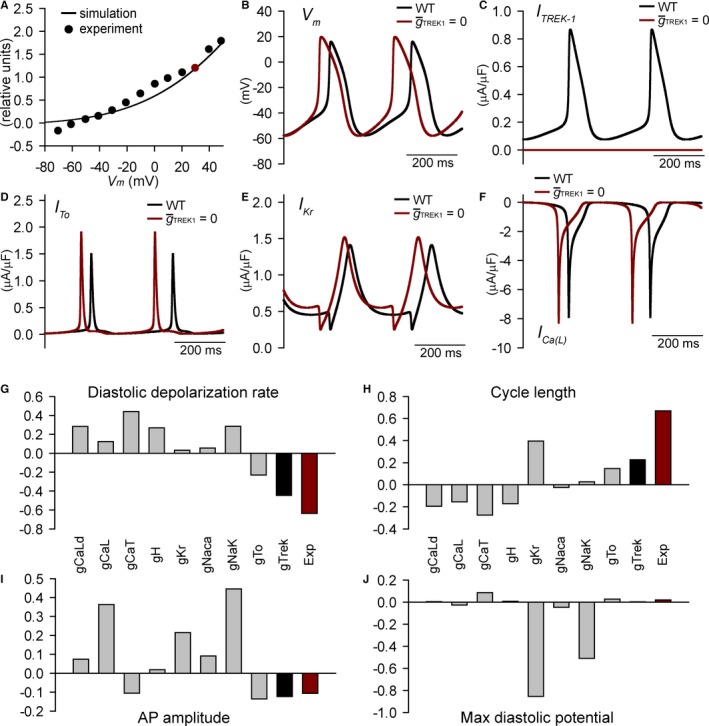
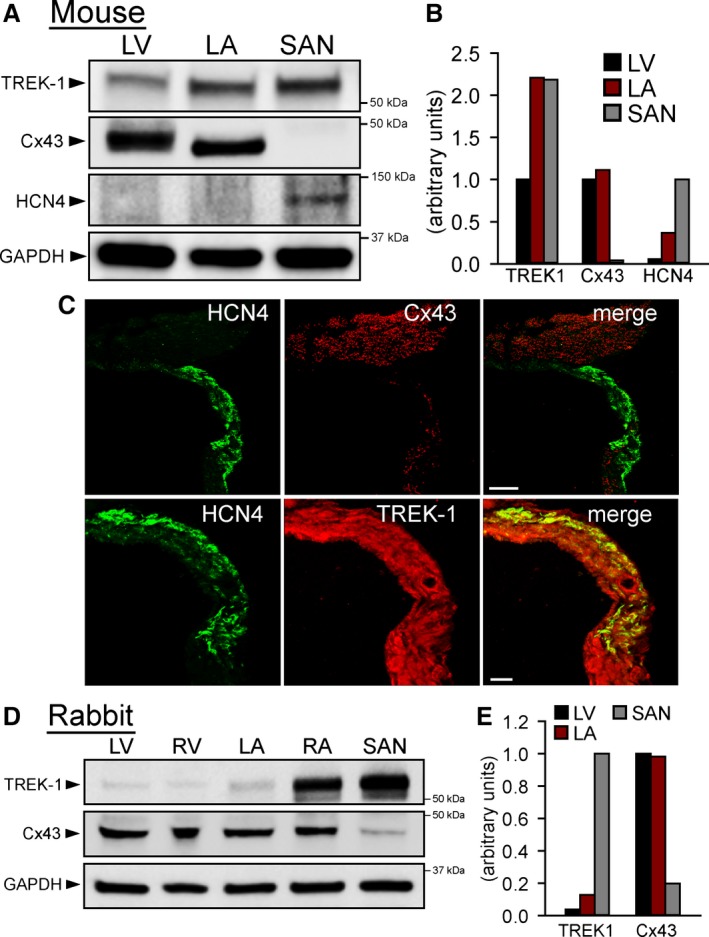
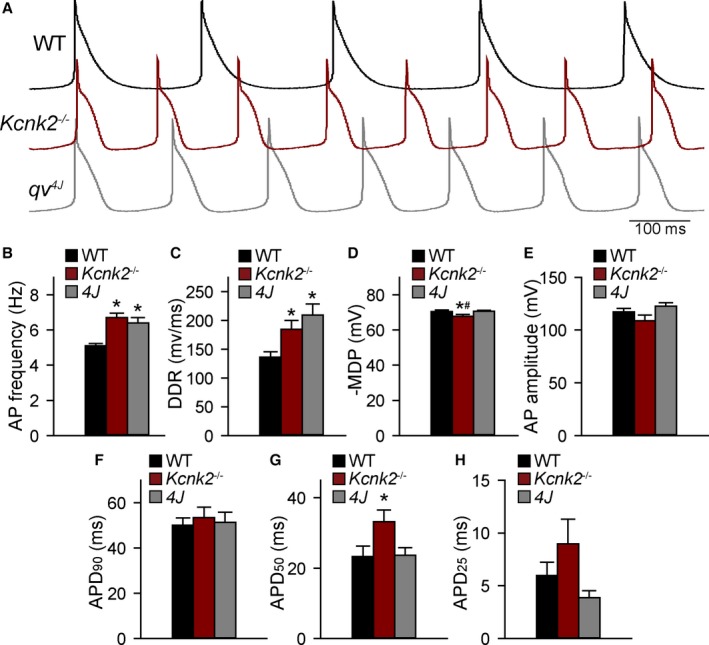
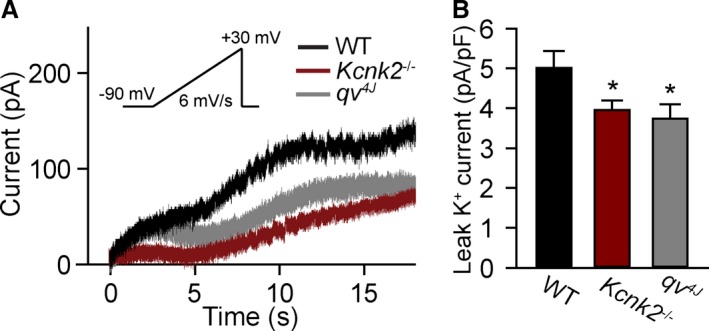
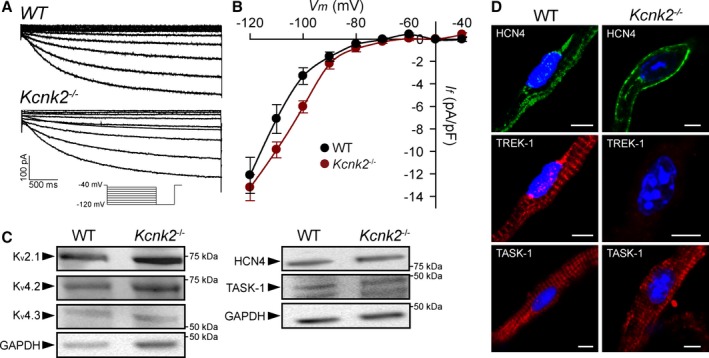
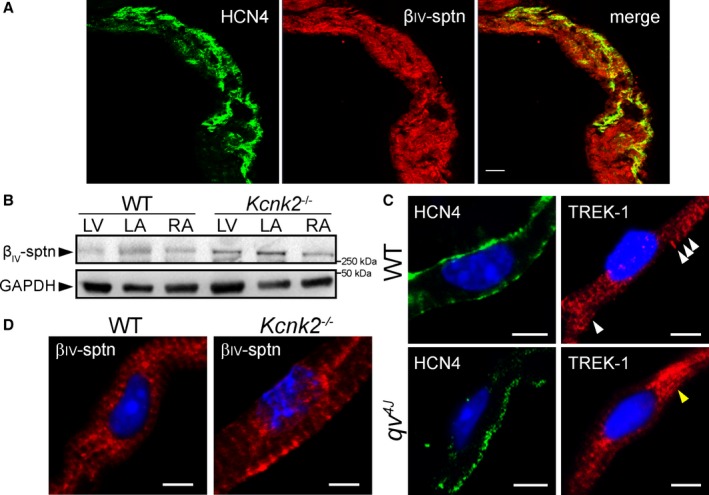
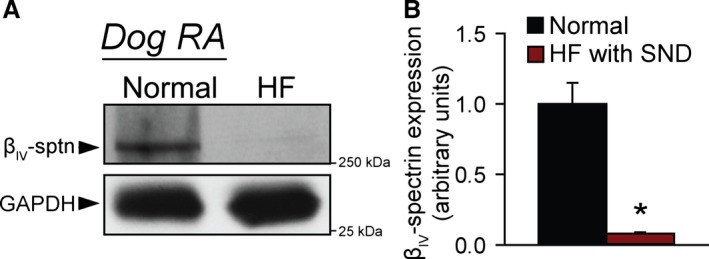
Cardiac-specific TREK-1-deficient mice (αMHC-Kcnk(f/f)) were generated and found to have a prevalent sinoatrial phenotype characterized by bradycardia with frequent episodes of sinus pause following stress. Action potential measurements from isolated αMHC-Kcnk2(f/f) sinoatrial node cells demonstrated decreased background K(+) current and abnormal sinoatrial cell membrane excitability. To identify novel pathways for regulating TREK-1 activity and sinoatrial node excitability, mice expressing a truncated allele of the TREK-1-associated cytoskeletal protein βIV-spectrin (qv(4J) mice) were analyzed and found to display defects in cell electrophysiology as well as loss of normal TREK-1 membrane localization. Finally, the βIV-spectrin/TREK-1 complex was found to be downregulated in the right atrium from a canine model of sinoatrial node dysfunction and in human cardiac disease.
These findings identify a TREK-1-dependent pathway essential for normal sinoatrial node cell excitability that serves as a potential target for selectively regulating sinoatrial node cell function.
双孔钾通道已成为选择性调节心肌细胞膜兴奋性的潜在靶点;然而,缺乏特异性抑制剂和相关动物模型阻碍了我们了解双孔钾通道在心脏中的作用及其作为治疗靶点的潜力。本研究的目的是确定机械敏感性双孔钾通道家族成员TREK-1在控制心脏兴奋性中的作用。
构建了心脏特异性TREK-1基因敲除小鼠(αMHC-Kcnk(f/f)),发现其具有以心动过缓为特征的普遍窦房结表型,应激后常出现窦性停搏。对分离的αMHC-Kcnk2(f/f)窦房结细胞进行动作电位测量,结果显示背景钾电流降低,窦房结细胞膜兴奋性异常。为了确定调节TREK-1活性和窦房结兴奋性的新途径,对表达TREK-1相关细胞骨架蛋白βIV-血影蛋白截短等位基因的小鼠(qv(4J)小鼠)进行了分析,发现其细胞电生理存在缺陷,且TREK-1正常膜定位丧失。最后,在犬窦房结功能障碍模型的右心房和人类心脏疾病中,发现βIV-血影蛋白/TREK-1复合物表达下调。
这些发现确定了一条对正常窦房结细胞兴奋性必不可少的TREK-1依赖性途径,该途径可作为选择性调节窦房结细胞功能的潜在靶点。