Hu Xingsheng, He Wenwu, Wen Shimin, Feng Xuqin, Fu Xi, Liu Yusong, Pu Ke
Department of Oncology, Nanchong Central Hospital (the Second Affiliated Hospital of North Sichuan Medical College), Nanchong, Sichuan Province, China.
Department of Cardiothoracic surgery, Nanchong Central Hospital, Nanchong, Sichuan Province, China.
PLoS One. 2016 Apr 21;11(4):e0151988. doi: 10.1371/journal.pone.0151988. eCollection 2016.
There are no adequate data to determine whether intensity-modulated radiotherapy (IMRT) is superior to three-dimensional conformal radiotherapy (3DCRT) in the treatment of non-small cell lung cancer (NSCLC). This meta-analysis was conducted to compare the clinical outcomes of IMRT and 3DCRT in the treatment of NSCLC.
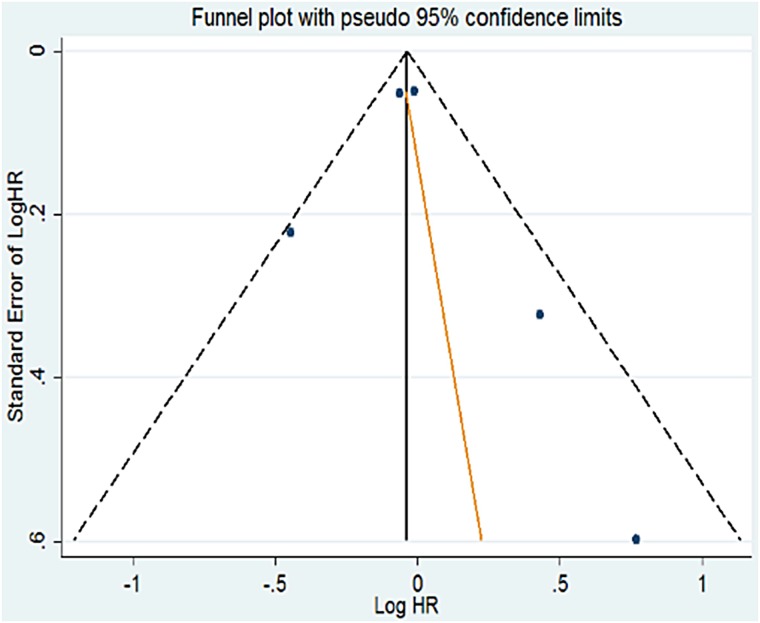
No exclusions were made based on types of study design. We performed a literature search in PubMed, EMBASE and the Cochrane library databases from their inceptions to April 30, 2015. The overall survival (OS) and relative risk (RR) of radiation pneumonitis and radiation oesophagitis were evaluated. Two authors independently assessed the methodological quality and extracted data. Publication bias was evaluated by funnel plot using Egger's test results.
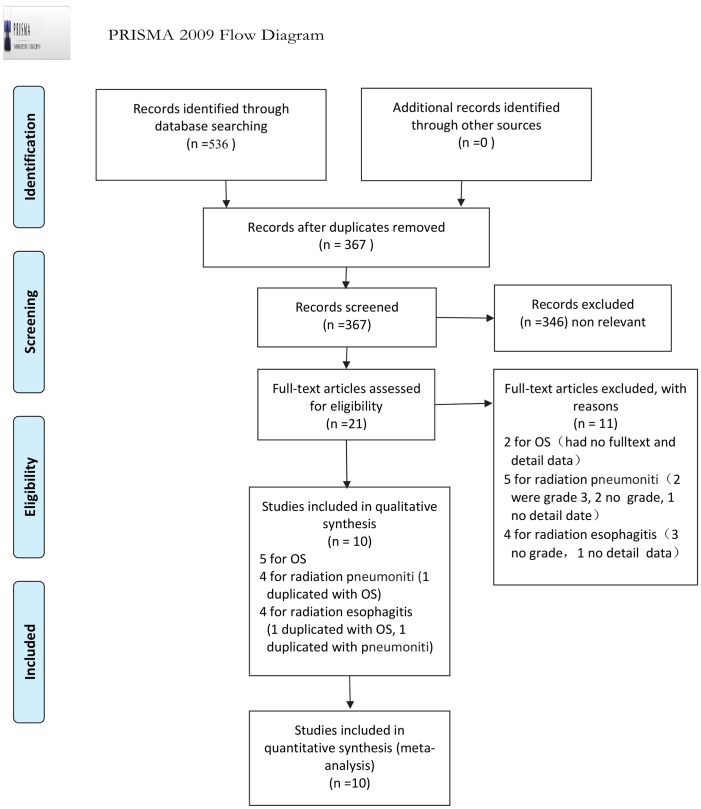
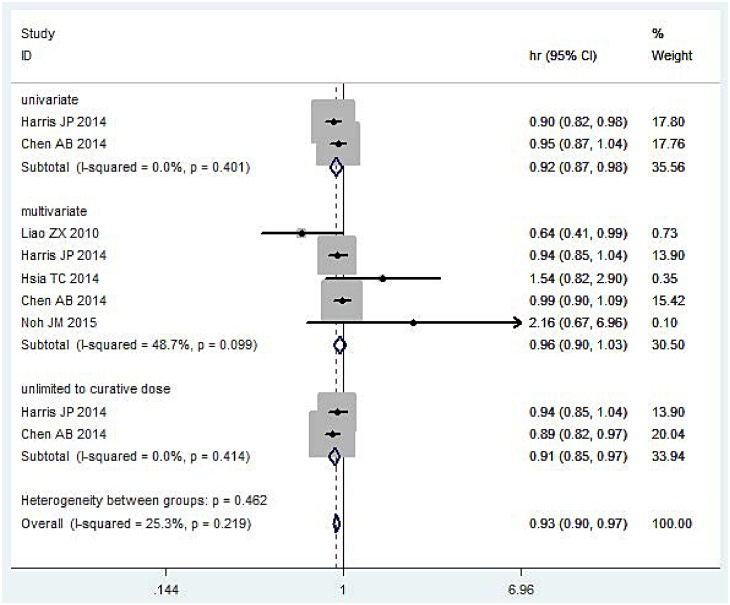
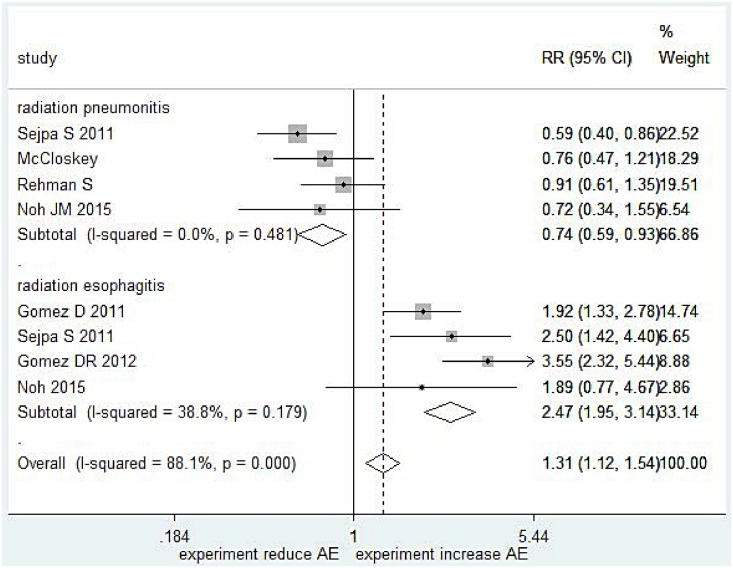
From the literature search, 10 retrospective studies were collected, and of those, 5 (12,896 patients) were selected for OS analysis, 4 (981 patients) were selected for radiation pneumonitis analysis, and 4 (1339 patients) were selected for radiation oesophagitis analysis. Cox multivariate proportional hazards models revealed that 3DCRT and IMRT had similar OS (HR = 0.96, P = 0.477) but that IMRT reduced the incidence of grade 2 radiation pneumonitis (RR = 0.74, P = 0.009) and increased the incidence of grade 3 radiation oesophagitis (RR = 2.47, P = 0.000).
OS of IMRT for NSCLC is not inferior to that of 3DCRT, but IMRT significantly reduces the risk of radiation pneumonitis and increases the risk of radiation oesophagitis compared to 3DCRT.
尚无充分数据来确定调强放射治疗(IMRT)在非小细胞肺癌(NSCLC)治疗中是否优于三维适形放射治疗(3DCRT)。本荟萃分析旨在比较IMRT和3DCRT治疗NSCLC的临床疗效。
不基于研究设计类型进行排除。我们在PubMed、EMBASE和Cochrane图书馆数据库中进行了从建库至2015年4月30日的文献检索。评估总生存期(OS)以及放射性肺炎和放射性食管炎的相对风险(RR)。两位作者独立评估方法学质量并提取数据。使用Egger检验结果通过漏斗图评估发表偏倚。
通过文献检索,收集到10项回顾性研究,其中5项(12,896例患者)入选OS分析,4项(981例患者)入选放射性肺炎分析,4项(1339例患者)入选放射性食管炎分析。Cox多变量比例风险模型显示,3DCRT和IMRT的OS相似(HR = 0.96,P = 0.477),但IMRT降低了2级放射性肺炎的发生率(RR = 0.74,P = 0.009),并增加了3级放射性食管炎的发生率(RR = 2.47,P = 0.000)。
NSCLC的IMRT的OS不劣于3DCRT,但与3DCRT相比,IMRT显著降低了放射性肺炎的风险,并增加了放射性食管炎的风险。