Urano-Tashiro Yumiko, Takahashi Yukihiro, Oguchi Riyo, Konishi Kiyoshi
Department of Microbiology, Nippon Dental University School of Life Dentistry at Tokyo, Fujimi, Chiyoda-ku, Tokyo, Japan.
Department of Pediatric Dentistry2, Nippon Dental University School of Life Dentistry at Tokyo, Fujimi, Chiyoda-ku, Tokyo, Japan.
PLoS One. 2016 Apr 21;11(4):e0154098. doi: 10.1371/journal.pone.0154098. eCollection 2016.
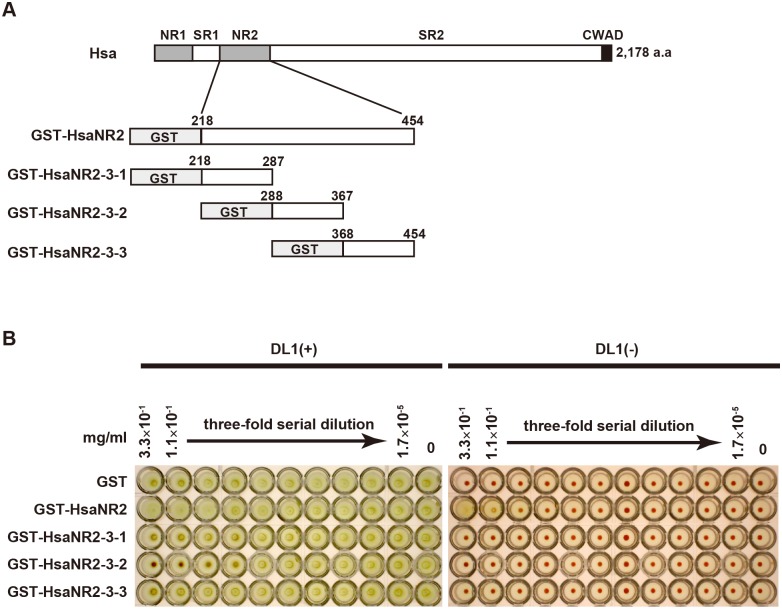
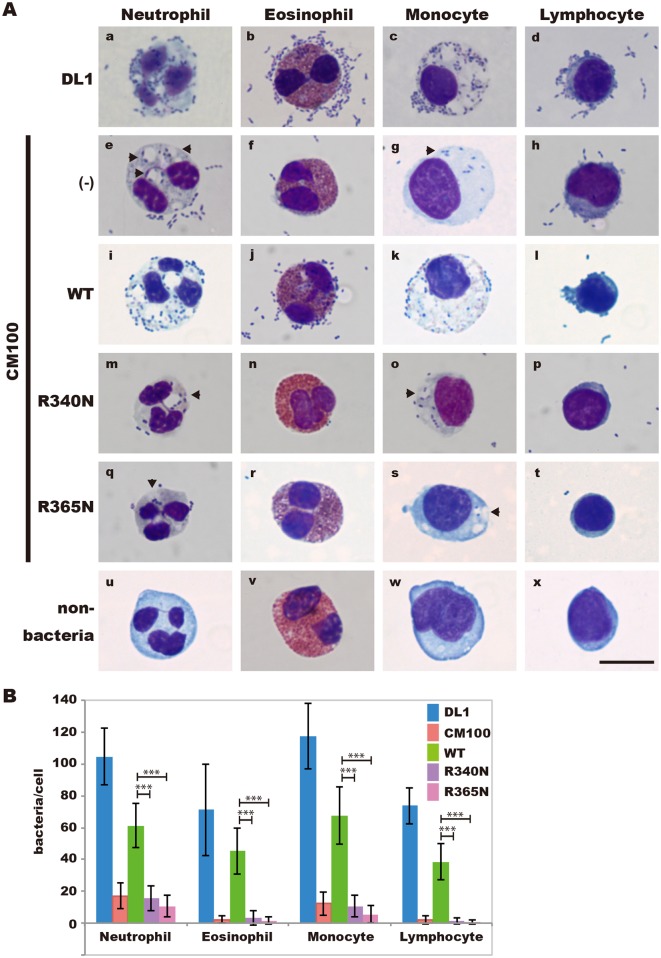
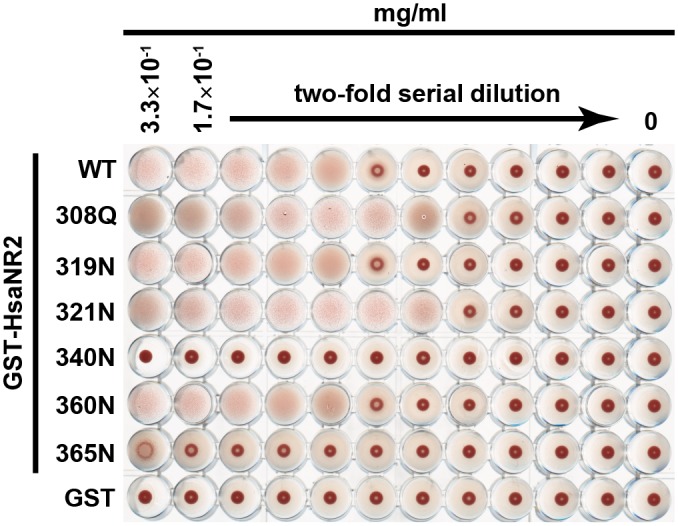
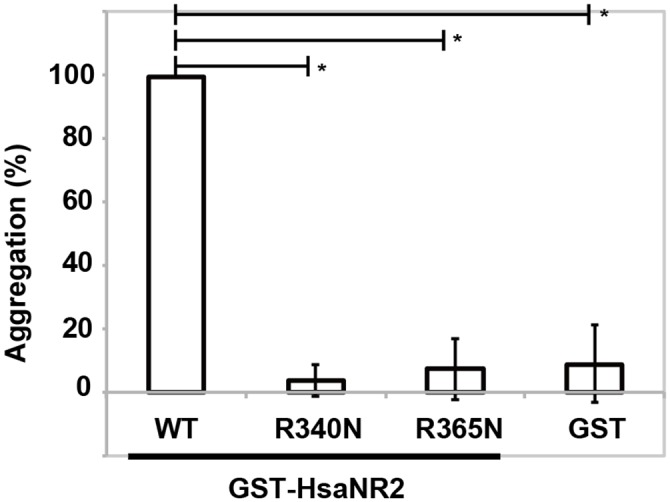
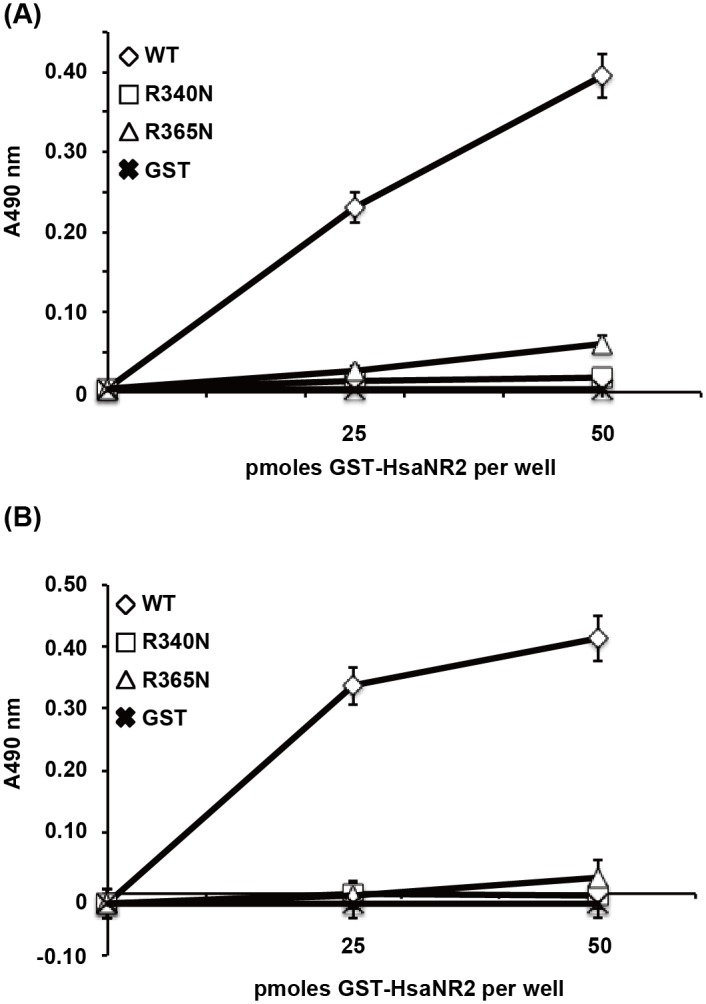
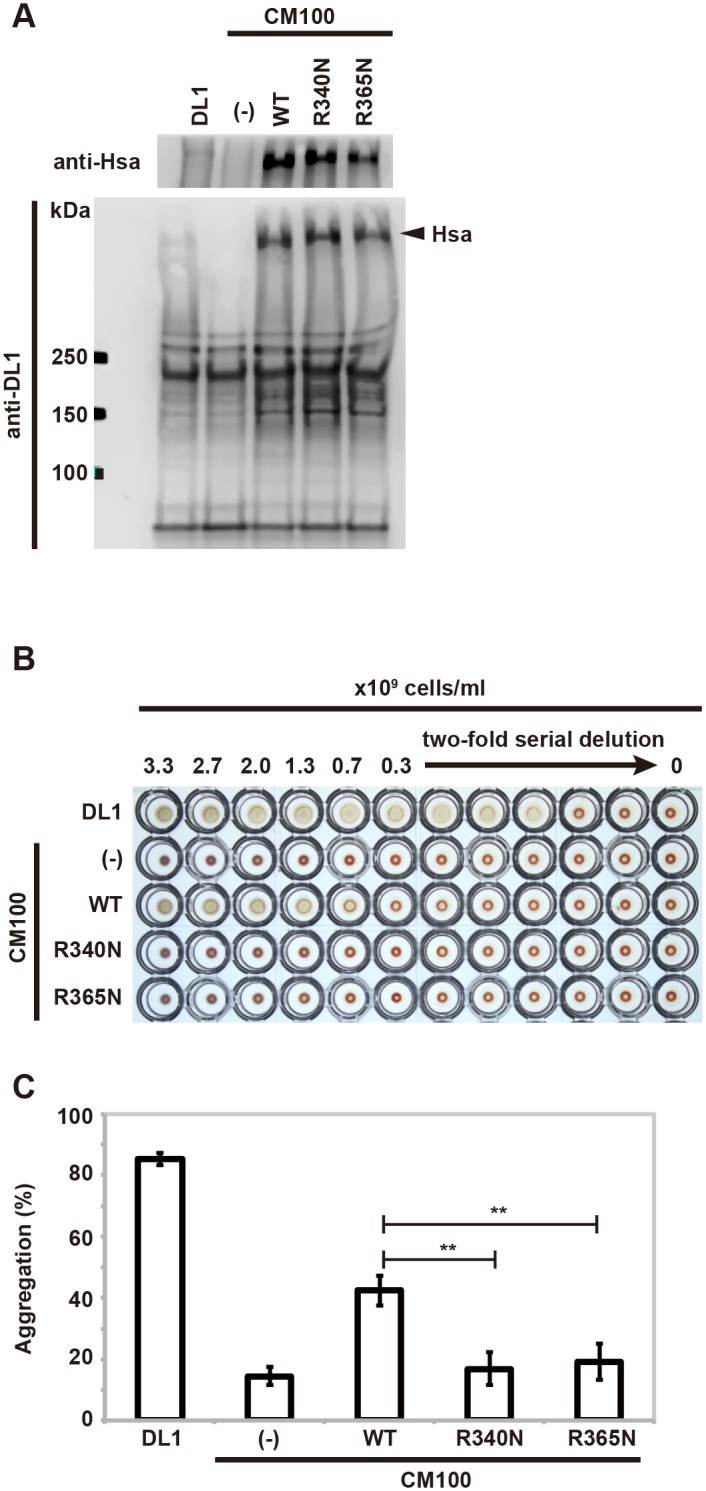
Hsa is a large, serine-rich protein of Streptococcus gordonii DL1 that mediates binding to α2-3-linked sialic acid termini of glycoproteins, including platelet glycoprotein Ibα, and erythrocyte membrane protein glycophorin A, and band 3. The binding of Hsa to platelet glycoprotein Ibα contributes to the pathogenesis of infective endocarditis. This interaction appears to be mediated by a second non-repetitive region (NR2) of Hsa. However, the molecular details of the interaction between the Hsa NR2 region and these glycoproteins are not well understood. In the present study, we identified the amino acid residues of the Hsa NR2 region that are involved in sialic acid recognition. To identify the sialic acid-binding site of Hsa NR2 region, we prepared various mutants of Hsa NR2 fused with glutathione transferase. Fusion proteins harboring Arg340 to Asn (R340N) or Arg365 to Asn (R365N) substitutions in the NR2 domain exhibited significantly reduced binding to human erythrocytes and platelets. A sugar-binding assay showed that these mutant proteins abolished binding to α2-3-linked sialic acid. Furthermore, we established S. gordonii DL1 derivatives that encoded the corresponding Hsa mutant protein. In whole-cell assays, these mutant strains showed significant reductions in hemagglutination, in platelet aggregation, and in adhesion to human leukocytes. These results indicate that the Arg340 and Arg365 residues of Hsa play an important role in the binding of Hsa to α2-3-linked sialic acid-containing glycoproteins.
Hsa是戈登链球菌DL1中的一种大型富含丝氨酸的蛋白质,它介导与糖蛋白的α2-3连接唾液酸末端结合,这些糖蛋白包括血小板糖蛋白Ibα、红细胞膜蛋白血型糖蛋白A和带3蛋白。Hsa与血小板糖蛋白Ibα的结合有助于感染性心内膜炎的发病机制。这种相互作用似乎是由Hsa的第二个非重复区域(NR2)介导的。然而,Hsa NR2区域与这些糖蛋白之间相互作用的分子细节尚未完全了解。在本研究中,我们确定了Hsa NR2区域中参与唾液酸识别的氨基酸残基。为了确定Hsa NR2区域的唾液酸结合位点,我们制备了与谷胱甘肽转移酶融合的Hsa NR2的各种突变体。在NR2结构域中含有精氨酸340突变为天冬酰胺(R340N)或精氨酸365突变为天冬酰胺(R365N)的融合蛋白与人类红细胞和血小板的结合显著减少。糖结合试验表明,这些突变蛋白消除了与α2-3连接唾液酸的结合。此外,我们构建了编码相应Hsa突变蛋白的戈登链球菌DL1衍生物。在全细胞试验中,这些突变菌株在血凝、血小板聚集和与人白细胞的黏附方面均显著降低。这些结果表明,Hsa的精氨酸340和精氨酸365残基在Hsa与含α2-3连接唾液酸的糖蛋白的结合中起重要作用。