Zhang Xiong, Wang Ya-Nan, Zhu Juan-Juan, Liu Xue-Xia, You Hui, Gong Mei-Ying, Zou Ming, Cheng Wen-Hsing, Zhu Jian-Hong
Department of Preventive Medicine, Wenzhou Medical University, Wenzhou, Zhejiang 325035, China.
Department of Geriatrics and Neurology, The Second Affiliated Hospital, Wenzhou Medical University, Wenzhou, Zhejiang 325035, China.
Oncotarget. 2016 May 24;7(21):30855-66. doi: 10.18632/oncotarget.8806.
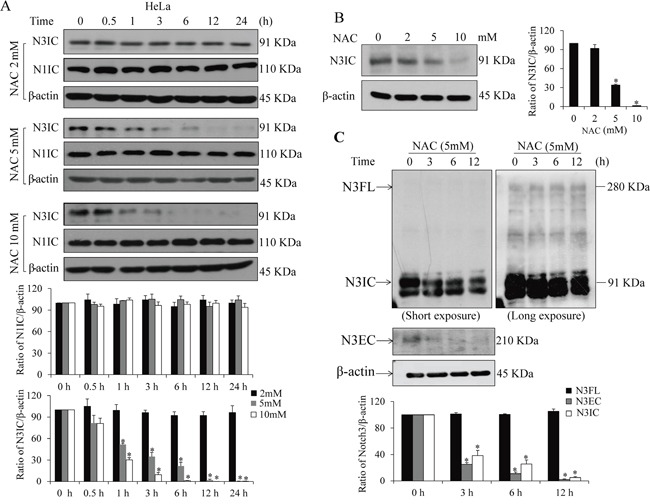
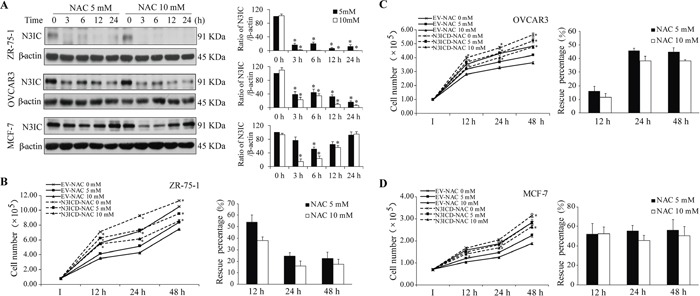
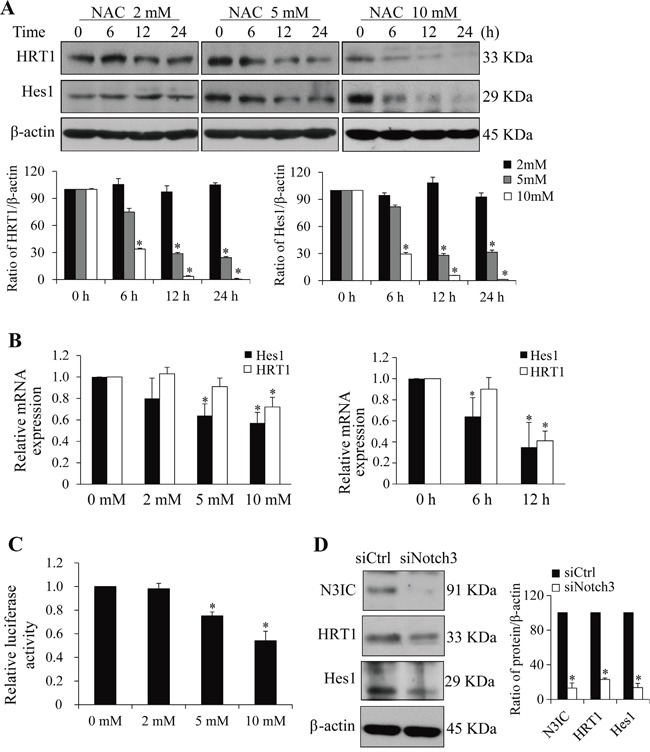
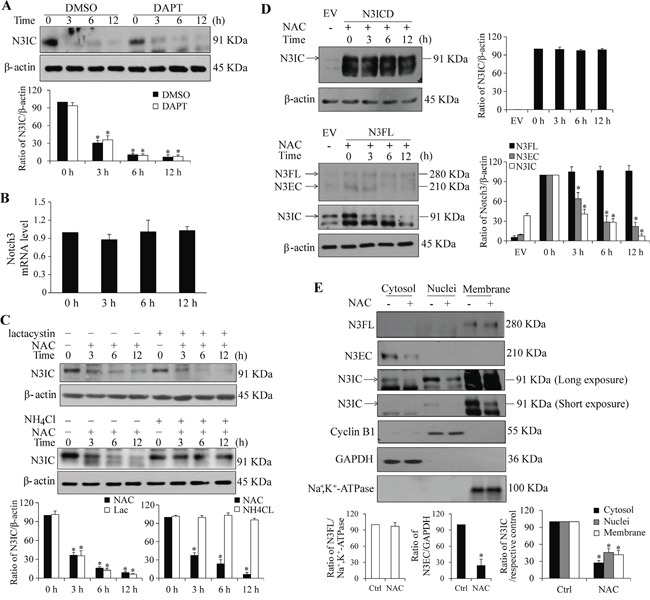
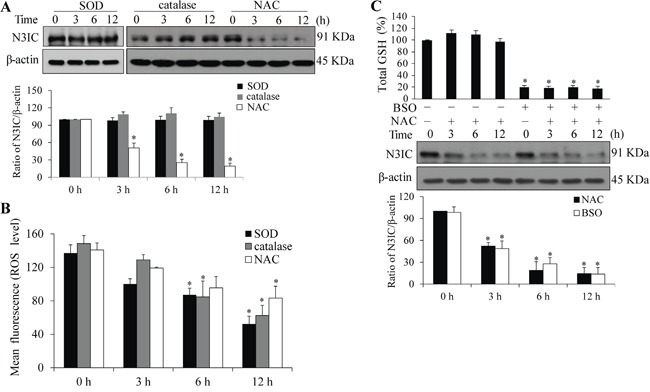
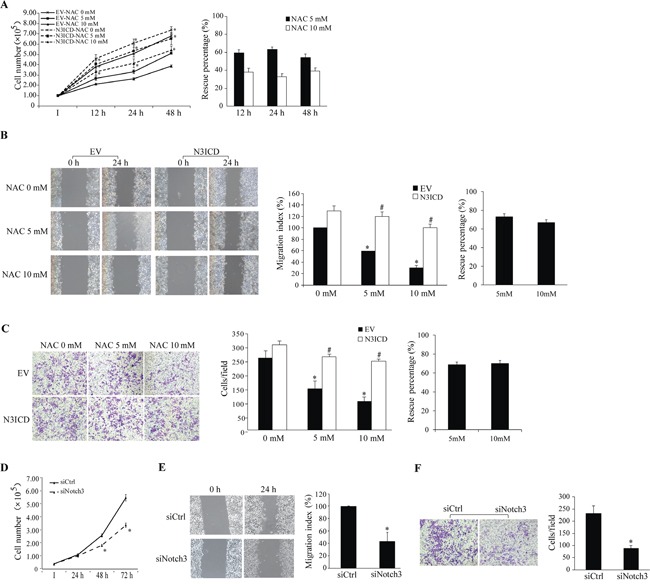
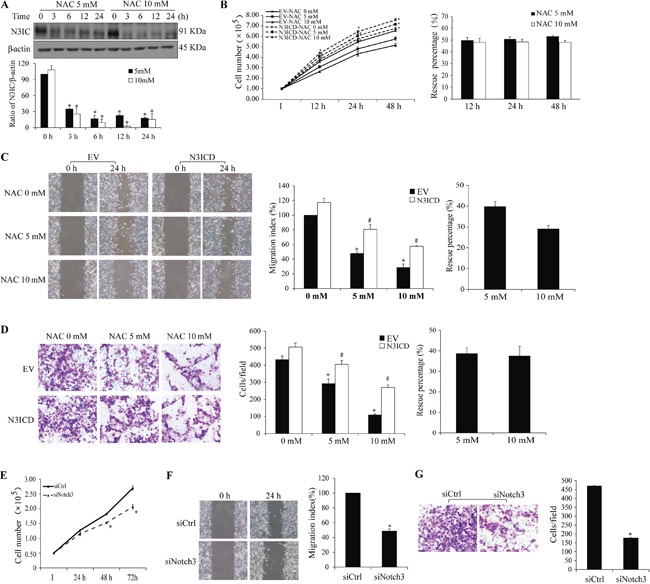
Notch3 receptor is expressed in a variety of cancers and the excised active intracellular domain (N3ICD) initiates its signaling cascade. N-acetylcysteine (NAC) as an antioxidant has been implicated in cancer prevention and therapy. In this study, we demonstrated a negative regulation of Notch3 by NAC in cancer cells. HeLa cells treated with NAC exhibited a time- and concentration-dependent decrease in Notch3 levels and its downstream effectors Hes1 and HRT1 in a manner independent of f-secretase or glutathione. In contrast, NAC did not affect protein levels of Notch1, the full length Notch3 precursor, or ectopically expressed N3ICD. Although SOD, catalase and NAC suppressed reactive oxygen species in HeLa cells, the first two antioxidants did not impact on Notch3 levels. While the mRNA expression of Notch3 was not altered by NAC, functional inhibition of lysosome, but not proteasome, blocked the NAC-dependent reduction of Notch3 levels. Furthermore, results from Notch3 silencing and N3ICD overexpression demonstrated that NAC prevented malignant phenotypes through down-regulation of Notch3 protein in multiple cancer cells. In summary, NAC reduces Notch3 levels through lysosome-dependent protein degradation, thereby negatively regulates Notch3 malignant signaling in cancer cells. These results implicate a novel NAC treatment in sensitizing Notch3-expressing tumors.
Notch3受体在多种癌症中表达,切除的活性细胞内结构域(N3ICD)启动其信号级联反应。N-乙酰半胱氨酸(NAC)作为一种抗氧化剂,已被证明与癌症预防和治疗有关。在本研究中,我们证明了NAC在癌细胞中对Notch3具有负调控作用。用NAC处理的HeLa细胞中,Notch3水平及其下游效应分子Hes1和HRT1呈现出时间和浓度依赖性降低,且这种降低方式与γ-分泌酶或谷胱甘肽无关。相比之下,NAC不影响Notch1、全长Notch3前体或异位表达的N3ICD的蛋白水平。虽然超氧化物歧化酶(SOD)、过氧化氢酶和NAC都能抑制HeLa细胞中的活性氧,但前两种抗氧化剂对Notch3水平没有影响。虽然NAC不会改变Notch3的mRNA表达,但抑制溶酶体(而非蛋白酶体)的功能会阻断NAC介导的Notch3水平降低。此外,Notch3沉默和N3ICD过表达的结果表明,NAC通过下调多种癌细胞中的Notch3蛋白来预防恶性表型。总之,NAC通过溶酶体依赖性蛋白降解降低Notch3水平,从而对癌细胞中的Notch3恶性信号进行负调控。这些结果表明,一种新型的NAC治疗方法可使表达Notch3的肿瘤致敏。