Lorenz Leoni, Zenz Tamara, Oliinyk Denys, Meier-Rosar Florian, Jenke Robert, Aigner Achim, Büch Thomas
Clinical Pharmacology, Rudolf-Boehm-Institute for Pharmacology and Toxicology, Medical Faculty, Leipzig University, 04107 Leipzig, Germany.
Functional Proteomics, Research Center Lobeda, Jena University Hospital, 07747 Jena, Germany.
Pharmaceuticals (Basel). 2024 Aug 16;17(8):1080. doi: 10.3390/ph17081080.
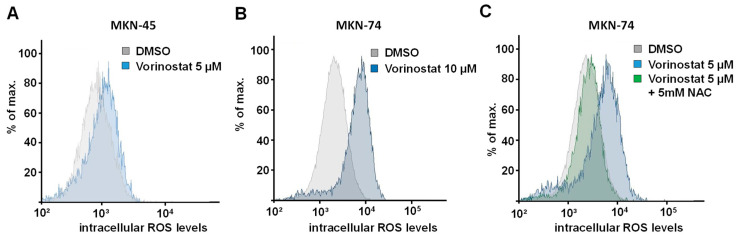
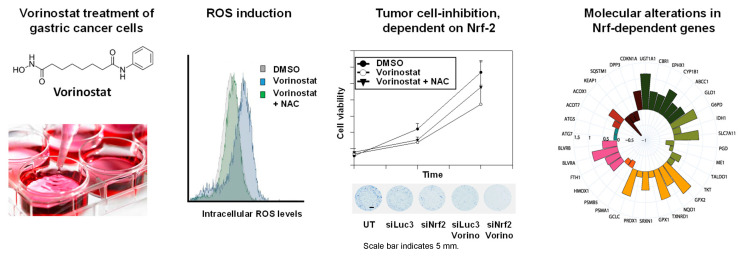
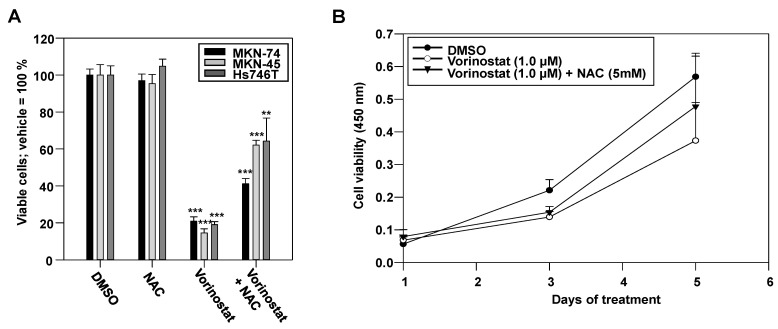
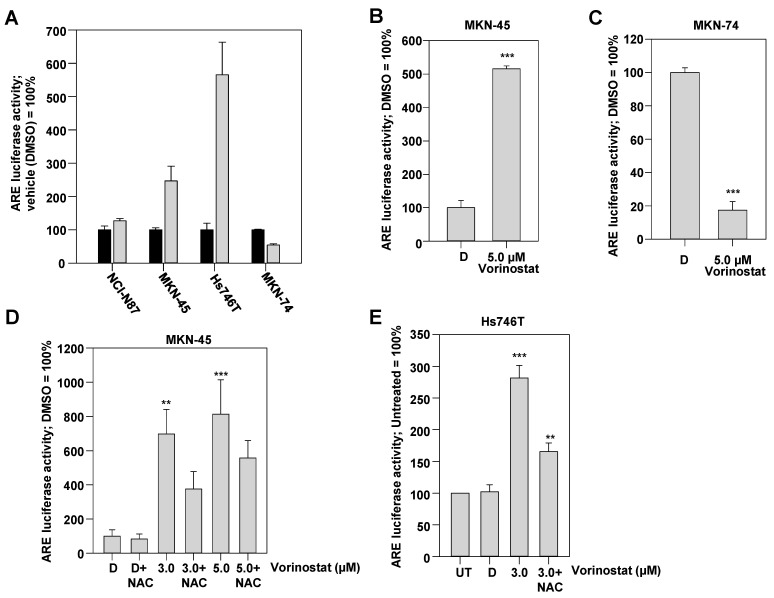
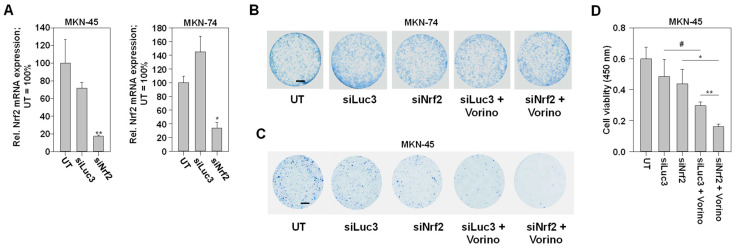
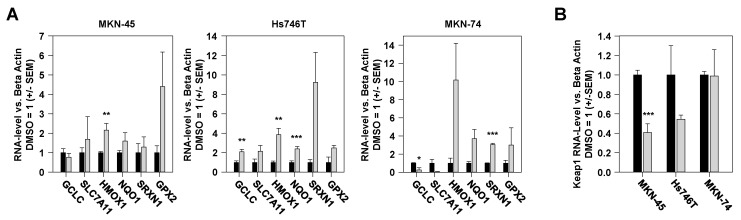
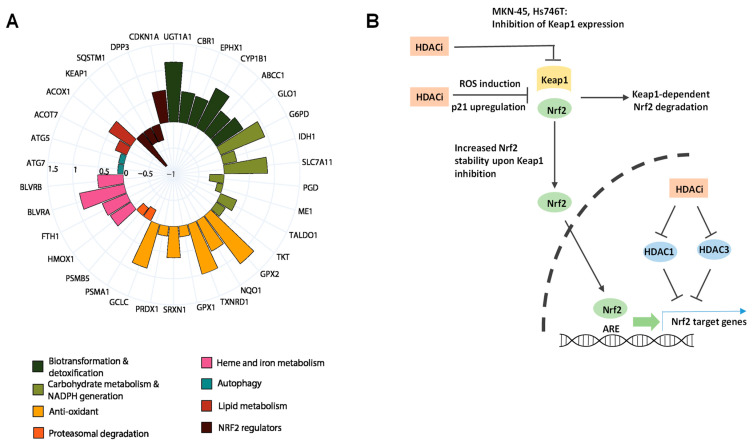
Histone deacetylase inhibitors (HDACi) show high antineoplastic potential in preclinical studies in various solid tumors, including gastric carcinoma; however, their use in clinical studies has not yet yielded convincing efficacies. Thus, further studies on cellular/molecular effects of HDACi are needed, for improving clinical efficacy and identifying suitable combination partners. Here, we investigated the role of oxidative stress in gastric cancer cells upon treatment with HDACi. A particular focus was laid on the role of the Nrf2 pathway, which can mediate resistance to cell-inhibitory effects of reactive oxidative species (ROS). Using fluorescence-based ROS sensors, oxidative stress was measured in human gastric cancer cell lines. Activation of the Nrf2 pathway was monitored in luciferase reporter assays as well as by mRNA and proteomic expression analyses of Nrf2 regulators and Nrf2-induced genes. Furthermore, the effects of ROS scavenger N-acetyl-L-cysteine (NAC) and Nrf2-knockdown on HDACi-dependent antiproliferative effects were investigated in colorimetric formazan-based and clonogenic survival assays. HDACi treatment led to increased oxidative stress levels and consequently, treatment with NAC reduced cytotoxicity of HDACi. In addition, vorinostat treatment stimulated expression of a luciferase reporter under the control of an antioxidative response element, indicating activation of the Nrf2 system. This Nrf2 activation was only partially reversible by treatment with NAC, suggesting ROS independent pathways to contribute to HDACi-promoted Nrf2 activation. In line with its cytoprotective role, Nrf2 knockdown led to a sensitization against HDACi. Accordingly, the expression of antioxidant and detoxifying Nrf2 target genes was upregulated upon HDACi treatment. In conclusion, oxidative stress induction upon HDAC inhibition contributes to the antitumor effects of HDAC inhibitors, and activation of Nrf2 represents a potentially important adaptive response of gastric cancer cells in this context.
组蛋白去乙酰化酶抑制剂(HDACi)在包括胃癌在内的多种实体瘤的临床前研究中显示出较高的抗肿瘤潜力;然而,它们在临床研究中的应用尚未产生令人信服的疗效。因此,需要进一步研究HDACi的细胞/分子效应,以提高临床疗效并确定合适的联合用药伙伴。在此,我们研究了HDACi处理后氧化应激在胃癌细胞中的作用。特别关注了Nrf2通路的作用,该通路可介导对活性氧化物质(ROS)细胞抑制作用的抗性。使用基于荧光的ROS传感器,在人胃癌细胞系中测量氧化应激。在荧光素酶报告基因测定中以及通过对Nrf2调节因子和Nrf2诱导基因的mRNA和蛋白质组表达分析来监测Nrf2通路的激活。此外,在基于比色甲臜的和克隆形成存活测定中研究了ROS清除剂N-乙酰-L-半胱氨酸(NAC)和Nrf2敲低对HDACi依赖性抗增殖作用的影响。HDACi处理导致氧化应激水平升高,因此,用NAC处理可降低HDACi的细胞毒性。此外,伏立诺他处理刺激了抗氧化反应元件控制下的荧光素酶报告基因的表达,表明Nrf2系统被激活。用NAC处理只能部分逆转这种Nrf2激活,提示ROS非依赖性途径参与HDACi促进的Nrf2激活。与其细胞保护作用一致,Nrf2敲低导致对HDACi的敏感性增加。因此,HDACi处理后抗氧化和解毒的Nrf2靶基因的表达上调。总之,HDAC抑制后诱导的氧化应激有助于HDAC抑制剂的抗肿瘤作用,在此背景下,Nrf2的激活代表了胃癌细胞潜在的重要适应性反应。