Li Changtian, Zhang Changsheng, Li Junlai, Huo Huiping, Song Danfei
Ultrasound, Chinese PLA General Hospital, Beijing, China (mainland).
Anesthesia and Operation Center, Chinese PLA General Hospital, Beijing, China (mainland).
Med Sci Monit. 2016 Apr 22;22:1349-59. doi: 10.12659/msm.895662.
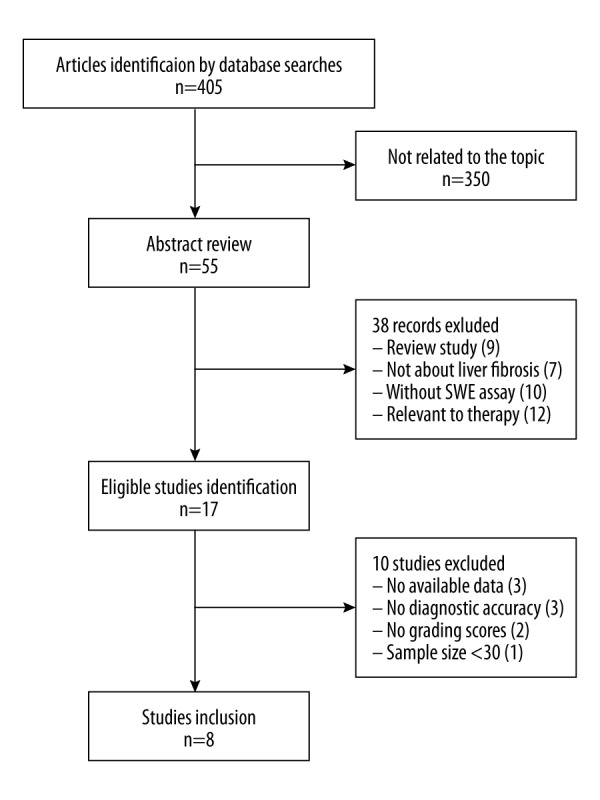
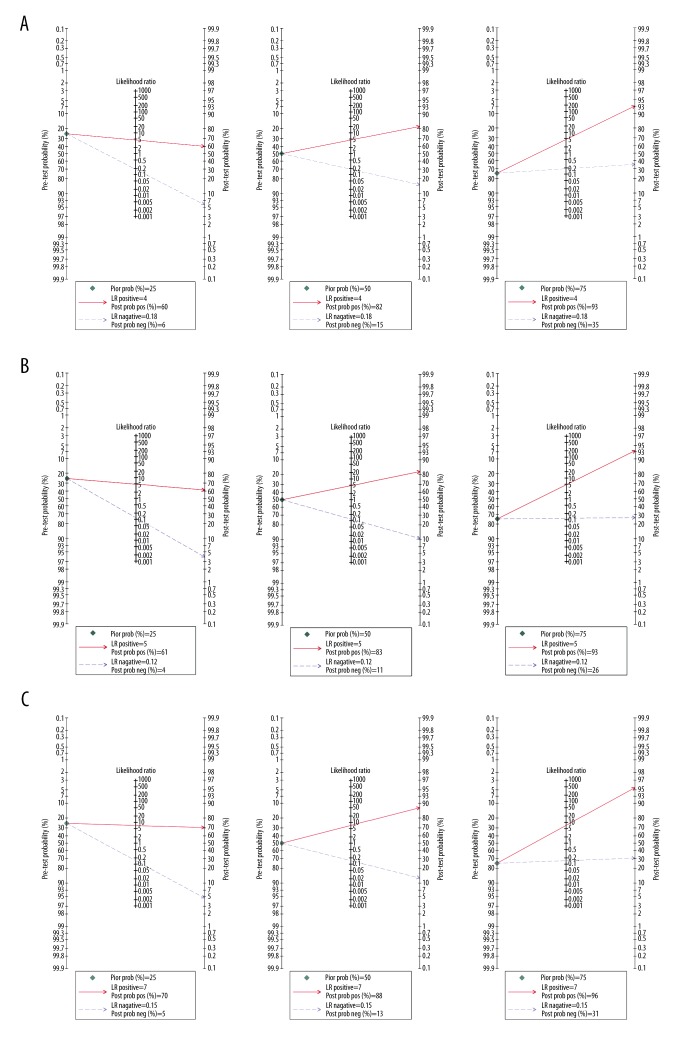
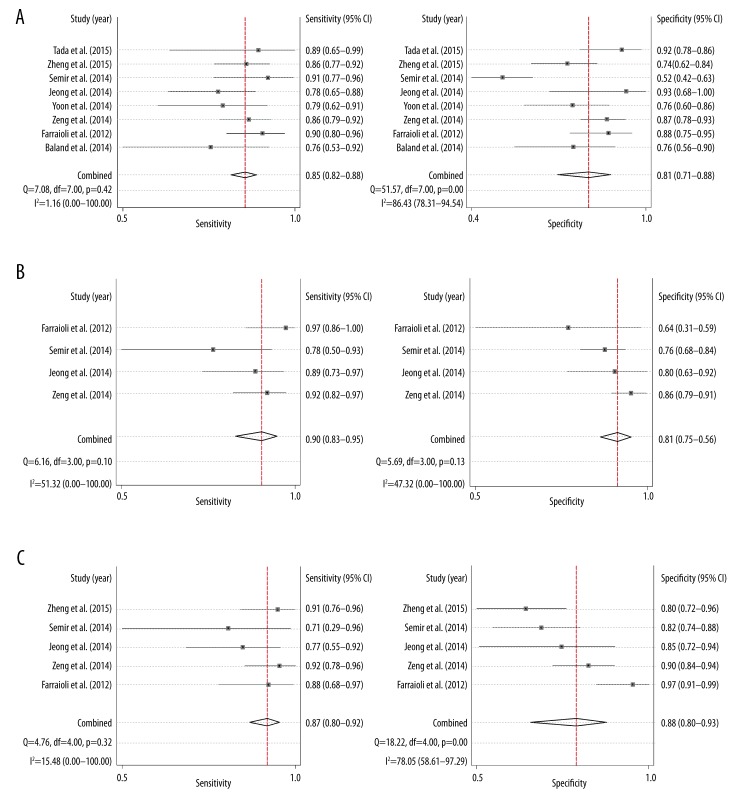
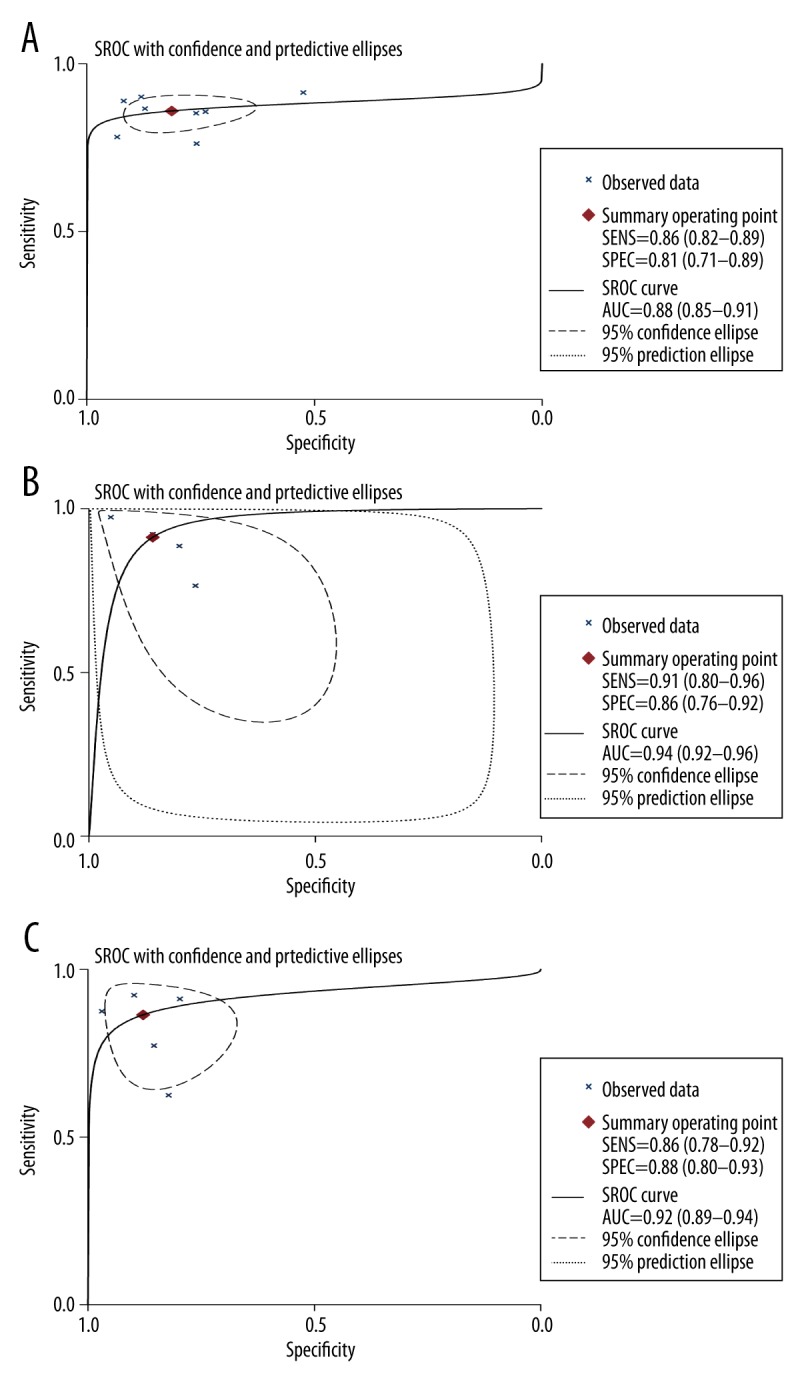
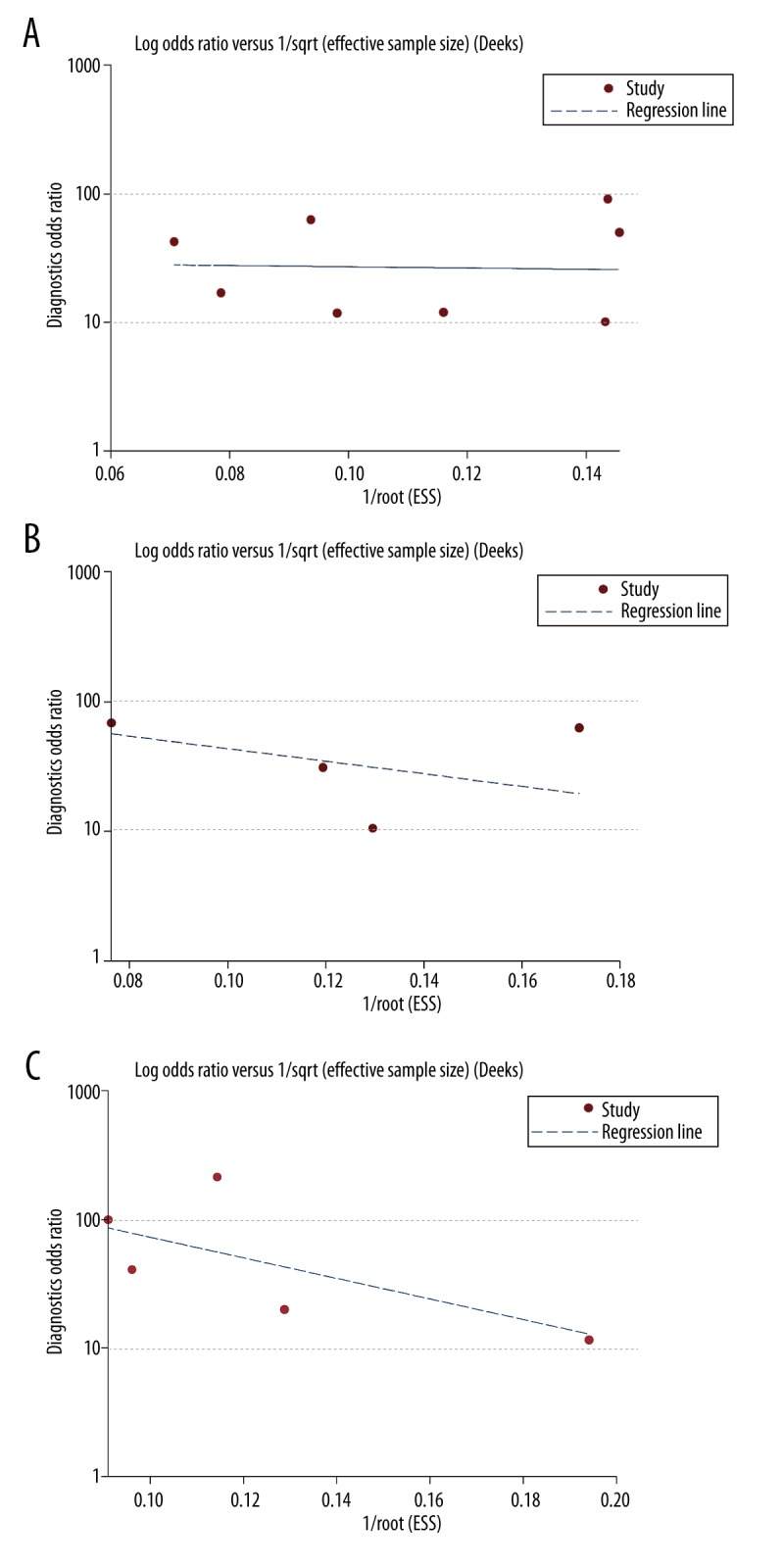
BACKGROUND The present meta-analysis, based on previous studies, was aimed to evaluate the test accuracy of real-time shear wave elastography (SWE) for the staging of liver fibrosis. MATERIAL AND METHODS A systematic search on MEDLINE, PubMed, Embase, and Google Scholar databases was conducted, and data on SWE tests and liver fibrosis staging were collected. For each cut-off stage of fibrosis (F≥2, F≥3, and F≥4), pooled results of sensitivity, specificity, and area under summary receiver operating characteristic (SROC) curve were analyzed. The study heterogeneity was evaluated by χ2 and I2 tests. I2>50% or P≤0.05 indicates there was heterogeneity, and then a random-effects model was applied. Otherwise, the fixed-effects model was used. The publication bias was evaluated using Deeks funnel plots asymmetry test and Fagan plot analysis was performed. RESULTS Finally, 934 patients from 8 published studies were included in the analysis. The pooled sensitivity and specificity of SWE for F≥2 were 85.0% (95% CI, 82-88%) and 81% (95% CI, 71-88%), respectively. The area under the SROC curve with 95% CI was presented as 0.88 (95% CI, 85-91%). The pooled sensitivity and specificity of SWE for F≥3 were 90.0% (95% CI, 83.0-95.0%) and 81.0% (95% CI, 75.0-86.0%), respectively, corresponding to an area of SROC of 0.94 (95% CI, 92-96%). The pooled sensitivity and specificity of SWE for F≥4 were 87.0% (95% CI, 80.0-92.0%) and 88.0% (95% CI, 80.0-93.0%), respectively, corresponding to an area of SROC of 0.92 (95% CI, 89-94%). CONCLUSIONS The overall accuracy of SWE is high and clinically useful for the staging of liver fibrosis. Compared to the results of meta-analyses on other tests, such as RTE, TE, and ARFI, the performance of SWE is nearly identical in accuracy for the evaluation of cirrhosis. For the evaluation of significant liver fibrosis (F≥2), the overall accuracy of SWE seems to be similar to ARFI, but more accurate than RTE and TE.
基于既往研究进行本次荟萃分析,旨在评估实时剪切波弹性成像(SWE)对肝纤维化分期的检测准确性。
对MEDLINE、PubMed、Embase和谷歌学术数据库进行系统检索,收集SWE检测及肝纤维化分期的数据。针对每个纤维化截断分期(F≥2、F≥3和F≥4),分析敏感性、特异性及汇总受试者工作特征(SROC)曲线下面积的合并结果。采用χ2检验和I2检验评估研究异质性。I2>50%或P≤0.05表明存在异质性,此时应用随机效应模型。否则,使用固定效应模型。采用Deeks漏斗图不对称性检验评估发表偏倚,并进行Fagan图分析。
最终,纳入分析的是来自8项已发表研究的934例患者。SWE对F≥2的合并敏感性和特异性分别为85.0%(95%CI,82 - 88%)和81%(95%CI,71 - 88%)。SROC曲线下面积及其95%CI为0.88(95%CI,85 - 91%)。SWE对F≥3的合并敏感性和特异性分别为90.0%(95%CI,83.0 - 95.0%)和81.0%(95%CI,75.0 - 86.0%),对应的SROC面积为0.94(95%CI,92 - 96%)。SWE对F≥4的合并敏感性和特异性分别为87.0%(95%CI,80.0 - 92.0%)和88.0%(95%CI,80.0 - 93.0%),对应的SROC面积为0.92(95%CI,89 - 94%)。
SWE的总体准确性较高,在肝纤维化分期中具有临床应用价值。与其他检测方法(如RTE、TE和ARFI)的荟萃分析结果相比,SWE在评估肝硬化的准确性方面表现相近。对于评估显著肝纤维化(F≥2),SWE的总体准确性似乎与ARFI相似,但比RTE和TE更准确。