Koga Tomohiro, Ichinose Kunihiro, Tsokos George C
Division of Rheumatology, Department of Medicine, Beth Israel Deaconess Medical Center, Harvard Medical School, Boston, MA, USA; Department of Immunology and Rheumatology, Nagasaki University Graduate School of Biomedical Sciences, Nagasaki, Japan.
Division of Rheumatology, Department of Medicine, Beth Israel Deaconess Medical Center, Harvard Medical School, Boston, MA, USA; Department of Immunology and Rheumatology, Nagasaki University Graduate School of Biomedical Sciences, Nagasaki, Japan.
Clin Immunol. 2017 Dec;185:95-99. doi: 10.1016/j.clim.2016.04.010. Epub 2016 Apr 21.
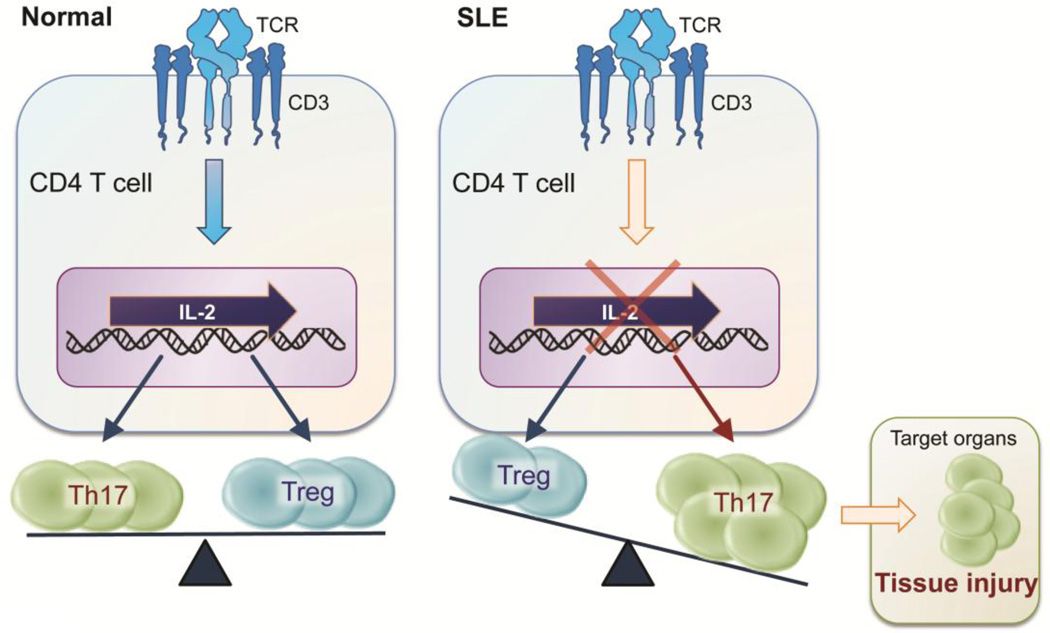
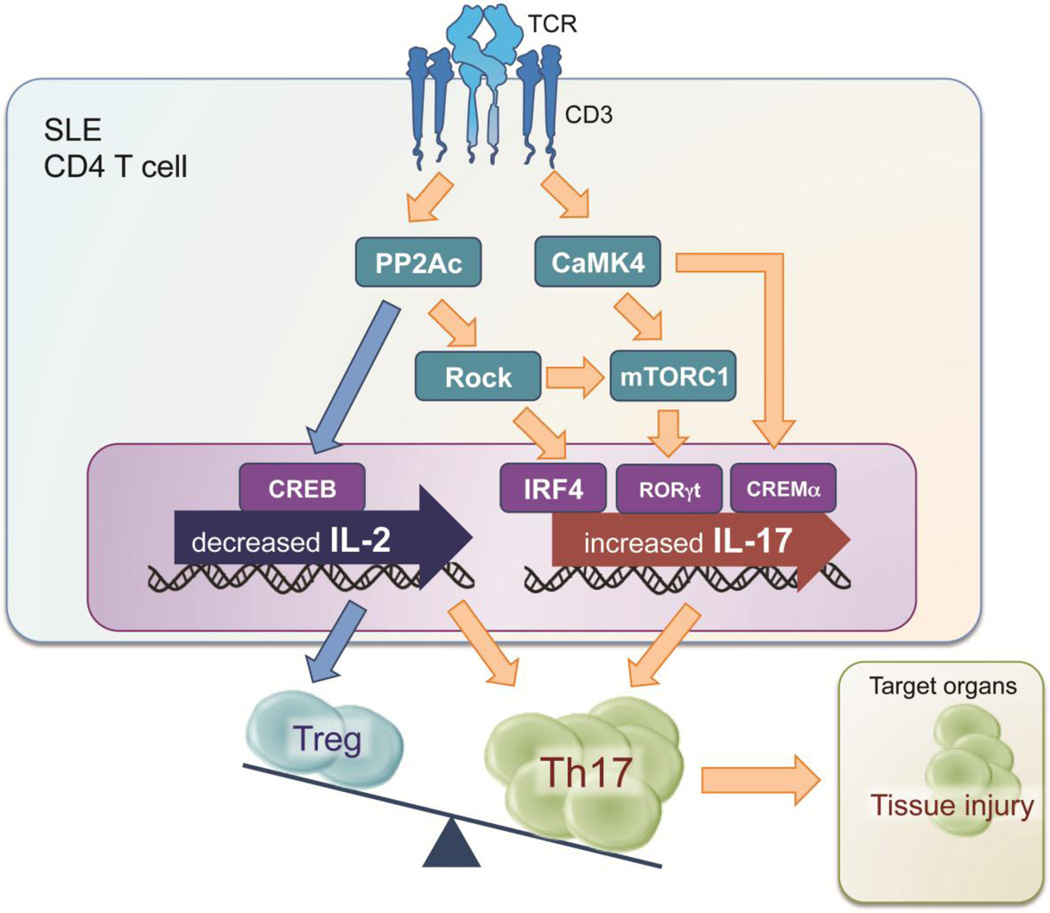
Systemic lupus erythematosus (SLE) is a complicated autoimmune disorder characterized by autoantibodies production, immune complex formation, and immune dysregulation, resulting in damage of multiple organs including the kidney. Lupus nephritis (LN) is the most common severe manifestation of SLE involving the majority of patients. Even though there are a number of reports indicating that interleukin-17 (IL-17) and Th17 cells play important roles in the pathogenesis of LN, the precise molecular mechanisms underline the development of LN have not been totally elucidated. In this review, we briefly summarize general characteristics of T and IL-17 cells in SLE. In addition, we discuss in detail T cell signaling pathways which control IL-17 production in patients with LN and in glomerulonephritis in lupus-prone mice. A better understanding of signaling and gene regulation defects in LN will lead to the identification of novel therapeutic targets and predictive biomarkers for diagnosis and prognosis of this disease.
系统性红斑狼疮(SLE)是一种复杂的自身免疫性疾病,其特征为自身抗体产生、免疫复合物形成和免疫失调,可导致包括肾脏在内的多个器官受损。狼疮性肾炎(LN)是SLE最常见的严重表现,累及大多数患者。尽管有许多报告表明白细胞介素-17(IL-17)和Th17细胞在LN的发病机制中起重要作用,但LN发生发展的确切分子机制尚未完全阐明。在本综述中,我们简要总结了SLE中T细胞和IL-17细胞的一般特征。此外,我们详细讨论了控制LN患者和狼疮易感小鼠肾小球肾炎中IL-17产生的T细胞信号通路。更好地理解LN中的信号传导和基因调控缺陷将有助于识别该疾病诊断和预后的新治疗靶点及预测生物标志物。