Roulois David, Deshayes Sophie, Guilly Marie-Noëlle, Nader Joëlle S, Liddell Charly, Robard Myriam, Hulin Philippe, Ouacher Amal, Le Martelot Vanessa, Fonteneau Jean-François, Grégoire Marc, Blanquart Christophe, Pouliquen Daniel L
CRCNA, Université d'Angers, Université de Nantes, Nantes, France.
INSERM, Université d'Angers, Université de Nantes, Nantes, France.
Oncotarget. 2016 Jun 7;7(23):34664-87. doi: 10.18632/oncotarget.8970.
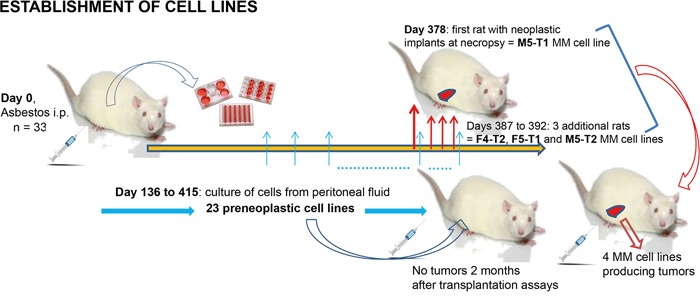
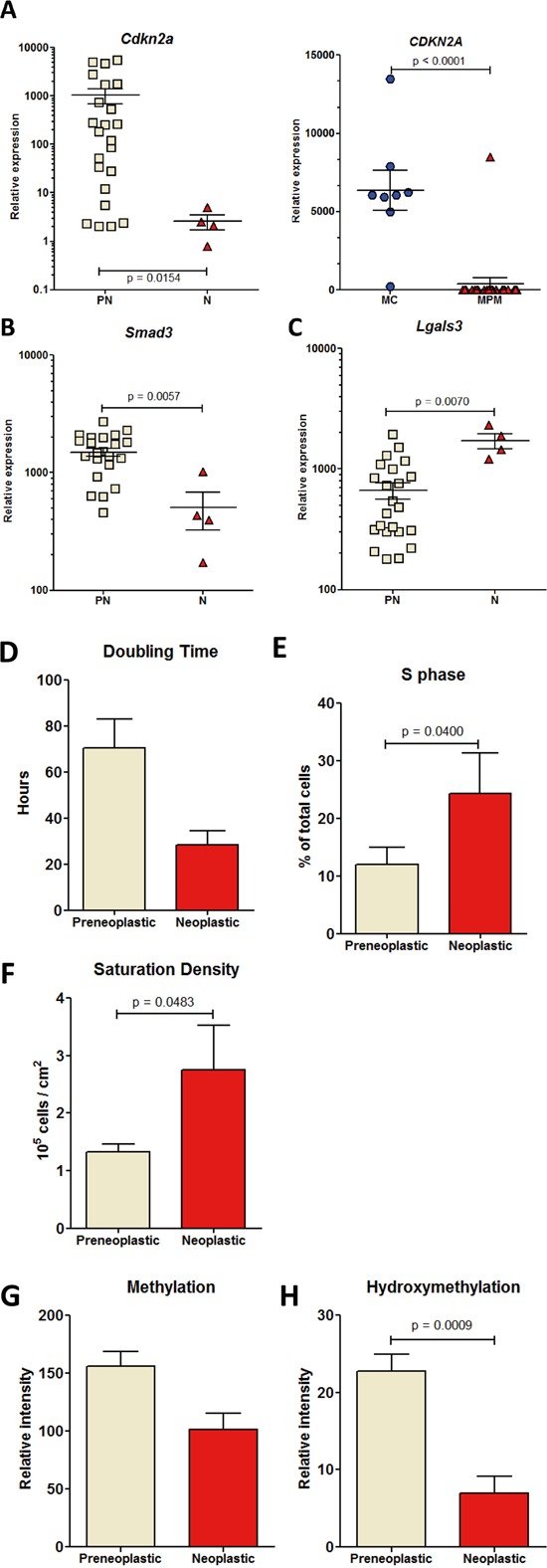
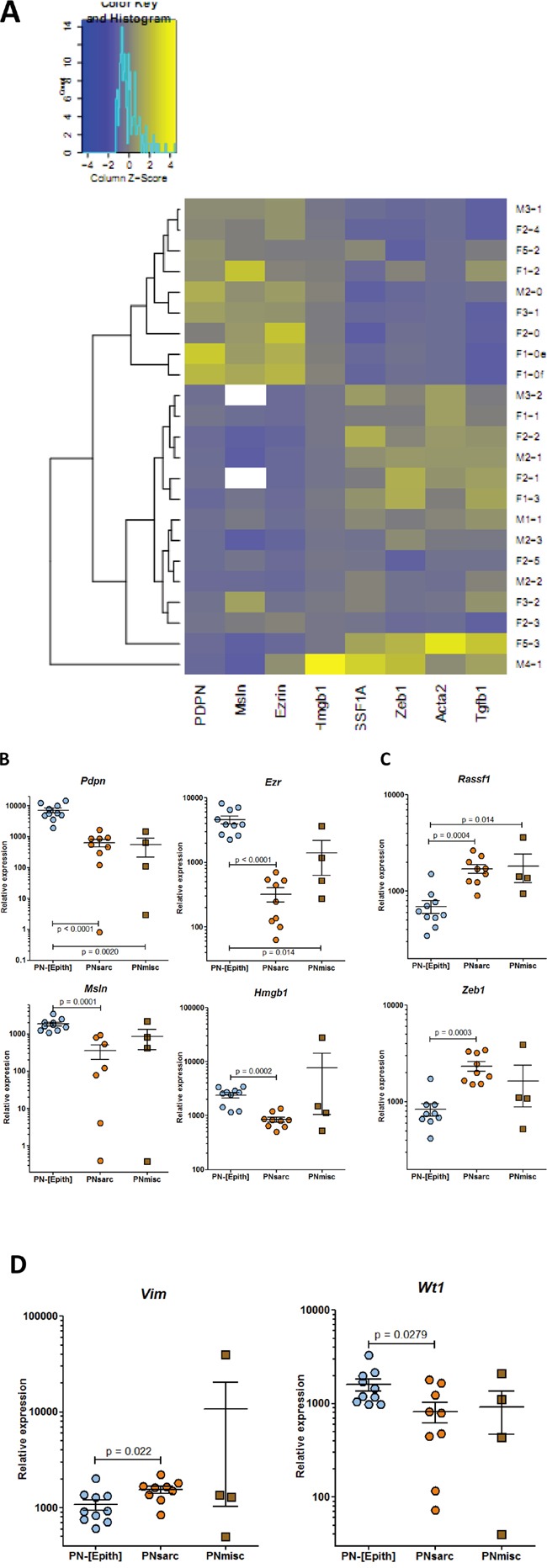
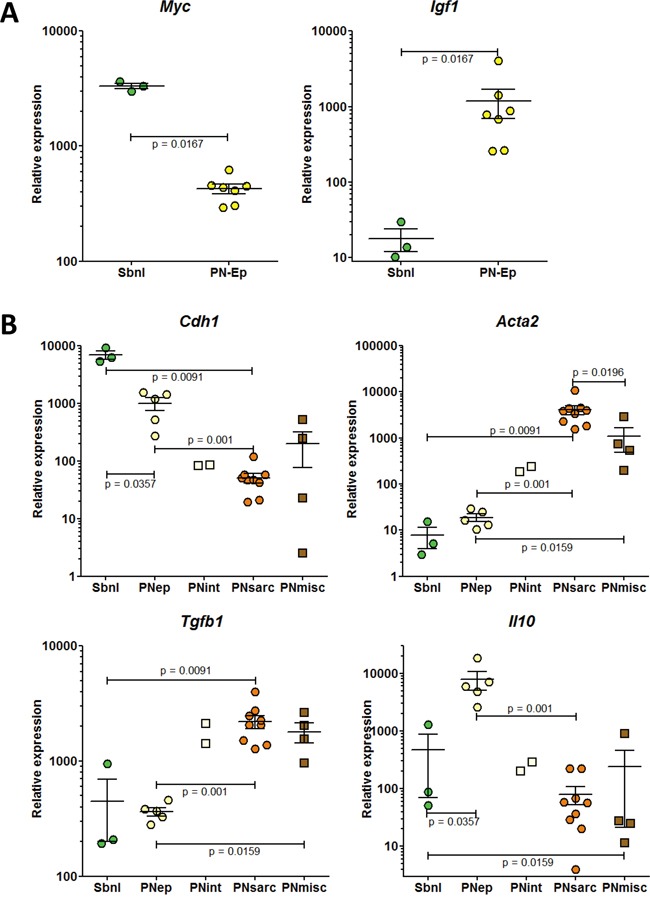
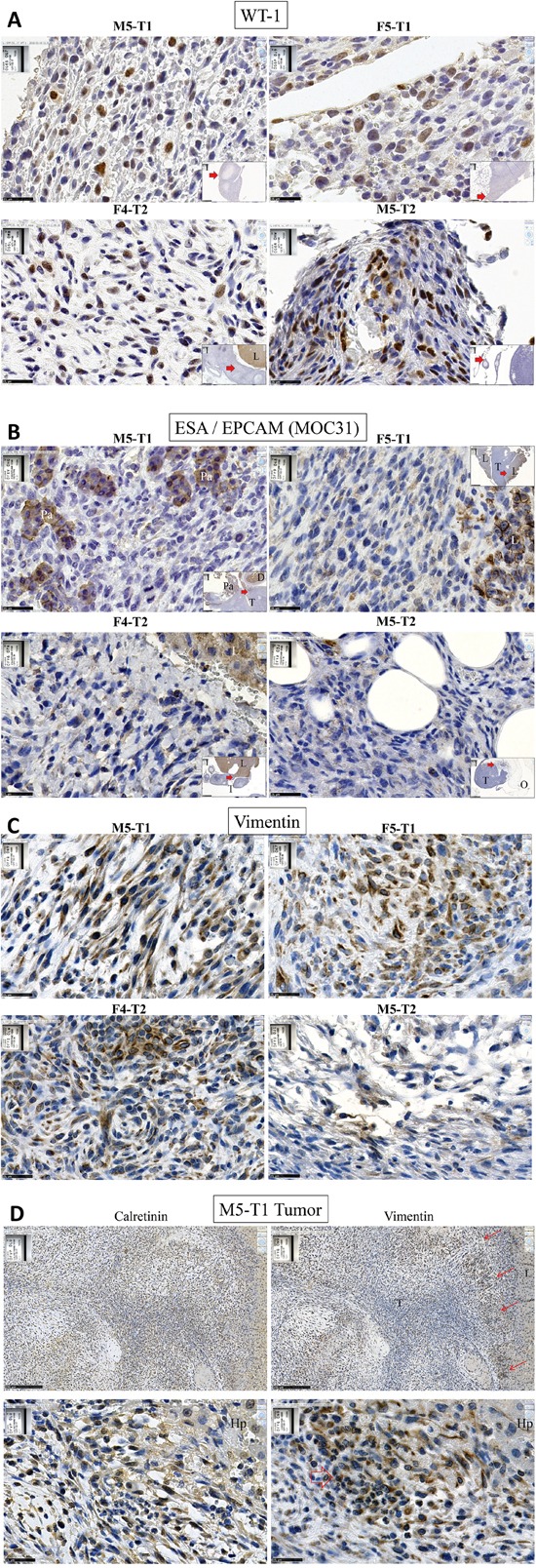
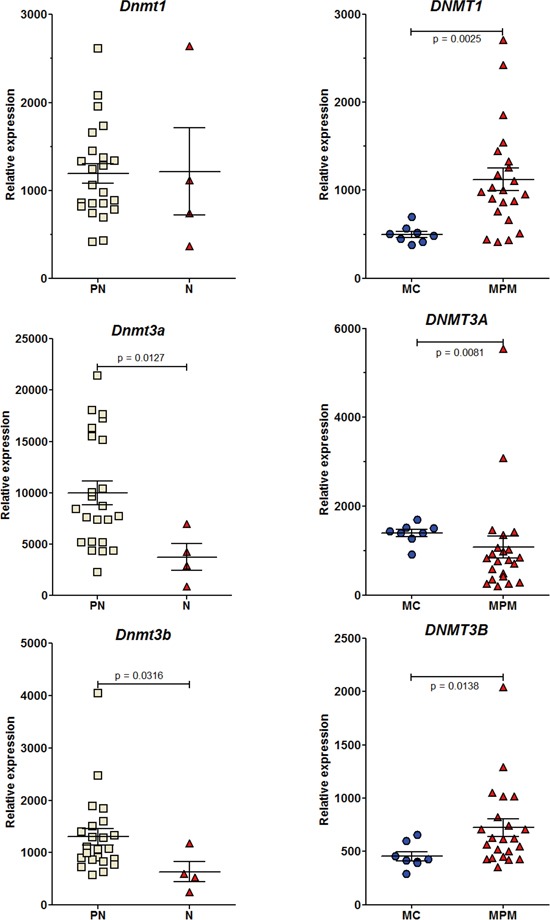
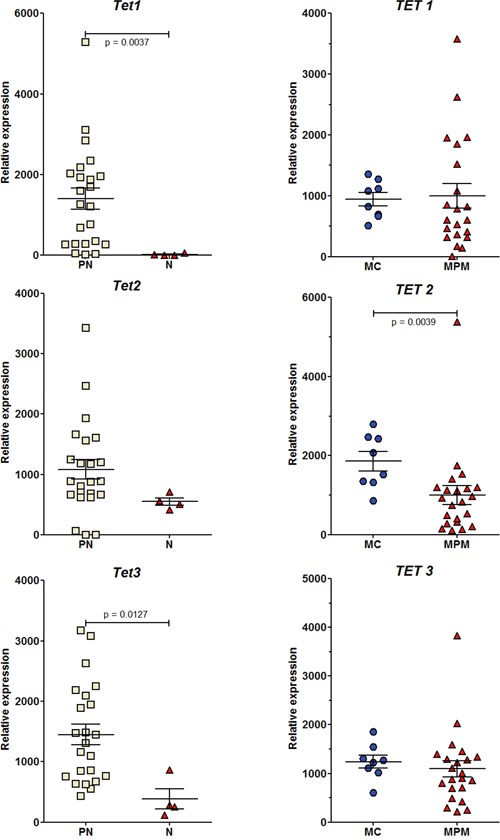
Malignant mesothelioma (MM) is one of the worst cancers in terms of clinical outcome, urging the need to establish and characterize new preclinical tools for investigation of the tumorigenic process, improvement of early diagnosis and evaluation of new therapeutic strategies. For these purposes, we characterized a collection of 27 cell lines established from F344 rats, after 136 to 415 days of induction with crocidolite asbestos administered intraperitoneally. Four mesotheliomas were distinguished from 23 preneoplastic mesothelial cell lines (PN) according to their propensity to generate tumors after orthotopic transplantation into syngeneic rats, their growth pattern, and the expression profile of three genes. PN cell lines were further discriminated into groups / subgroups according to morphology in culture and the expression profiles of 14 additional genes. This approach was completed by analysis of positive and negative immunohistochemical MM markers in the four tumors, of karyotype alterations in the most aggressive MM cell line in comparison with a PN epithelioid cell line, and of human normal mesothelial and mesothelioma cells and a tissue array. Our results showed that both the rat and human MM cell lines shared in common a dramatic decrease in the relative expression of Cdkn2a and of epigenetic regulators, in comparison with PN and normal human mesothelial cells, respectively. In particular, we identified the involvement of the relative expression of the Ten-Eleven Translocation (TET) family of dioxygenases and Dnmt3a in relation to the 5-hydroxymethylcytosine level in malignant transformation and the acquisition of metastatic potential.
恶性间皮瘤(MM)在临床预后方面是最严重的癌症之一,这促使人们需要建立并表征新的临床前工具,用于研究致瘤过程、改善早期诊断以及评估新的治疗策略。出于这些目的,我们对一组从F344大鼠建立的27个细胞系进行了表征,这些细胞系是在腹腔内注射青石棉诱导136至415天后获得的。根据原位移植到同基因大鼠后产生肿瘤的倾向、生长模式以及三个基因的表达谱,从23个肿瘤前间皮细胞系(PN)中区分出了四个间皮瘤。PN细胞系根据培养中的形态以及另外14个基因的表达谱进一步分为不同的组/亚组。通过分析四个肿瘤中MM免疫组化阳性和阴性标志物、将最具侵袭性的MM细胞系与PN上皮样细胞系比较的核型改变,以及人类正常间皮细胞、间皮瘤细胞和组织芯片,完成了该方法。我们的结果表明,与PN细胞系和正常人腹膜间皮细胞相比,大鼠和人类MM细胞系中Cdkn2a和表观遗传调节因子的相对表达均显著降低。特别是,我们确定了双加氧酶的十-十一易位(TET)家族和Dnmt3a的相对表达与恶性转化过程中的5-羟甲基胞嘧啶水平以及转移潜能的获得有关。