Wellcome Sanger Institute, Wellcome Genome Campus, Hinxton, Cambridgeshire, UK.
Cambridge Institute for Medical Research, University of Cambridge, Cambridge, Cambridgeshire, UK.
Thorax. 2021 Nov;76(11):1154-1162. doi: 10.1136/thoraxjnl-2020-216602. Epub 2021 Mar 10.
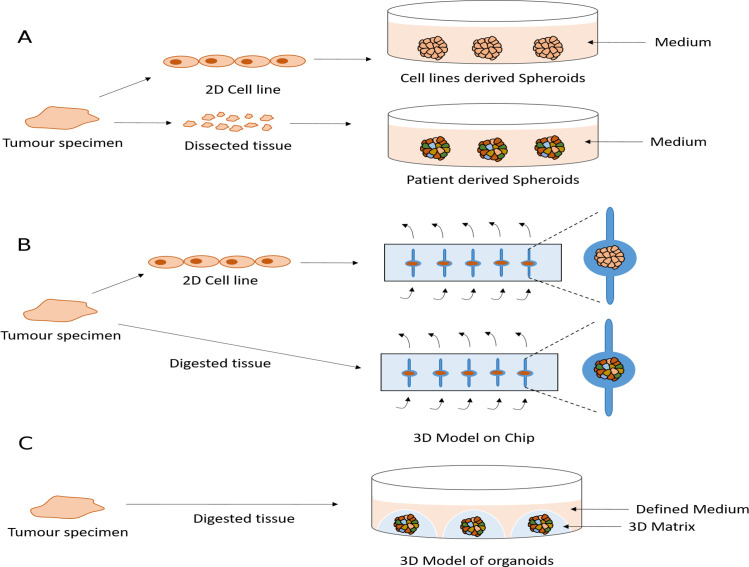
Malignant pleural mesothelioma (MPM) is an aggressive cancer most commonly caused by prior exposure to asbestos. Median survival is 12-18 months, since surgery is ineffective and chemotherapy offers minimal benefit. Preclinical models that faithfully recapitulate the genomic and histopathological features of cancer are critical for the development of new treatments. The most commonly used models of MPM are two-dimensional cell lines established from primary tumours or pleural fluid. While these have provided some important insights into MPM biology, these cell models have significant limitations. In order to address some of these limitations, spheroids and microfluidic chips have more recently been used to investigate the role of the three-dimensional environment in MPM. Efforts have also been made to develop animal models of MPM, including asbestos-induced murine tumour models, MPM-prone genetically modified mice and patient-derived xenografts. Here, we discuss the available in vitro and in vivo models of MPM and highlight their strengths and limitations. We discuss how newer technologies, such as the tumour-derived organoids, might allow us to address the limitations of existing models and aid in the identification of effective treatments for this challenging-to-treat disease.
恶性胸膜间皮瘤(MPM)是一种侵袭性癌症,最常见于先前接触石棉。由于手术无效,化疗益处极小,中位生存期为 12-18 个月。忠实再现癌症基因组和组织病理学特征的临床前模型对于开发新的治疗方法至关重要。最常用于 MPM 的模型是从原发性肿瘤或胸腔积液中建立的二维细胞系。虽然这些模型为 MPM 生物学提供了一些重要的见解,但这些细胞模型存在显著的局限性。为了克服这些局限性,近年来人们已经使用球体和微流控芯片来研究三维环境在 MPM 中的作用。此外,还努力开发 MPM 的动物模型,包括石棉诱导的鼠肿瘤模型、MPM 易感基因修饰小鼠和患者来源的异种移植物。在这里,我们讨论了现有的 MPM 体外和体内模型,并强调了它们的优缺点。我们讨论了新技术,如肿瘤衍生的类器官,如何使我们能够克服现有模型的局限性,并有助于确定针对这种难以治疗疾病的有效治疗方法。