Xue Hai-Yan, Yuan Li, Cao Ying-Jie, Fan Ya-Ping, Chen Xiao-Lan, Huang Xin-Zhong
Department of Nephrology, Affiliated Hospital of Nantong University, Nantong, Jiangsu 226001, China.
Department of Nephrology, Affiliated Hospital of Nantong University, Nantong, Jiangsu 226001, China
Biosci Rep. 2016 Jun 3;36(3). doi: 10.1042/BSR20160035. Print 2016 Jul.
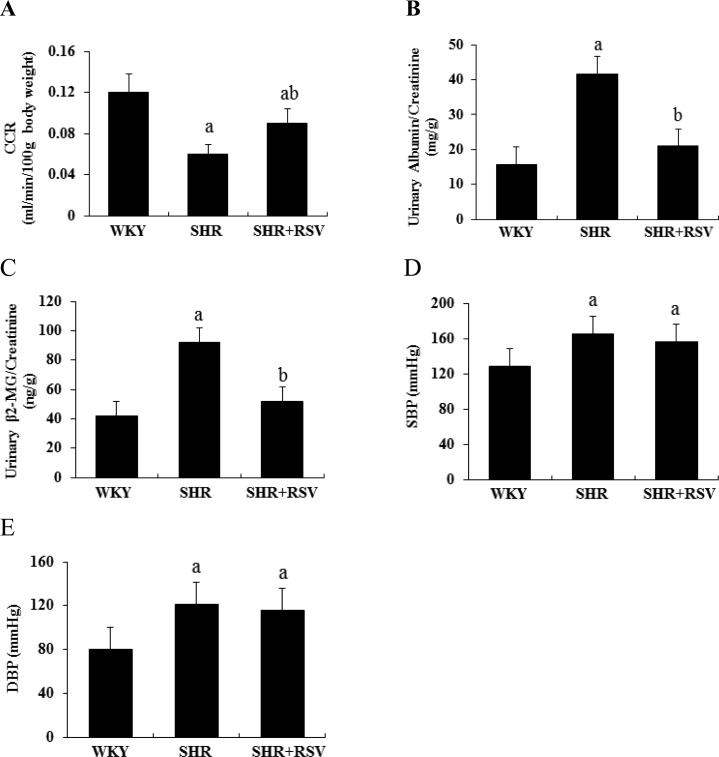
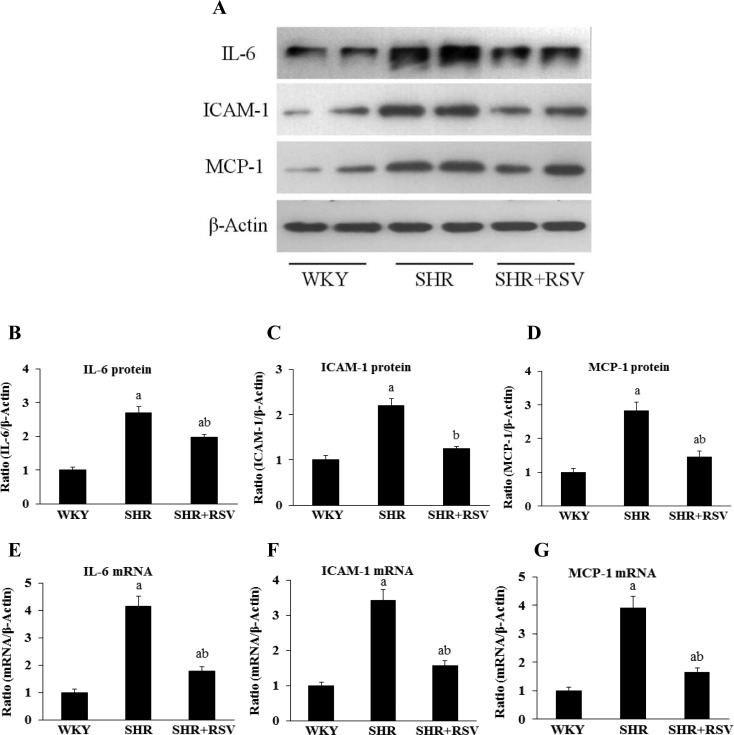
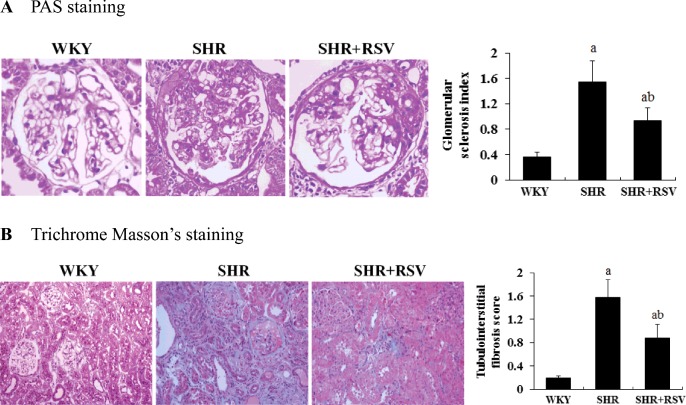
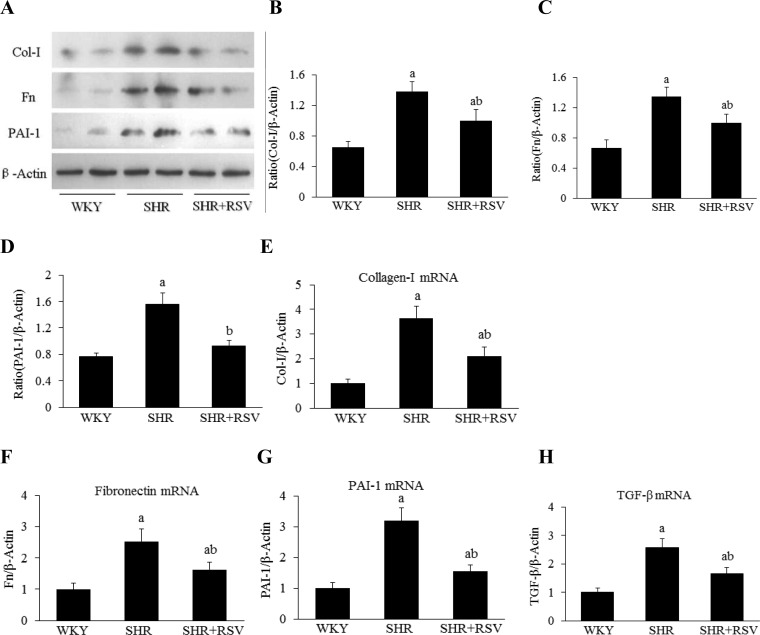
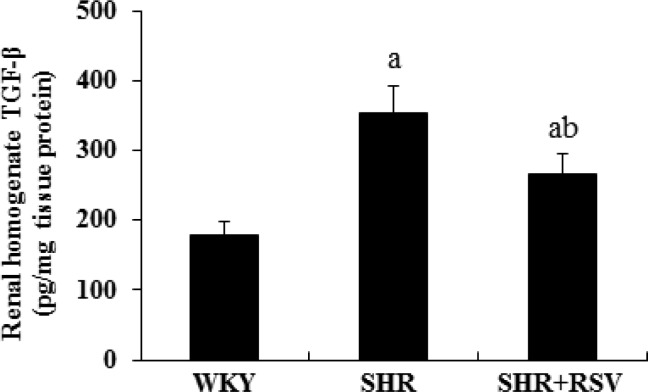
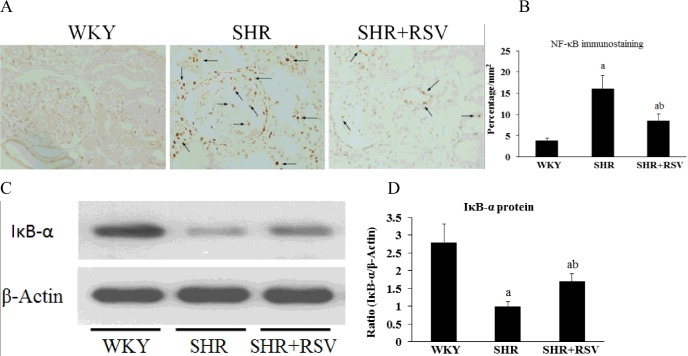
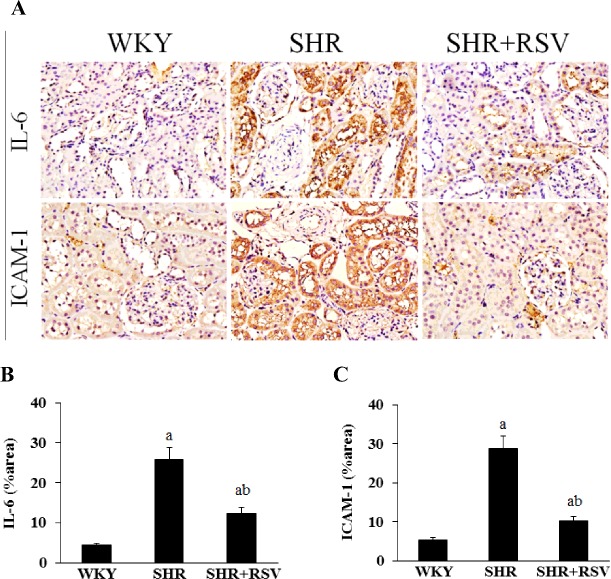
Micro-inflammation plays an important role in the pathogenesis of spontaneously hypertensive rat (SHR). In the present study, we investigated the therapeutic potential of resveratrol (RSV), a polyphenol with anti-fibrosis activity in hypertensive renal damage model. In SHR renal damage model, RSV treatment blunted the increase in urine albumin excretion, urinary β2-microglobulin (β2-MG), attenuated the decrease in creatinine clearance rate (CCR). The glomerular sclerosis index (1.54±0.33 compared with 0.36±0.07) and tubulointerstitial fibrosis (1.57±0.31 compared with 0.19±0.04) were significantly higher in SHRs compared with Wistar Kyoto rats (WKYs), which were significantly lower by RSV treatment. The increases in mesangium accumulation and the expression of renal collagen type I (Col I), fibronectin (Fn), plasminogen activator inhibitor-1 (PAI-1) and transforming growth factor-β1 (TGF-β1) in SHR were also reduced by RSV treatment. Nuclear factor κB (NF-κB) expression was increased in the cytoplasm and nuclei of the SHR kidneys, which was significantly decreased by RSV treatment. Furthermore, the protein level of IκB-α significantly decreased in the kidneys of the SHR when compared with the WKYs. RSV treatment partially restored the decreased IκB-α level. In SHR kidney, increased expression of interleukin-6 (IL-6), intercellular adhesion molecule-1 (ICAM-1) and monocyte chemoattractant protein 1 (MCP-1) were observed. These changes were attenuated by RSV treatment. No changes in blood pressure were detected between SHR group and SHR + RSV group. Taken together, the present study demonstrated that RSV treatment may significantly attenuate renal damage in the SHR model of chronic kidney disease (CKD). The renal protective effect is associated with inhibition of IL-6, ICAM-1 and MCP-1 expression via the regulation of the nuclear translocation of NF-κB, which suggesting that micro-inflammation may be a potential therapeutic target of hypertensive renal damage.
微炎症在自发性高血压大鼠(SHR)的发病机制中起重要作用。在本研究中,我们调查了白藜芦醇(RSV)的治疗潜力,RSV是一种在高血压肾损伤模型中具有抗纤维化活性的多酚。在SHR肾损伤模型中,RSV治疗抑制了尿白蛋白排泄、尿β2-微球蛋白(β2-MG)的增加,减轻了肌酐清除率(CCR)的降低。与Wistar Kyoto大鼠(WKY)相比,SHR的肾小球硬化指数(1.54±0.33比0.36±0.07)和肾小管间质纤维化(1.57±0.31比0.19±0.04)显著更高,而RSV治疗使其显著降低。RSV治疗还减少了SHR中系膜积聚以及肾I型胶原(Col I)、纤连蛋白(Fn)、纤溶酶原激活物抑制剂-1(PAI-1)和转化生长因子-β1(TGF-β1)表达的增加。核因子κB(NF-κB)在SHR肾脏的细胞质和细胞核中表达增加,而RSV治疗使其显著降低。此外,与WKY相比,SHR肾脏中IκB-α的蛋白水平显著降低。RSV治疗部分恢复了降低的IκB-α水平。在SHR肾脏中,观察到白细胞介素-6(IL-)、细胞间黏附分子-1(ICAM-1)和单核细胞趋化蛋白1(MCP-1)表达增加。这些变化被RSV治疗减弱。SHR组和SHR + RSV组之间未检测到血压变化。综上所述,本研究表明RSV治疗可能显著减轻慢性肾脏病(CKD)的SHR模型中的肾损伤。肾脏保护作用与通过调节NF-κB的核转位抑制IL-6、ICAM-1和MCP-1表达有关,这表明微炎症可能是高血压肾损伤的潜在治疗靶点。