Stumpf Miriam, Blokzijl-Franke Sasja, den Hertog Jeroen
Hubrecht Institute-Koninklijke Nederlandse Akademie van Wetenschappen (KNAW) and University Medical Center Utrecht, Utrecht, The Netherlands.
Institute of Biology Leiden, Leiden University, Leiden, The Netherlands.
PLoS One. 2016 May 3;11(5):e0154771. doi: 10.1371/journal.pone.0154771. eCollection 2016.
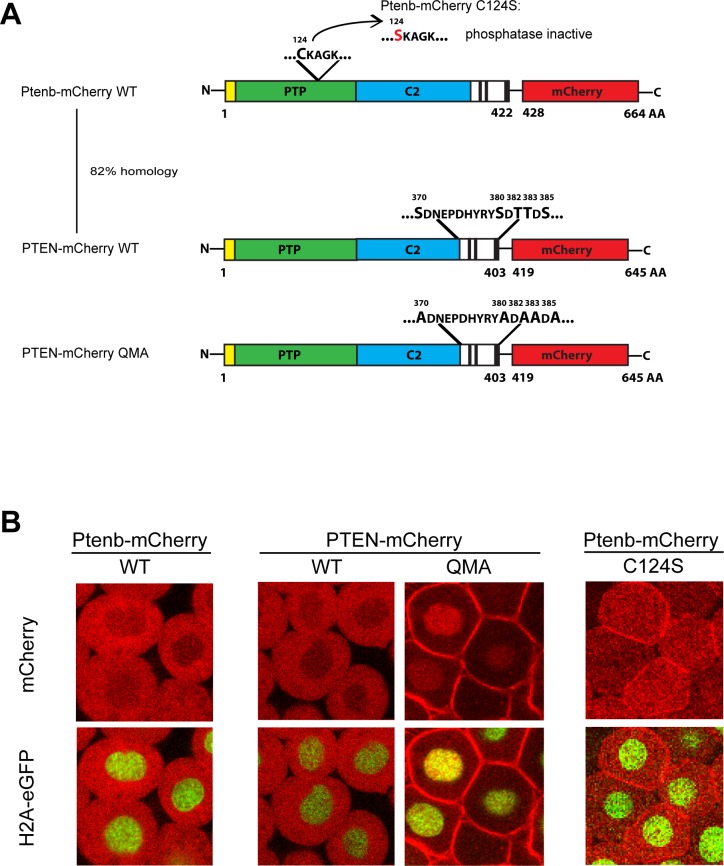
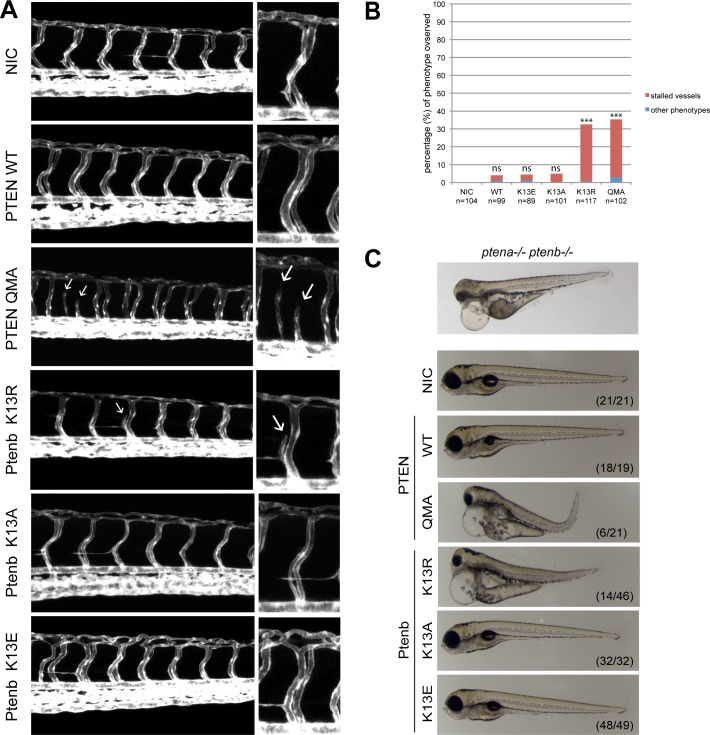
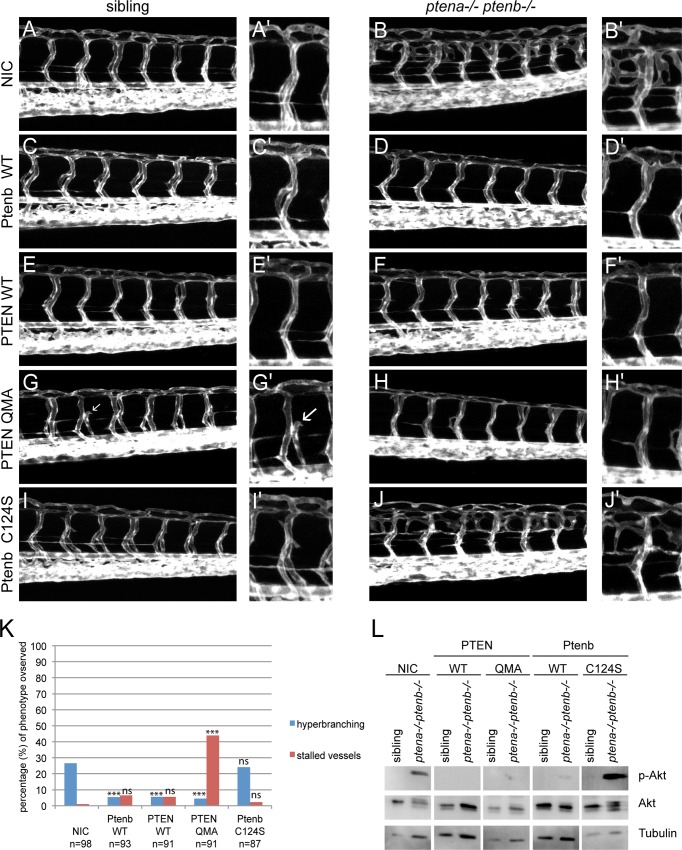
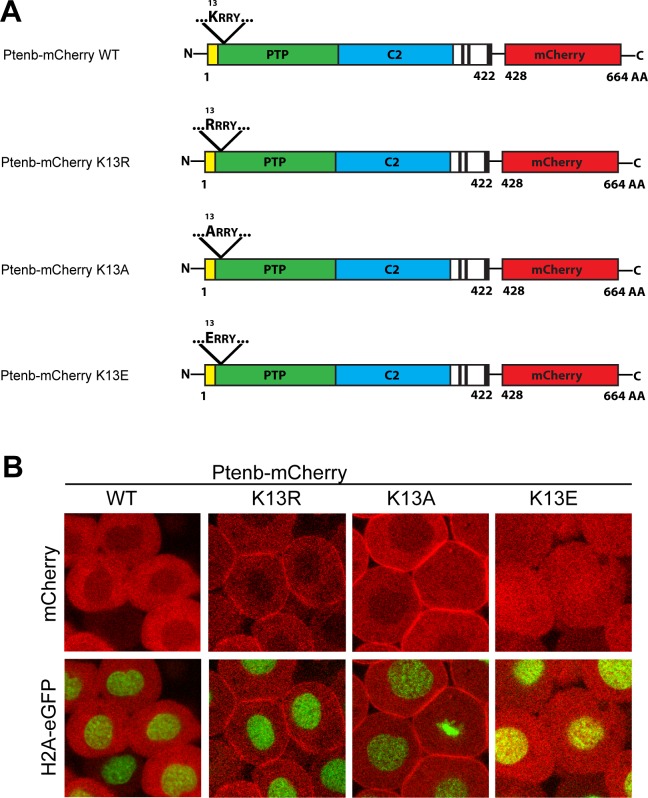
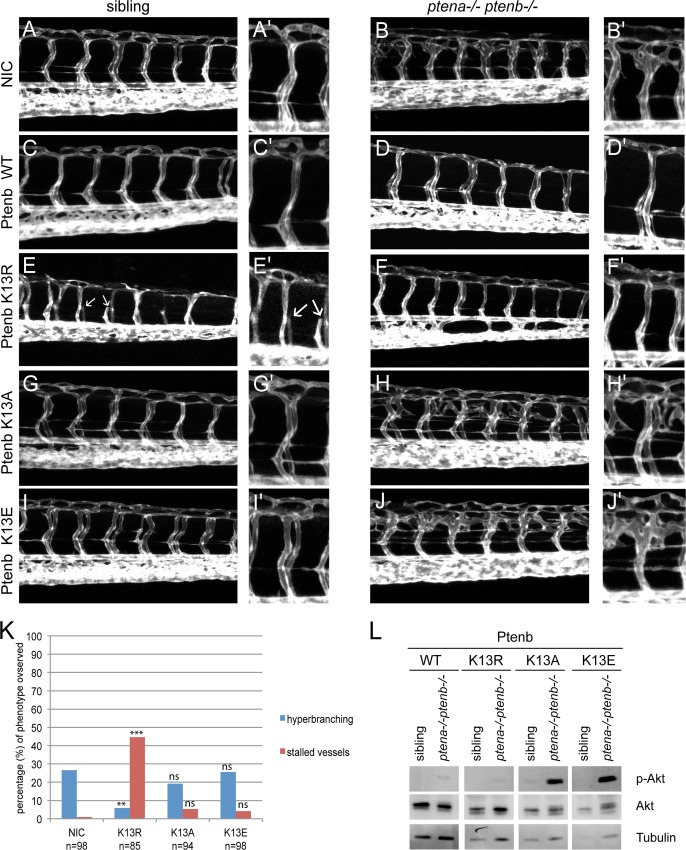
The lipid- and protein phosphatase PTEN is an essential tumor suppressor that is highly conserved among all higher eukaryotes. As an antagonist of the PI3K/Akt cell survival and proliferation pathway, it exerts its most prominent function at the cell membrane, but (PIP3-independent) functions of nuclear PTEN have been discovered as well. PTEN subcellular localization is tightly controlled by its protein conformation. In the closed conformation, PTEN localizes predominantly to the cytoplasm. Opening up of the conformation of PTEN exposes N-terminal and C-terminal regions of the protein that are required for both interaction with the cell membrane and translocation to the nucleus. Lack of Pten leads to hyperbranching of the intersegmental vessels during zebrafish embryogenesis, which is rescued by expression of exogenous Pten. Here, we observed that expression of mutant PTEN with an open conformation rescued the hyperbranching phenotype in pten double homozygous embryos and suppressed the increased p-Akt levels that are characteristic for embryos lacking Pten. In addition, in pten mutant and wild type embryos alike, open conformation PTEN induced stalled intersegmental vessels, which fail to connect with the dorsal longitudinal anastomotic vessel. Functional hyperactivity of open conformation PTEN in comparison to wild type PTEN seems to result predominantly from its enhanced recruitment to the cell membrane. Enhanced recruitment of phosphatase inactive mutants to the membrane did not induce the stalled vessel phenotype nor did it rescue the hyperbranching phenotype in pten double homozygous embryos, indicating that PTEN phosphatase activity is indispensable for its regulatory function during angiogenesis. Taken together, our data suggest that PTEN phosphatase activity needs to be carefully fine-tuned for normal embryogenesis and that the control of its subcellular localization is a key mechanism in this process.
脂质和蛋白质磷酸酶PTEN是一种重要的肿瘤抑制因子,在所有高等真核生物中高度保守。作为PI3K/Akt细胞存活和增殖途径的拮抗剂,它在细胞膜上发挥其最突出的功能,但核PTEN的(不依赖磷脂酰肌醇-3,4,5-三磷酸的)功能也已被发现。PTEN的亚细胞定位受其蛋白质构象的严格控制。在闭合构象中,PTEN主要定位于细胞质。PTEN构象的开放暴露出蛋白质的N端和C端区域,这两个区域对于与细胞膜相互作用和转运到细胞核都是必需的。缺乏Pten会导致斑马鱼胚胎发育过程中节间血管的过度分支,而外源性Pten的表达可以挽救这一现象。在这里,我们观察到具有开放构象的突变型PTEN的表达挽救了pten双纯合胚胎中的过度分支表型,并抑制了缺乏Pten的胚胎所特有的p-Akt水平的升高。此外,在pten突变体和野生型胚胎中,开放构象的PTEN都会诱导节间血管停滞,这些血管无法与背侧纵向吻合血管相连。与野生型PTEN相比,开放构象PTEN的功能亢进似乎主要是由于其向细胞膜的募集增强。将磷酸酶无活性的突变体增强募集到细胞膜上既不会诱导血管停滞表型,也不会挽救pten双纯合胚胎中的过度分支表型,这表明PTEN磷酸酶活性对于其在血管生成过程中的调节功能是不可或缺的。综上所述,我们的数据表明,PTEN磷酸酶活性需要仔细微调以实现正常胚胎发育,并且其亚细胞定位的控制是这一过程中的关键机制。