Wang Shuai, Bai Ge, Wang Shu, Yang Leiyun, Yang Fen, Wang Yi, Zhu Jian-Kang, Hua Jian
College of Plant Science, Jilin University, Changchun, P.R. China.
School of Integrated Plant Science, Plant Biology Section, Cornell University, Ithaca, New York, United States of America.
PLoS Genet. 2016 May 3;12(5):e1006027. doi: 10.1371/journal.pgen.1006027. eCollection 2016 May.
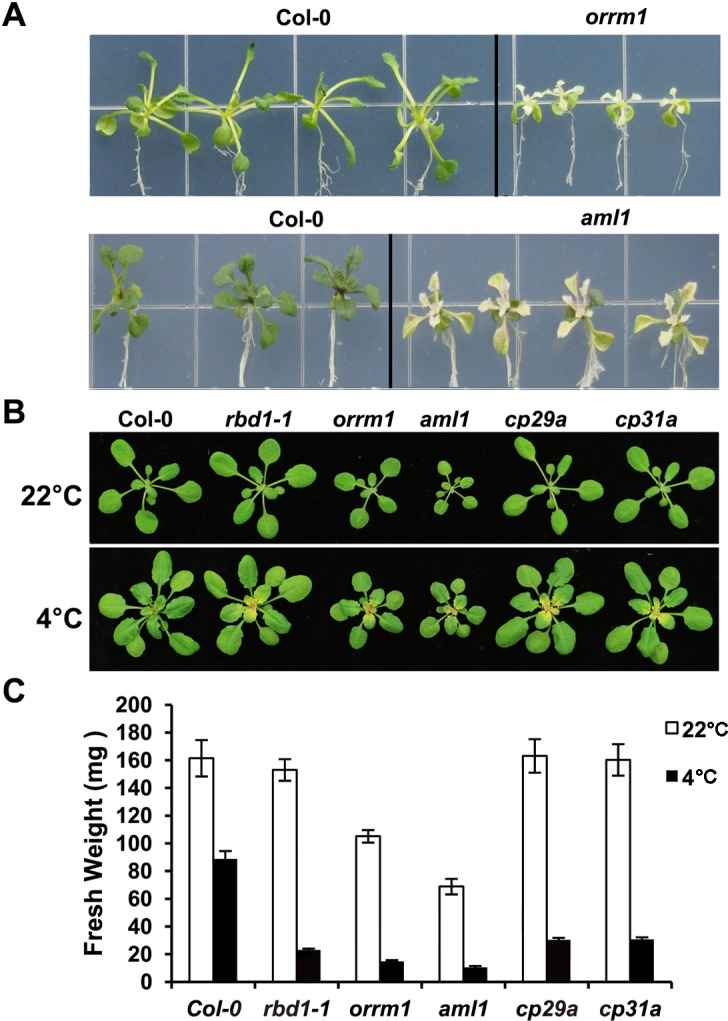
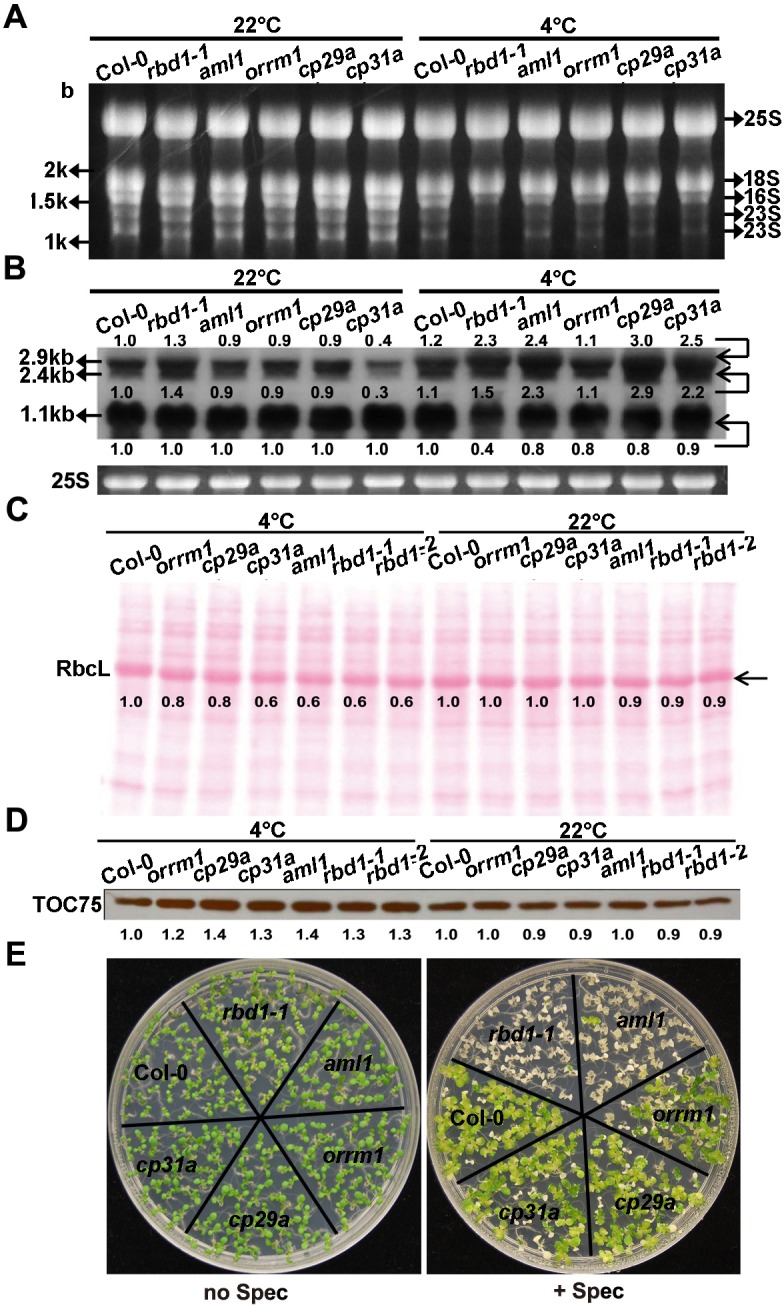
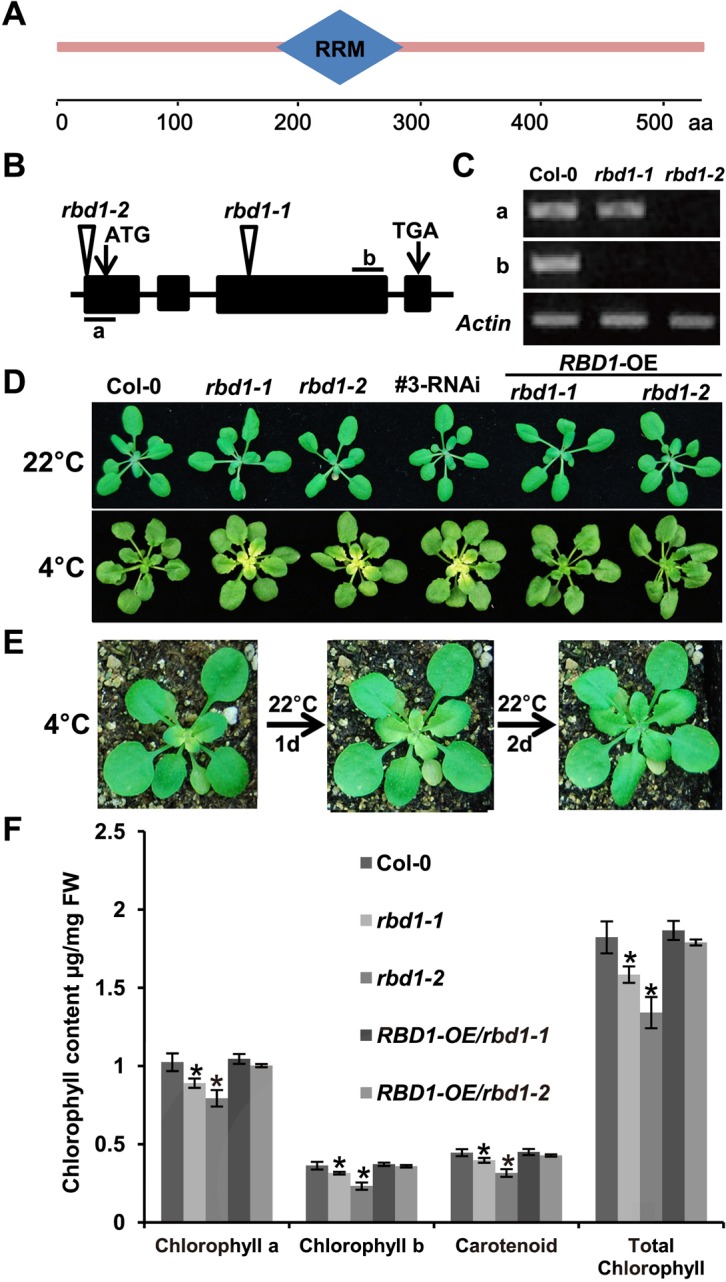
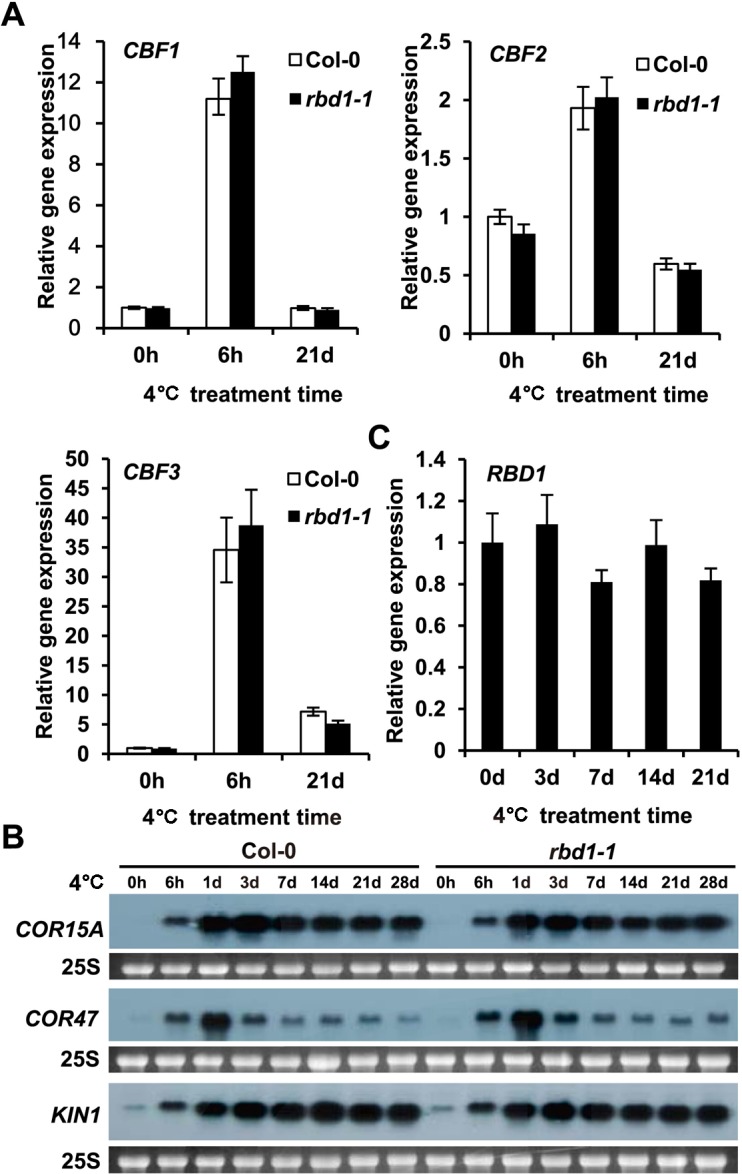
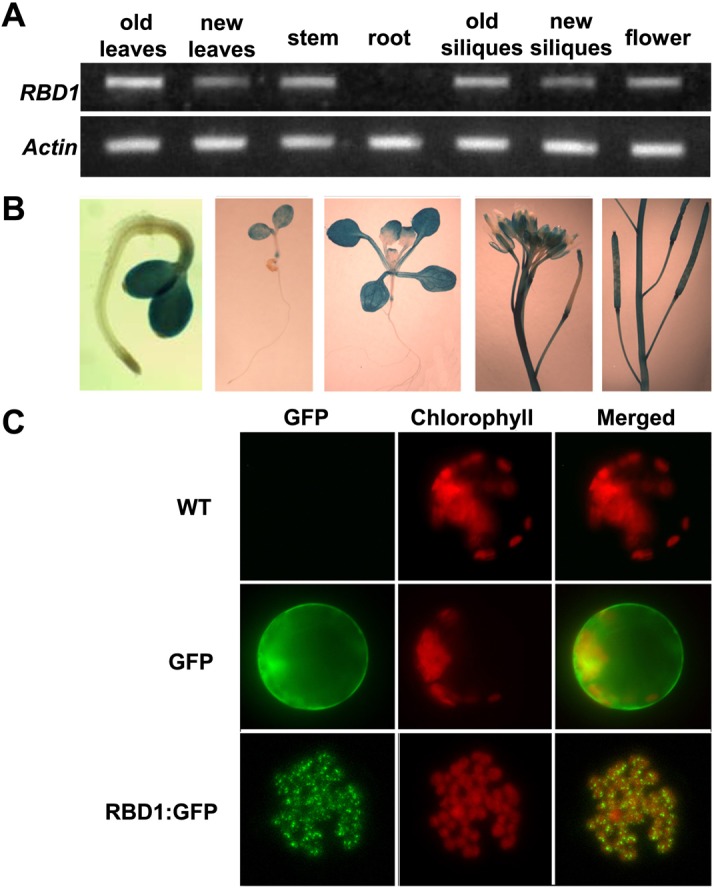
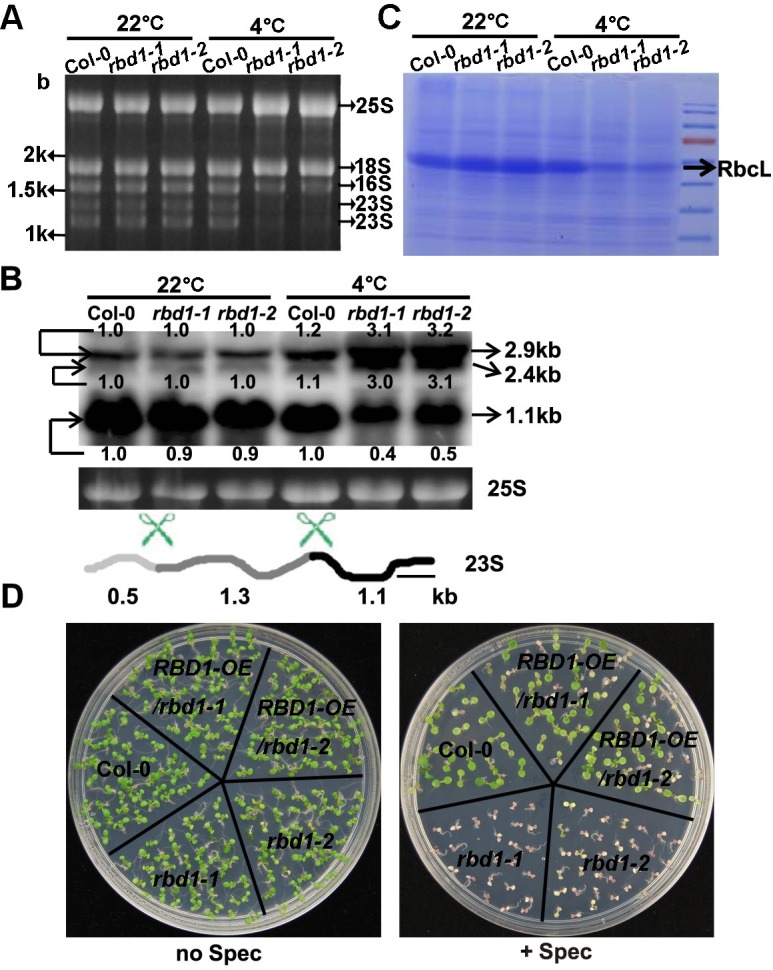
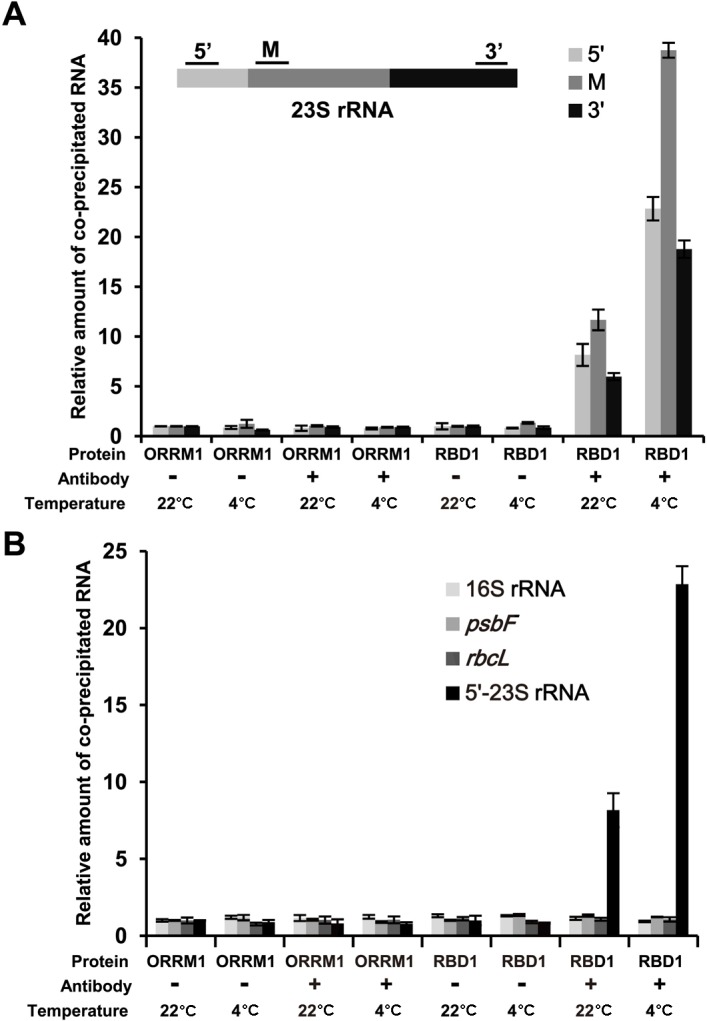
Plants have varying abilities to tolerate chilling (low but not freezing temperatures), and it is largely unknown how plants such as Arabidopsis thaliana achieve chilling tolerance. Here, we describe a genome-wide screen for genes important for chilling tolerance by their putative knockout mutants in Arabidopsis thaliana. Out of 11,000 T-DNA insertion mutant lines representing half of the genome, 54 lines associated with disruption of 49 genes had a drastic chilling sensitive phenotype. Sixteen of these genes encode proteins with chloroplast localization, suggesting a critical role of chloroplast function in chilling tolerance. Study of one of these proteins RBD1 with an RNA binding domain further reveals the importance of chloroplast translation in chilling tolerance. RBD1 is expressed in the green tissues and is localized in the chloroplast nucleoid. It binds directly to 23S rRNA and the binding is stronger under chilling than at normal growth temperatures. The rbd1 mutants are defective in generating mature 23S rRNAs and deficient in chloroplast protein synthesis especially under chilling conditions. Together, our study identifies RBD1 as a regulator of 23S rRNA processing and reveals the importance of chloroplast function especially protein translation in chilling tolerance.
植物耐受冷害(低温但不结冰)的能力各不相同,而拟南芥等植物如何实现冷害耐受性在很大程度上尚不清楚。在这里,我们通过拟南芥假定的基因敲除突变体对冷害耐受性重要基因进行了全基因组筛选。在代表基因组一半的11000个T-DNA插入突变体株系中,54个与49个基因破坏相关的株系具有严重的冷害敏感表型。其中16个基因编码具有叶绿体定位的蛋白质,表明叶绿体功能在冷害耐受性中起关键作用。对其中一种具有RNA结合结构域的蛋白质RBD1的研究进一步揭示了叶绿体翻译在冷害耐受性中的重要性。RBD1在绿色组织中表达,定位于叶绿体类核。它直接与23S rRNA结合,且在冷害条件下的结合比正常生长温度下更强。rbd1突变体在产生成熟的23S rRNA方面存在缺陷,尤其是在冷害条件下叶绿体蛋白质合成不足。总之,我们的研究确定RBD1是23S rRNA加工的调节因子,并揭示了叶绿体功能尤其是蛋白质翻译在冷害耐受性中的重要性。