
通过基因组尺度代谢模型理解心血管疾病中内皮代谢变异的原因及影响。
Understanding the Causes and Implications of Endothelial Metabolic Variation in Cardiovascular Disease through Genome-Scale Metabolic Modeling.
作者信息
McGarrity Sarah, Halldórsson Haraldur, Palsson Sirus, Johansson Pär I, Rolfsson Óttar
机构信息
Center for Systems Biology, University of Iceland , Reykjavik , Iceland.
Department of Pharmacology and Toxicology, School of Health Sciences, University of Iceland , Reykjavik , Iceland.
出版信息
Front Cardiovasc Med. 2016 Apr 18;3:10. doi: 10.3389/fcvm.2016.00010. eCollection 2016.
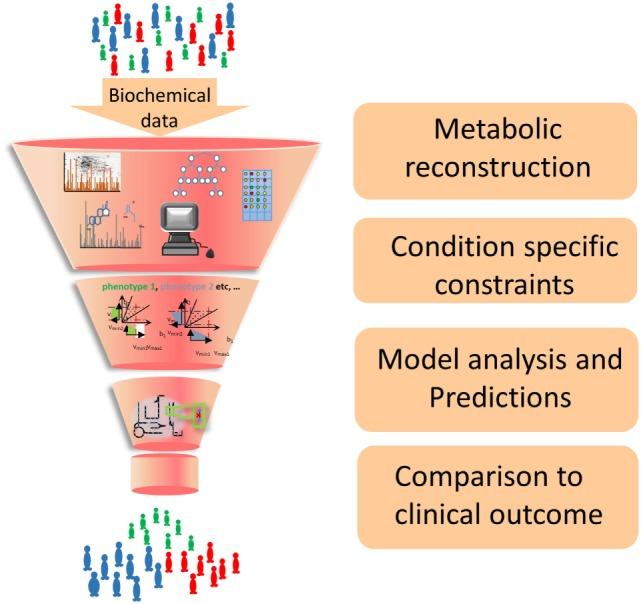
High-throughput biochemical profiling has led to a requirement for advanced data interpretation techniques capable of integrating the analysis of gene, protein, and metabolic profiles to shed light on genotype-phenotype relationships. Herein, we consider the current state of knowledge of endothelial cell (EC) metabolism and its connections to cardiovascular disease (CVD) and explore the use of genome-scale metabolic models (GEMs) for integrating metabolic and genomic data. GEMs combine gene expression and metabolic data acting as frameworks for their analysis and, ultimately, afford mechanistic understanding of how genetic variation impacts metabolism. We demonstrate how GEMs can be used to investigate CVD-related genetic variation, drug resistance mechanisms, and novel metabolic pathways in ECs. The application of GEMs in personalized medicine is also highlighted. Particularly, we focus on the potential of GEMs to identify metabolic biomarkers of endothelial dysfunction and to discover methods of stratifying treatments for CVDs based on individual genetic markers. Recent advances in systems biology methodology, and how these methodologies can be applied to understand EC metabolism in both health and disease, are thus highlighted.
高通量生化分析使得人们需要先进的数据解释技术,这些技术能够整合基因、蛋白质和代谢谱分析,以阐明基因型与表型的关系。在此,我们考虑内皮细胞(EC)代谢的当前知识状态及其与心血管疾病(CVD)的联系,并探索使用基因组规模代谢模型(GEMs)来整合代谢和基因组数据。GEMs将基因表达和代谢数据结合起来,作为分析的框架,并最终提供对遗传变异如何影响代谢的机制理解。我们展示了GEMs如何用于研究EC中与CVD相关的遗传变异、耐药机制和新的代谢途径。还强调了GEMs在个性化医学中的应用。特别是,我们关注GEMs识别内皮功能障碍代谢生物标志物以及发现基于个体遗传标记对CVD进行分层治疗方法的潜力。因此,突出了系统生物学方法的最新进展,以及这些方法如何应用于理解健康和疾病状态下的EC代谢。

 Zotero 插件