Granjeiro Érica Maria, da Silva Glauber S F, Giusti Humberto, Oliveira José Antonio, Glass Mogens Lesner, Garcia-Cairasco Norberto
Physiology Department, Ribeirão Preto School of Medicine, University of São Paulo, 14049-900, Ribeirão Preto, SP, Brazil.
PLoS One. 2016 May 5;11(5):e0154141. doi: 10.1371/journal.pone.0154141. eCollection 2016.
We investigated the behavioral, respiratory, and thermoregulatory responses elicited by acute exposure to both hypercapnic and hypoxic environments in Wistar audiogenic rats (WARs). The WAR strain represents a genetic animal model of epilepsy.
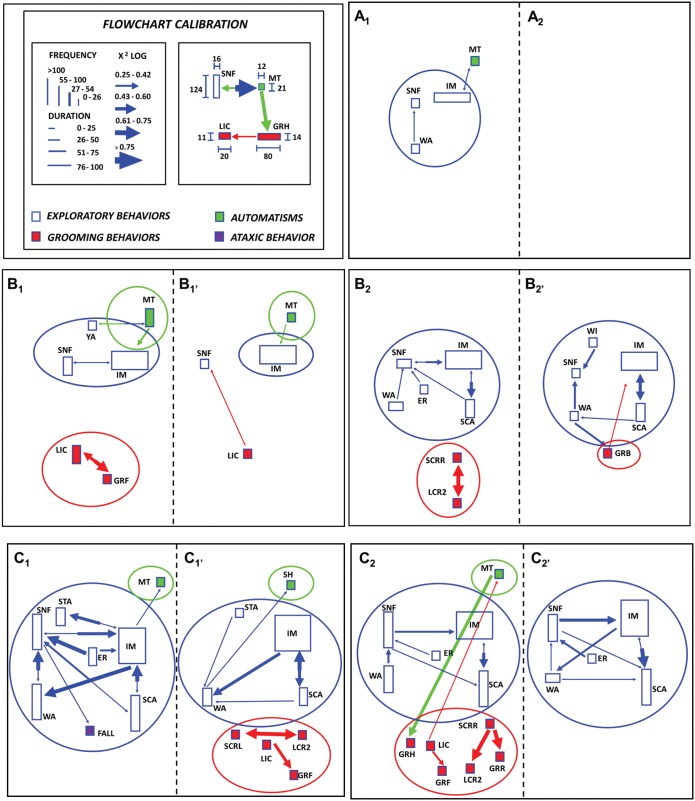
Behavioral analyses were performed using neuroethological methods, and flowcharts were constructed to illustrate behavioral findings. The body plethysmography method was used to obtain pulmonary ventilation (VE) measurements, and body temperature (Tb) measurements were taken via temperature sensors implanted in the abdominal cavities of the animals.
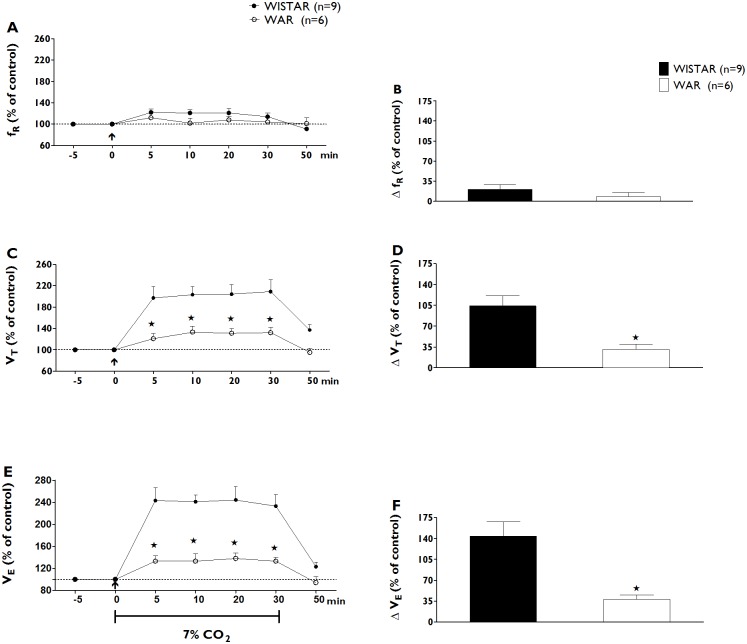
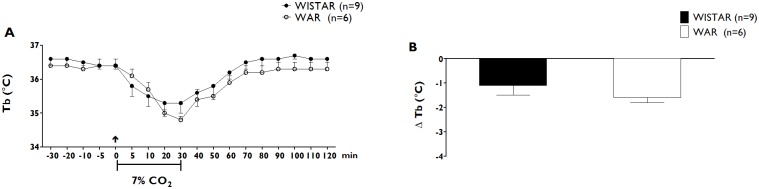
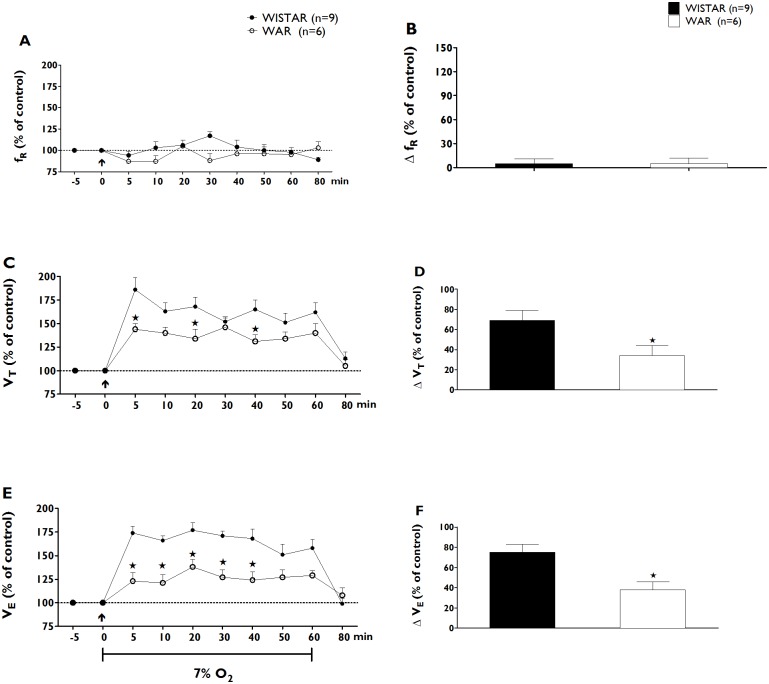
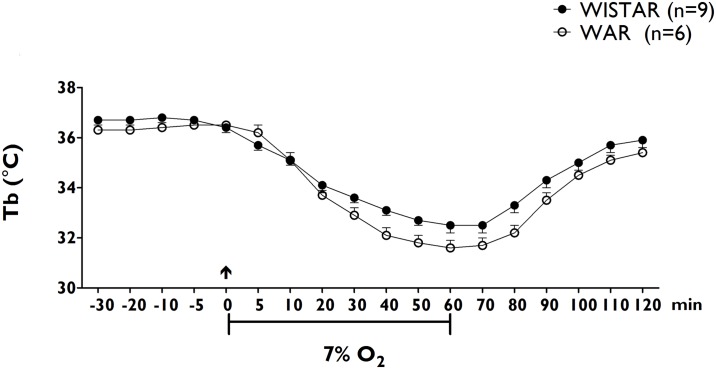
No significant difference was observed between the WAR and Wistar control group with respect to the thermoregulatory response elicited by exposure to both acute hypercapnia and acute hypoxia (p>0.05). However, we found that the VE of WARs was attenuated relative to that of Wistar control animals during exposure to both hypercapnic (WAR: 133 ± 11% vs. Wistar: 243 ± 23%, p<0.01) and hypoxic conditions (WAR: 138 ± 8% vs. Wistar: 177 ± 8%; p<0.01). In addition, we noted that this ventilatory attenuation was followed by alterations in the behavioral responses of these animals.
Our results indicate that WARs, a genetic model of epilepsy, have important alterations in their ability to compensate for changes in levels of various arterial blood gasses. WARs present an attenuated ventilatory response to an increased PaCO2 or decreased PaO2, coupled to behavioral changes, which make them a suitable model to further study respiratory risks associated to epilepsy.
我们研究了急性暴露于高碳酸血症和低氧环境下,Wistar听源性大鼠(WARs)所引发的行为、呼吸和体温调节反应。WAR品系代表了一种癫痫的遗传动物模型。
使用神经行为学方法进行行为分析,并构建流程图以说明行为学研究结果。采用体容积描记法获取肺通气(VE)测量值,并通过植入动物腹腔的温度传感器测量体温(Tb)。
在急性高碳酸血症和急性低氧暴露所引发的体温调节反应方面,WAR组和Wistar对照组之间未观察到显著差异(p>0.05)。然而,我们发现,在高碳酸血症(WAR:133±11% vs. Wistar:243±23%,p<0.01)和低氧条件下(WAR:138±8% vs. Wistar:177±8%;p<0.01),WARs的VE相对于Wistar对照动物有所减弱。此外,我们注意到这种通气减弱伴随着这些动物行为反应的改变。
我们的结果表明,作为癫痫遗传模型的WARs在补偿各种动脉血气水平变化的能力方面存在重要改变。WARs对升高的PaCO2或降低的PaO2呈现出减弱的通气反应,并伴有行为变化,这使其成为进一步研究与癫痫相关的呼吸风险的合适模型。