Sun Jiayi, Manmathan Harish, Sun Cheng, Peebles Christie A M
Chemical and Biological Engineering Department, Colorado State University, Campus delivery 1370, Fort Collins, 80523, USA.
Soil and Crop Sciences Department, Colorado State University, Campus deliver 1170, Fort Collins, Colorado, 80523, USA.
BMC Plant Biol. 2016 May 6;16(1):108. doi: 10.1186/s12870-016-0794-4.
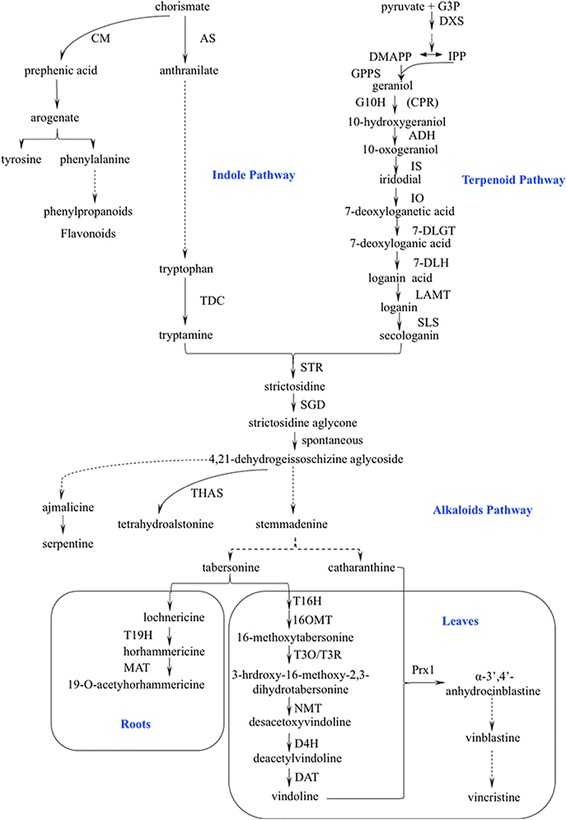
Clinically important anti-cancer drugs vinblastine and vincristine are solely synthesized by the terpenoid indole alkaloid (TIA) pathway in Catharanthus roseus. Anthranilate synthase (AS) is a rate-limiting enzyme in the TIA pathway. The transgenic C. roseus hairy root line overexpressing a feedback insensitive ASα subunit under the control of an inducible promoter and the ASβ subunit constitutively was previously created for the overproduction of TIAs. However, both increases and decreases in TIAs were detected after overexpressing ASα. Although genetic modification is targeted to one gene in the TIA pathway, it could trigger global transcriptional changes that can directly or indirectly affect TIA biosynthesis. In this study, Illumina sequencing and RT-qPCR were used to detect the transcriptional responses to overexpressing AS, which can increase understanding of the complex regulation of the TIA pathway and further inspire rational metabolic engineering for enhanced TIA production in C. roseus hairy roots.
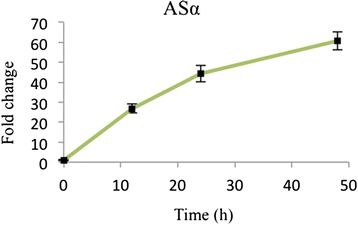
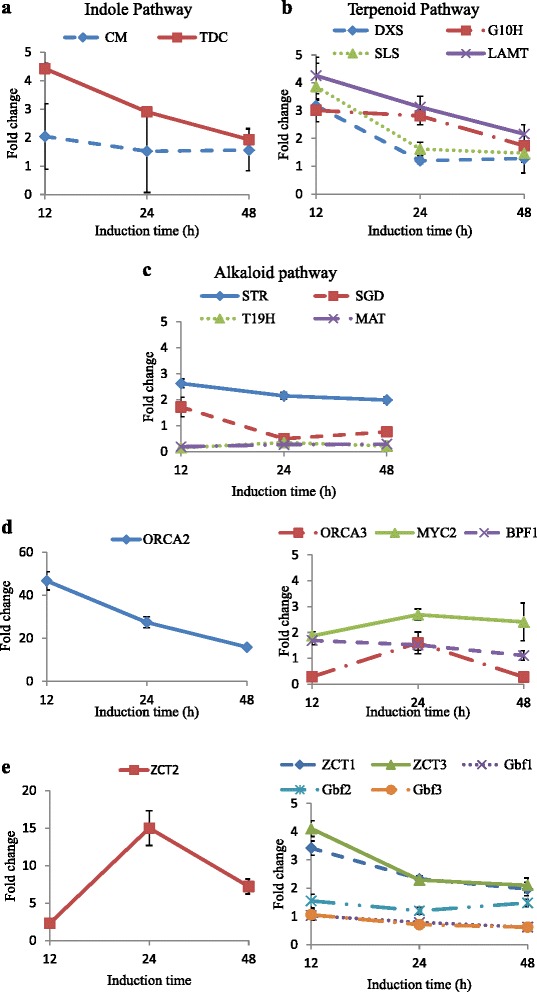
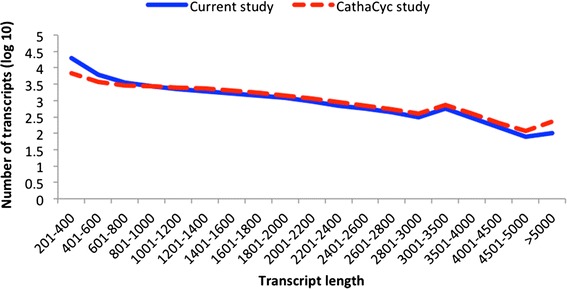
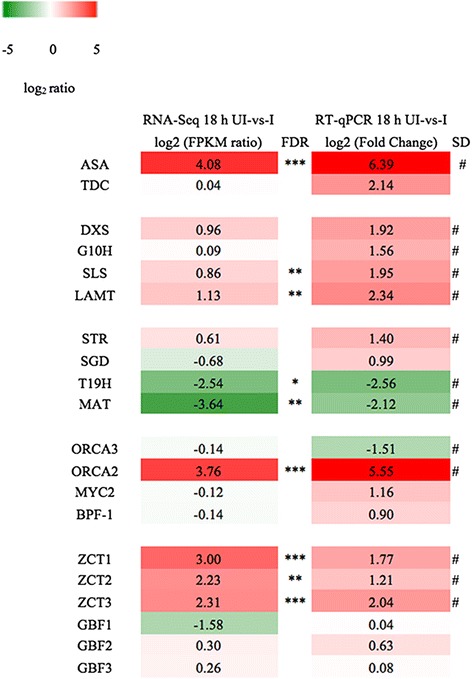
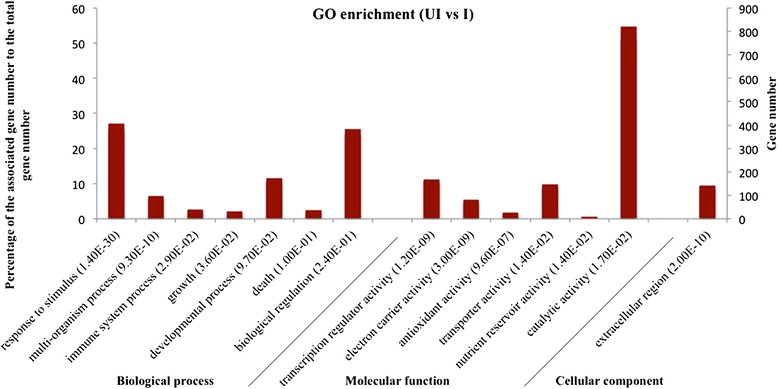
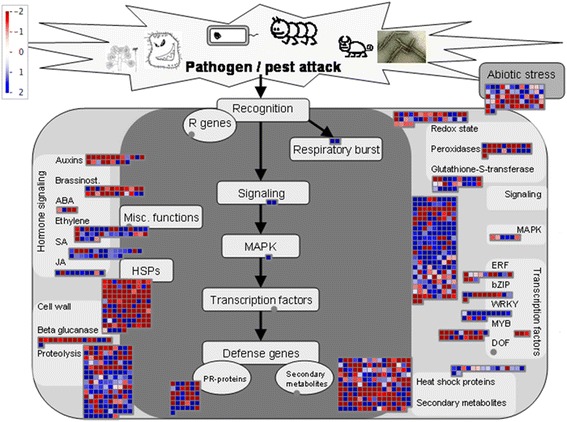
Overexpressing AS in C. roseus hairy roots altered the transcription of most known TIA pathway genes and regulators after 12, 24, and 48 h induction detected by RT-qPCR. Changes in the transcriptome of C. roseus hairy roots was further investigated 18 hours after ASα induction and compared to the control hairy roots using RNA-seq. A unigene set of 30,281 was obtained by de novo assembly of the sequencing reads. Comparison of the differentially expressed transcriptional profiles resulted in 2853 differentially expressed transcripts. Functional annotation of these transcripts revealed a complex and systematically transcriptome change in ASαβ hairy roots. Pathway analysis shows alterations in many pathways such as aromatic amino acid biosynthesis, jasmonic acid (JA) biosynthesis and other secondary metabolic pathways after perturbing AS. Moreover, many genes in overall stress response were differentially expressed after overexpressing ASα.
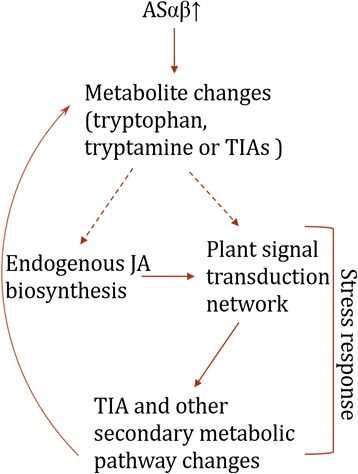
The transcriptomic analysis illustrates overexpressing AS stimulates the overall stress response and affects the metabolic networks in C. roseus hairy roots. The up-regulation of endogenous JA biosynthesis pathway indicates the involvement of JA signal transduction to regulate TIA biosynthesis in ASαβ engineered roots and explained why many of the transcripts for TIA genes and regulators are seen to increase with AS overexpression.
临床上重要的抗癌药物长春碱和长春新碱仅由长春花中的萜类吲哚生物碱(TIA)途径合成。邻氨基苯甲酸合酶(AS)是TIA途径中的限速酶。先前创建了在诱导型启动子控制下过表达反馈不敏感的ASα亚基且组成型表达ASβ亚基的转基因长春花毛状根系,用于过量生产TIAs。然而,过表达ASα后,TIAs出现了增加和减少的情况。尽管基因改造针对的是TIA途径中的一个基因,但它可能引发全局转录变化,直接或间接影响TIA生物合成。在本研究中,使用Illumina测序和RT-qPCR来检测过表达AS后的转录反应,这有助于增进对TIA途径复杂调控的理解,并进一步启发合理的代谢工程,以提高长春花毛状根中TIA的产量。
通过RT-qPCR检测发现,在诱导12、24和48小时后,长春花毛状根中过表达AS改变了大多数已知TIA途径基因和调控因子的转录。在ASα诱导18小时后,进一步研究长春花毛状根转录组的变化,并使用RNA-seq与对照毛状根进行比较。通过对测序读数进行从头组装,获得了一个包含30281个单基因的数据集。对差异表达转录谱的比较产生了2853个差异表达转录本。这些转录本的功能注释揭示了ASαβ毛状根中复杂且系统的转录组变化。通路分析表明,在干扰AS后,许多通路发生了改变,如芳香族氨基酸生物合成、茉莉酸(JA)生物合成和其他次生代谢途径。此外,过表达ASα后,许多参与整体应激反应的基因也出现了差异表达。
转录组分析表明,过表达AS会刺激长春花毛状根的整体应激反应并影响其代谢网络。内源性JA生物合成途径的上调表明JA信号转导参与了对ASαβ工程根中TIA生物合成的调控,这也解释了为什么许多TIA基因和调控因子的转录本会随着AS的过表达而增加。