Zhao Jingya, Zhang Jing, Zhang Xin, Feng Mingxiang, Qu Jieming
Department of Pulmonary Medicine, Huadong Hospital, Fudan University, Shanghai, China.
Department of Pulmonary Medicine, Zhongshan Hospital, Fudan University, Shanghai, China.
Oncotarget. 2016 Jun 28;7(26):40725-40734. doi: 10.18632/oncotarget.9173.
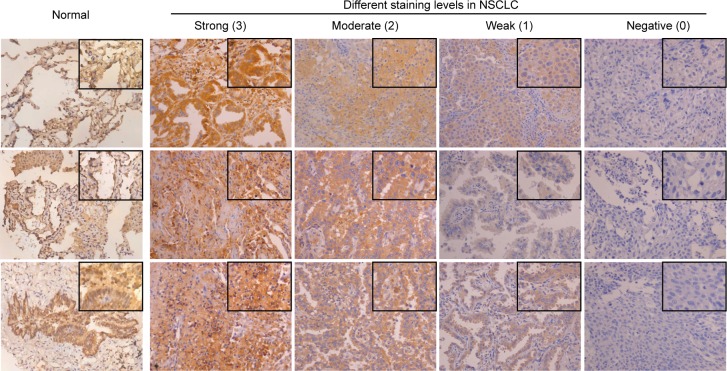
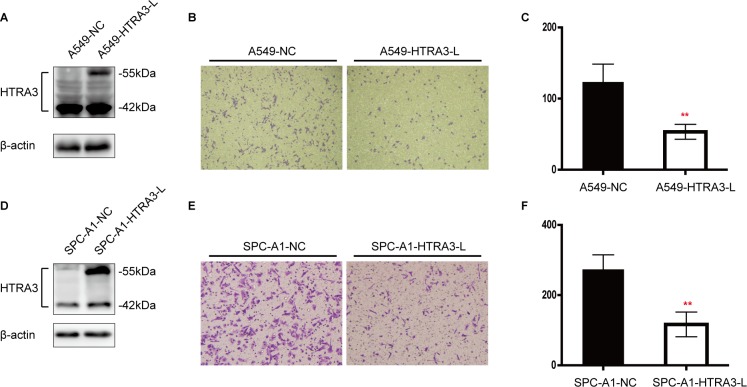
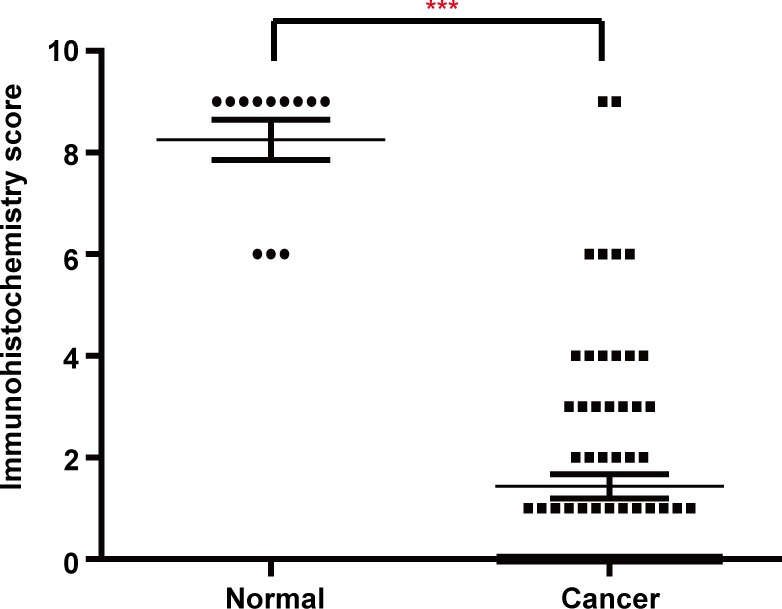
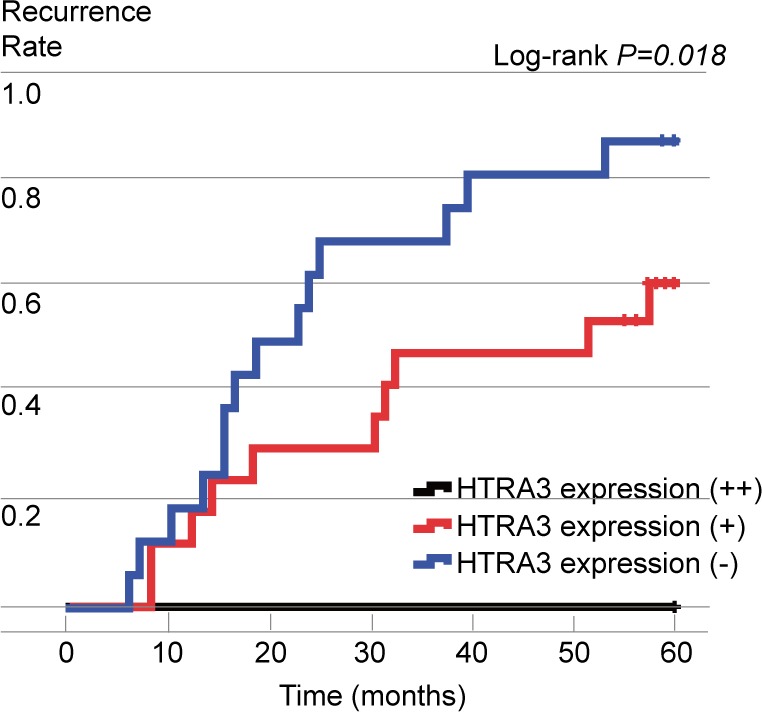
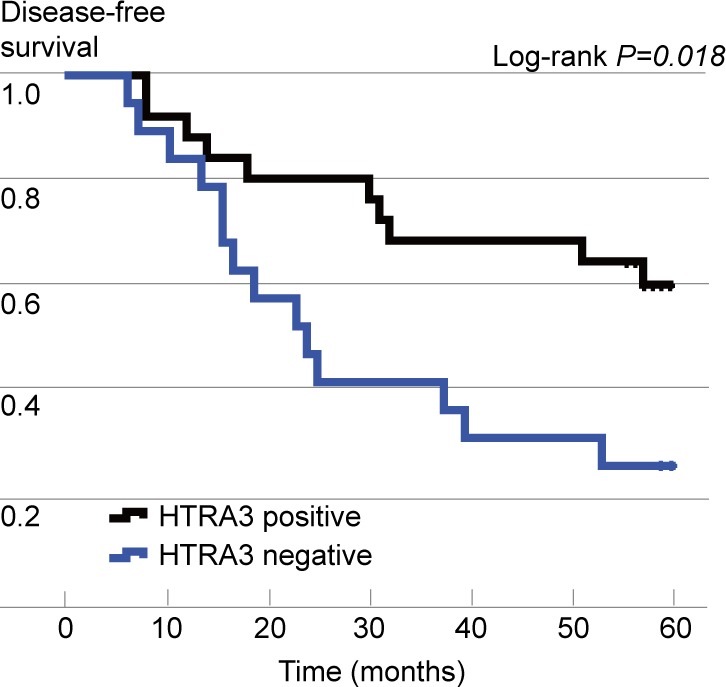
Non-small-cell lung cancer (NSCLC) is the leading cause of cancer-related death worldwide, and its recurrence rate after complete resection is high, owing to local or distant metastases. Low expression of high temperature requirement A3 (HTRA3) has been reported to promote tumorigenesis, diminish the effects of anti-tumor treatments, and correlate with a malignant phenotype. To assess the involvement of HTRA3 in the prognosis of postoperative NSCLC, we obtained tumors from 78 patients who had undergone complete surgical resection, and immunohistochemically examined them for HTRA3 expression. HTRA3 was significantly down-regulated in lung cancer tissues compared with normal lung tissues, and only six tumor cases(7.7%) exhibited relatively high levels of HTRA3 (P < 0.001). Notably, high-HTRA3 patients were at significantly lower risk of postoperative recurrence than low-HTRA3 or HTRA3-negative patients (0% versus 31.2% and 35.0%; P = 0.044, 0.029, respectively). High expression of HTRA3 also independently indicated longer disease-free survival in Cox regression analysis (hazard ratio 0.39, 95%CI 0.16-0.95, P = 0.038). Ectopic expression of the long isoform of HTRA3 attenuated the invasion of an NSCLC cell line in a Transwell assay, while knockdown of HTRA3 had the converse effect. Thus, HTRA3 suppresses tumor cell invasiveness and may serve as a prognostic biomarker for postoperative recurrence or survival in NSCLC.
非小细胞肺癌(NSCLC)是全球癌症相关死亡的主要原因,由于局部或远处转移,其完全切除后的复发率很高。据报道,高温需求A3(HTRA3)低表达可促进肿瘤发生、削弱抗肿瘤治疗效果并与恶性表型相关。为了评估HTRA3在NSCLC术后预后中的作用,我们从78例接受了完整手术切除的患者中获取肿瘤组织,并通过免疫组织化学检测HTRA3的表达。与正常肺组织相比,肺癌组织中HTRA3明显下调,只有6例肿瘤病例(7.7%)表现出相对较高水平的HTRA3(P < 0.001)。值得注意的是,高HTRA3患者术后复发风险明显低于低HTRA3或HTRA3阴性患者(0%对31.2%和35.0%;P分别为0.044和0.029)。在Cox回归分析中,HTRA3高表达也独立表明无病生存期更长(风险比0.39,95%CI 0.16 - 0.95,P = 0.038)。在Transwell实验中,HTRA3长异构体的异位表达减弱了NSCLC细胞系的侵袭能力,而敲低HTRA3则产生相反的效果。因此,HTRA3可抑制肿瘤细胞侵袭性,并可能作为NSCLC术后复发或生存的预后生物标志物。