Gonzalez Elena G, Blanco Juan C, Ballesteros Fernando, Alcaraz Lourdes, Palomero Guillermo, Doadrio Ignacio
Departamento de Biodiversidad y Biología Evolutiva, Museo Nacional de Ciencias Naturales, MNCN-CSIC , Madrid , Spain.
Fundación Oso Pardo , Santander , Spain.
PeerJ. 2016 Apr 28;4:e1928. doi: 10.7717/peerj.1928. eCollection 2016.
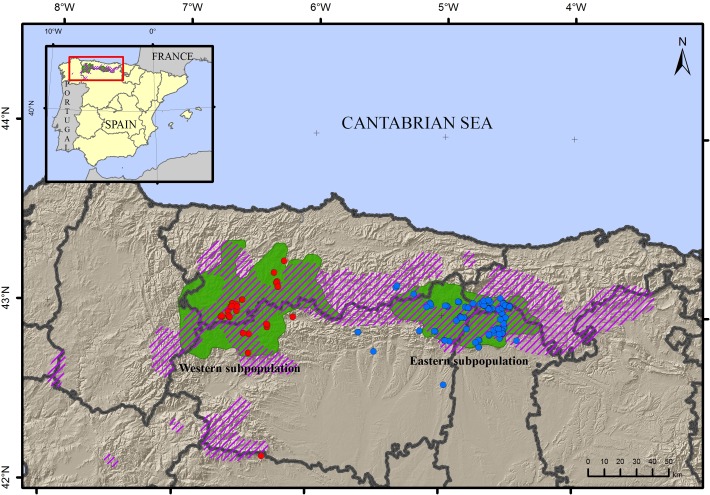
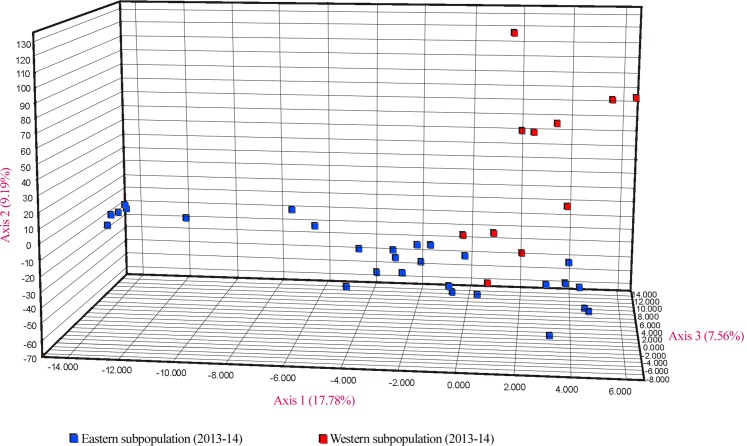
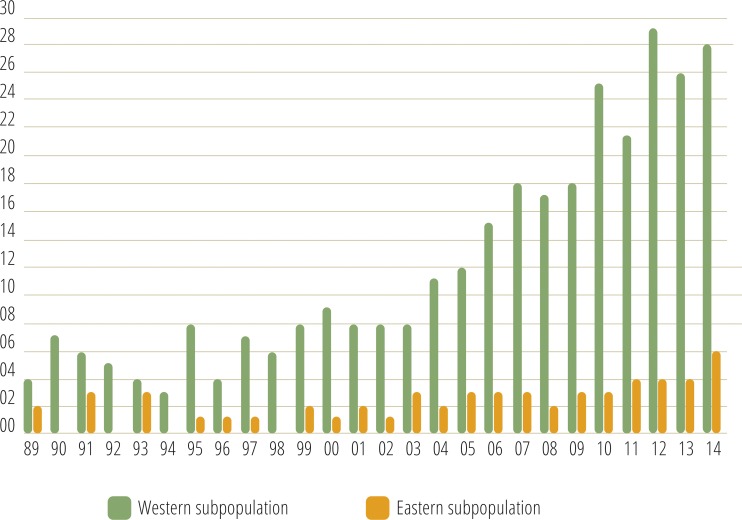
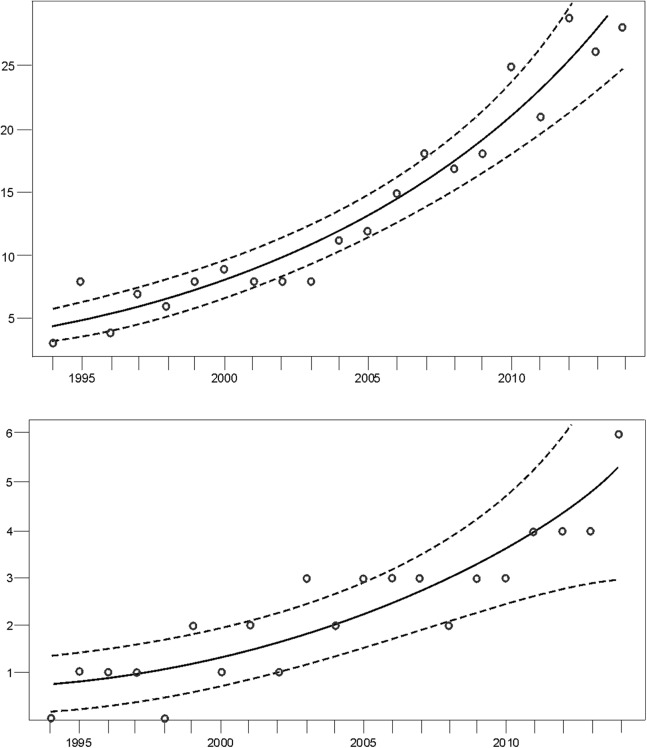
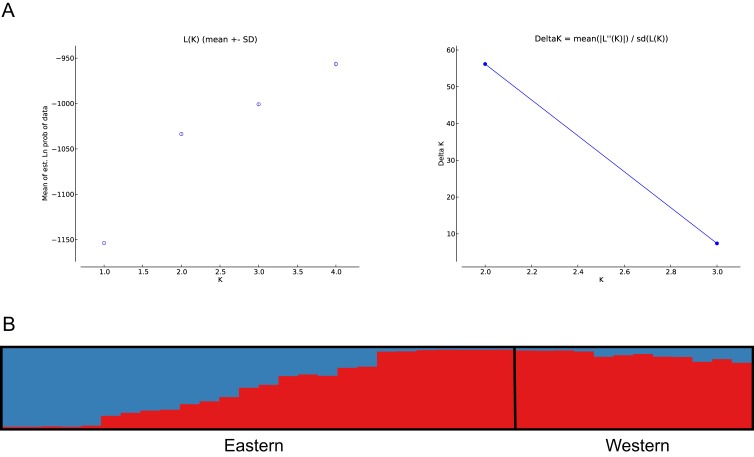
The brown bear Ursus arctos L., 1758 population of the Cantabrian Mountains (northwestern Spain) became isolated from other bear populations in Europe about 500 years ago and has declined due to hunting and habitat degradation. At the beginning of the 20th century, the Cantabrian population split into eastern and western subpopulations, and genetic exchange between them ceased. In the early 1990s, total population size was estimated to be < 100 bears. Subsequently, reduction in human-caused mortality has brought about an increase in numbers, mainly in the western subpopulation, likely promoting male-mediated migration and gene flow from the western nucleus to the eastern. To evaluate the possible genetic recovery of the small and genetically depauperate eastern subpopulation, in 2013 and 2014 we genotyped hair and faeces samples (116 from the eastern subpopulation and 36 from the western) for 18 microsatellite markers. Data from the annual count of females with cubs of the year (COY) during the past twenty-six years was used to analyze demographic changes. The number of females with COY fell to a minimum of seven in the western and three in eastern subpopulations in the biennium 1993-1994 and reached a respective maximum of 54 and 10 individuals in 2013-2014. We also observed increased bear dispersal and gene flow, mainly from the western to the eastern subpopulation. Of the 26 unique genotypes detected in the eastern subpopulation, 14 (54%) presented an admixture composition, and seven (27%) were determined to be migrants from the western subpopulation. Hence, the two separated and clearly structured subpopulations identified in the past currently show some degree of genetic admixture. This research shows the partial demographic recovery and a change in genetic composition due to migration process in a population of bears that has been isolated for several centuries.
棕熊(Ursus arctos L.,1758)坎塔布连山脉(西班牙西北部)的种群大约在500年前与欧洲其他熊种群隔离,并且由于狩猎和栖息地退化而数量减少。在20世纪初,坎塔布连种群分裂为东部和西部亚种群,它们之间的基因交流停止。在20世纪90年代初,估计种群总数不足100只熊。随后,人为死亡率的降低带来了数量的增加,主要是在西部亚种群,这可能促进了雄性介导的迁移以及从西部核心区域到东部的基因流动。为了评估小型且基因匮乏的东部亚种群可能的基因恢复情况,在2013年和2014年,我们对毛发和粪便样本(东部亚种群116份,西部亚种群36份)进行了18个微卫星标记的基因分型。过去26年中当年产仔雌熊(COY)年度计数的数据用于分析种群动态变化。在1993 - 1994两年期,西部亚种群中产仔雌熊数量降至最少7只,东部亚种群降至3只,而在2013 - 2014年分别达到最多54只和10只。我们还观察到熊的扩散和基因流动增加,主要是从西部亚种群到东部亚种群。在东部亚种群检测到的26种独特基因型中,14种(54%)呈现混合组成,7种(27%)被确定为来自西部亚种群的迁移个体。因此,过去确定的两个分离且结构清晰的亚种群目前显示出一定程度的基因混合。这项研究表明,一个已经隔离了几个世纪的熊种群由于迁移过程出现了部分种群动态恢复和基因组成变化。