Magalhães Ana Cristina, Ferreira Ana Rita, Gomes Sílvia, Vieira Marta, Gouveia Ana, Valença Isabel, Islinger Markus, Nascimento Rute, Schrader Michael, Kagan Jonathan C, Ribeiro Daniela
Institute for Research in Biomedicine - iBiMED, Department of Medical Sciences &Department of Biology, University of Aveiro, Aveiro, Portugal.
Neuroanatomy, Center for Biomedicine and Medical Technology Mannheim, University of Heidelberg, Heidelberg, Germany.
Sci Rep. 2016 May 16;6:26028. doi: 10.1038/srep26028.
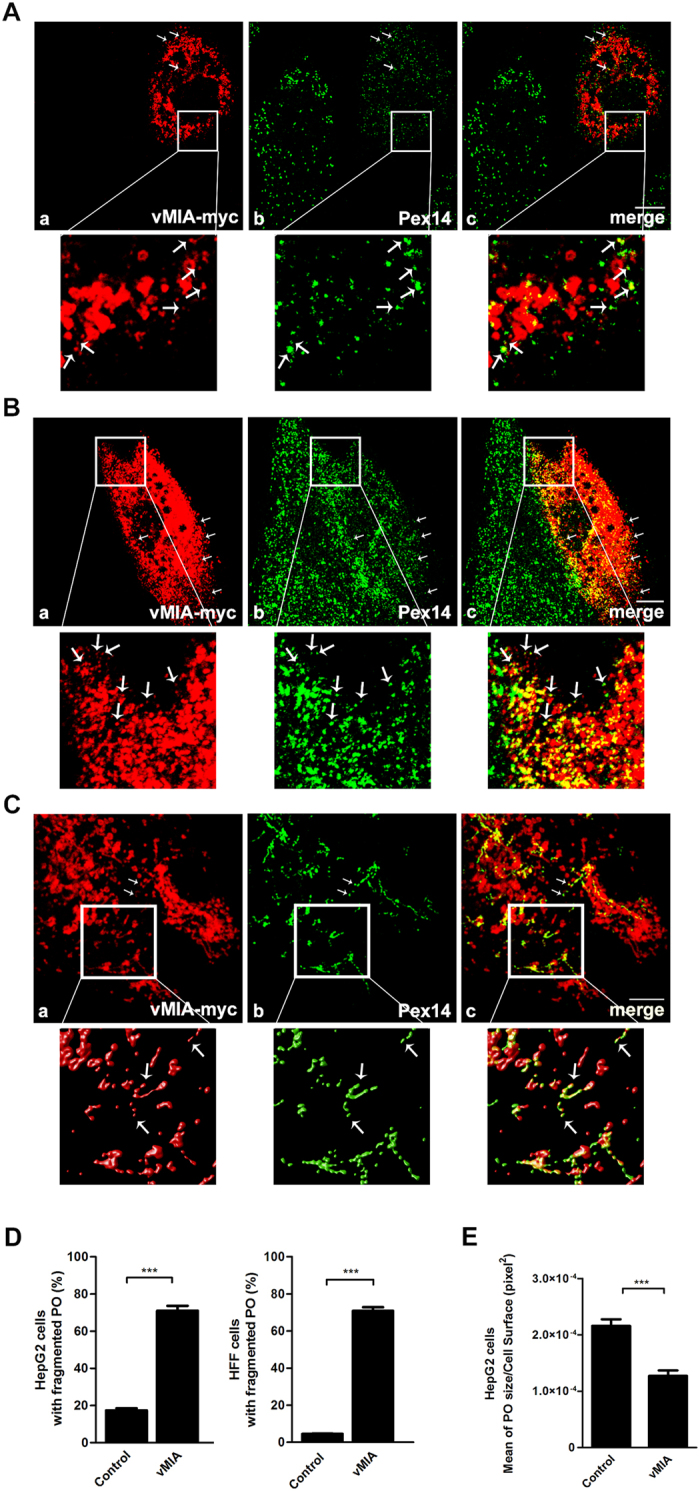
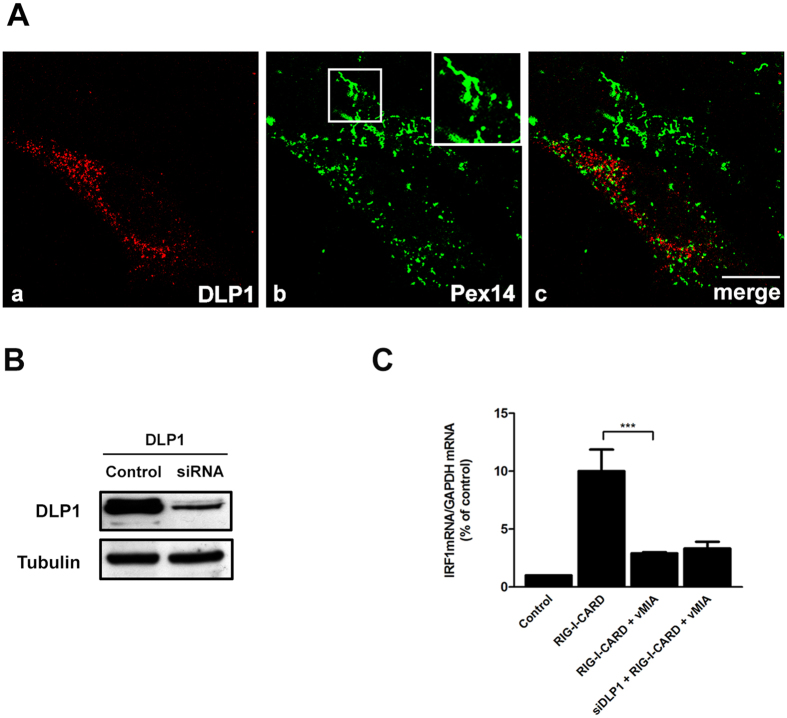
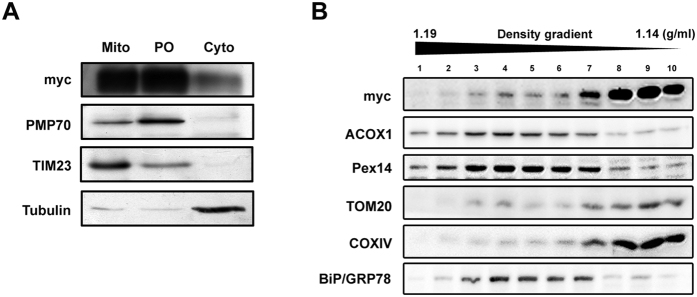
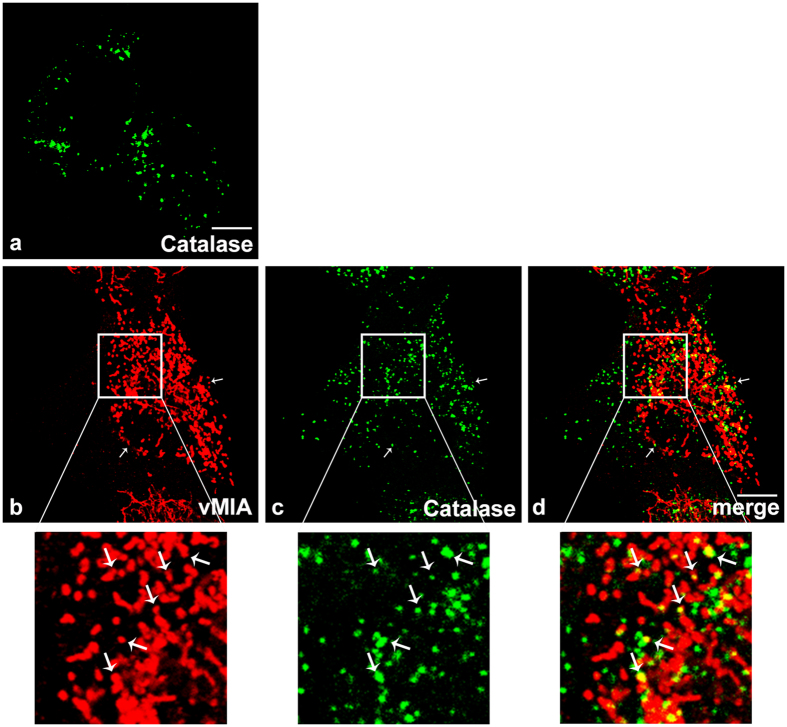
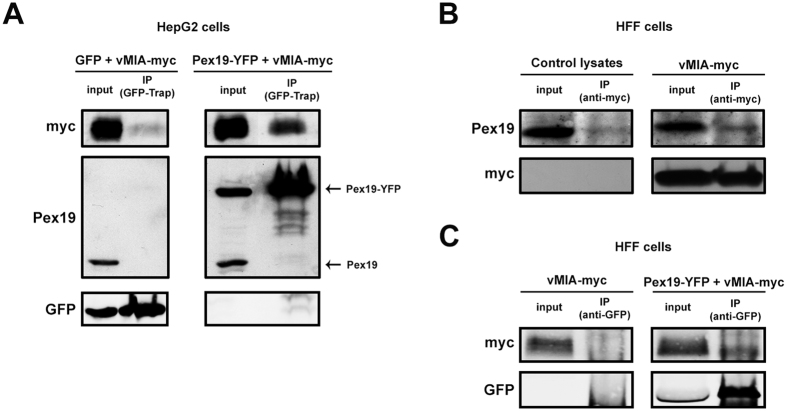
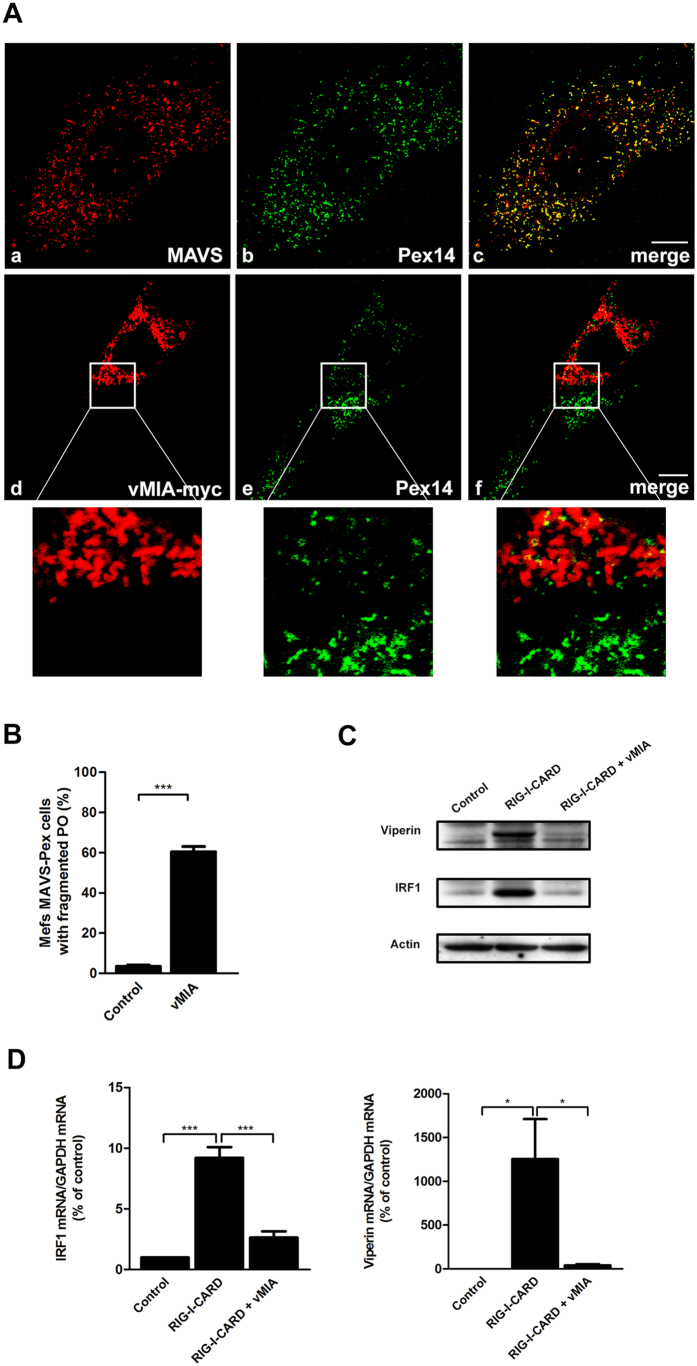
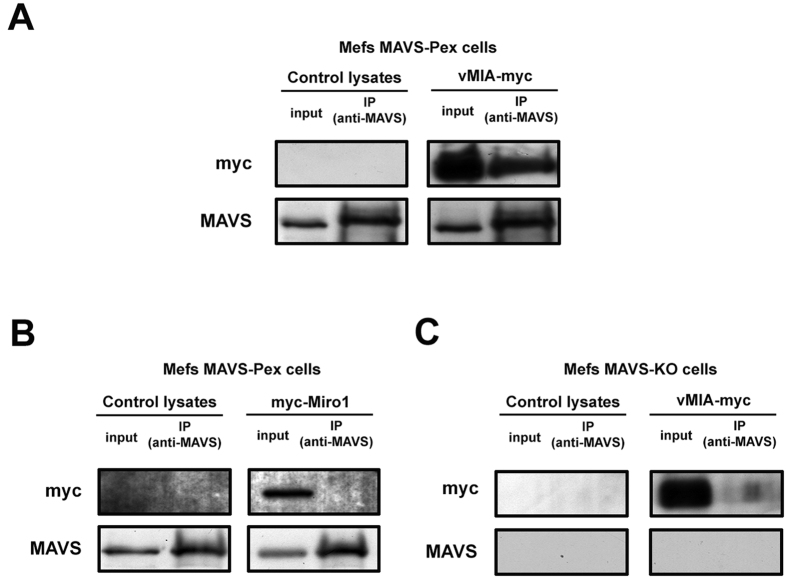
The human cytomegalovirus developed distinct evasion mechanisms from the cellular antiviral response involving vMIA, a virally-encoded protein that is not only able to prevent cellular apoptosis but also to inhibit signalling downstream from mitochondrial MAVS. vMIA has been shown to localize at mitochondria and to trigger their fragmentation, a phenomenon proven to be essential for the signalling inhibition. Here, we demonstrate that vMIA is also localized at peroxisomes, induces their fragmentation and inhibits the peroxisomal-dependent antiviral signalling pathway. Importantly, we demonstrate that peroxisomal fragmentation is not essential for vMIA to specifically inhibit signalling downstream the peroxisomal MAVS. We also show that vMIA interacts with the cytoplasmic chaperone Pex19, suggesting that the virus has developed a strategy to highjack the peroxisomal membrane proteins' transport machinery. Furthermore, we show that vMIA is able to specifically interact with the peroxisomal MAVS. Our results demonstrate that peroxisomes constitute a platform for evasion of the cellular antiviral response and that the human cytomegalovirus has developed a mechanism by which it is able to specifically evade the peroxisomal MAVS-dependent antiviral signalling.
人巨细胞病毒从涉及病毒编码蛋白vMIA的细胞抗病毒反应中发展出独特的逃避机制。vMIA不仅能够阻止细胞凋亡,还能抑制线粒体MAVS下游的信号传导。已证明vMIA定位于线粒体并引发其碎片化,这一现象被证明对信号传导抑制至关重要。在此,我们证明vMIA也定位于过氧化物酶体,诱导其碎片化并抑制过氧化物酶体依赖性抗病毒信号通路。重要的是,我们证明过氧化物酶体碎片化对于vMIA特异性抑制过氧化物酶体MAVS下游的信号传导并非必需。我们还表明vMIA与细胞质伴侣蛋白Pex19相互作用,这表明病毒已发展出一种策略来劫持过氧化物酶体膜蛋白的转运机制。此外,我们表明vMIA能够与过氧化物酶体MAVS特异性相互作用。我们的结果表明,过氧化物酶体构成了逃避细胞抗病毒反应的平台,并且人巨细胞病毒已发展出一种机制,通过该机制它能够特异性逃避过氧化物酶体MAVS依赖性抗病毒信号传导。