Yang Juhong, Ba Tu, Chen Liming, Shan Chunyan, Zheng Miaoyan, Wang Ying, Ren Huizhu, Chen Jingli, Xu Jie, Han Fei, Zhang Yi, Yang Xiaoyun, Chang Baocheng
Key Laboratory of Hormone and Development (Ministry of Health), Tianjin Key Laboratory of Metabolic Disease, Tianjin Hospital and Tianjin Institute of Endocrinology, Tianjin Medical University, Tianjin, China.
Arch Med Sci. 2016 Apr 1;12(2):233-42. doi: 10.5114/aoms.2016.59249. Epub 2016 Apr 12.
The aim of the study was to investigate the effects of metformin and sitagliptin on glycolipid metabolism in type 2 diabetes after different diets.
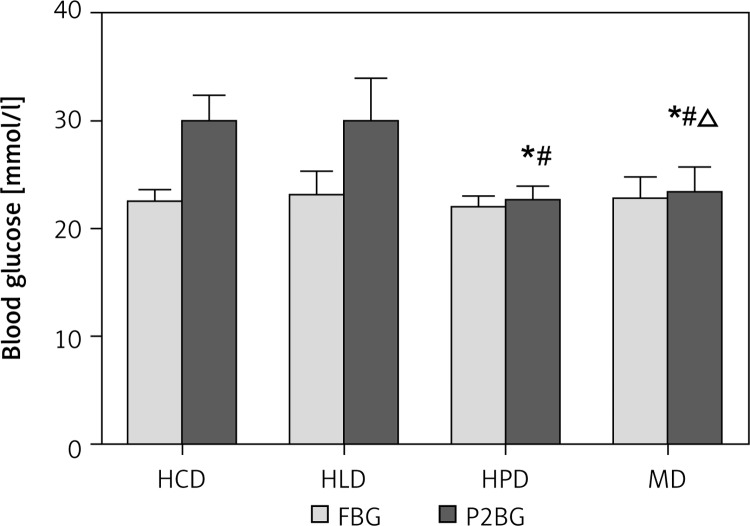
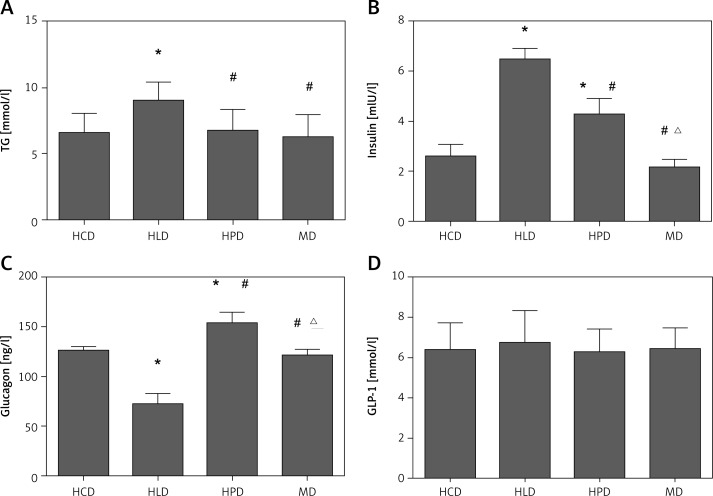
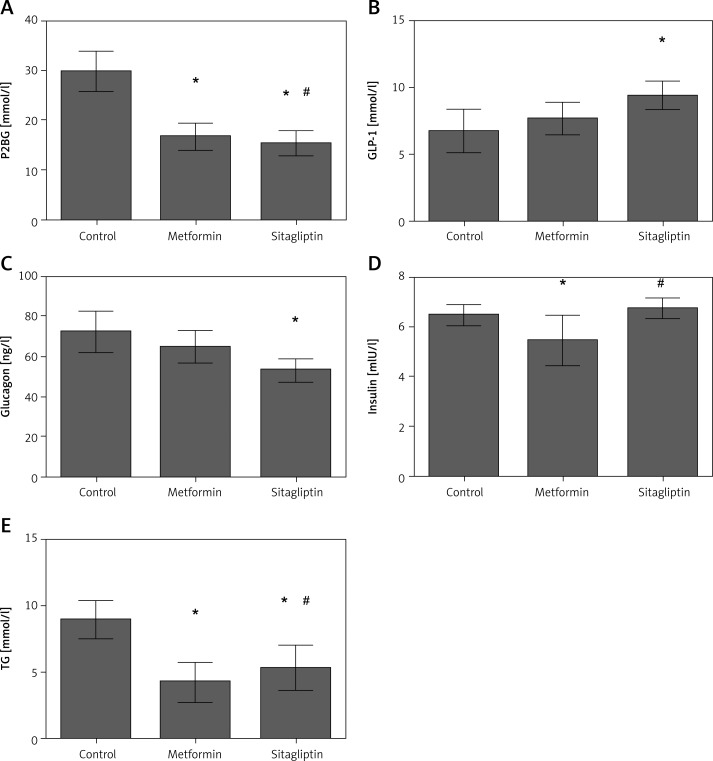
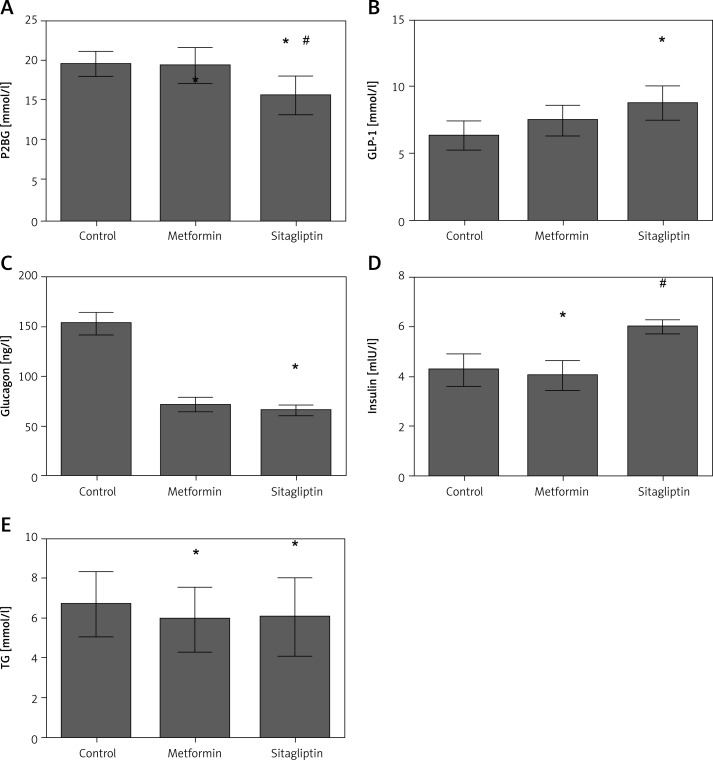
Seventy Male Sprague Dawley rats were fed with a high fat diet followed by streptozotocin treatment to induce type 2 diabetes. Then all rats were randomly divided into a control group, a metformin group (200 mg/kg), and a sitagliptin group (10 mg/kg). Each group was further divided into 4 groups receiving one load of high carbohydrate diet (45% glucose, 4.5 ml/kg), high fat diet (20% lipid emulsion, 4.5 ml/kg), high protein diet (20% whey protein, 10 ml/kg) or mixed meal, respectively. The caloric densities were all 33 kJ/kg. Postprandial blood glucose (P2BG), triglyceride (TG), glucagon-like peptide-1 (GLP-1), glucagon and insulin levels were measured.
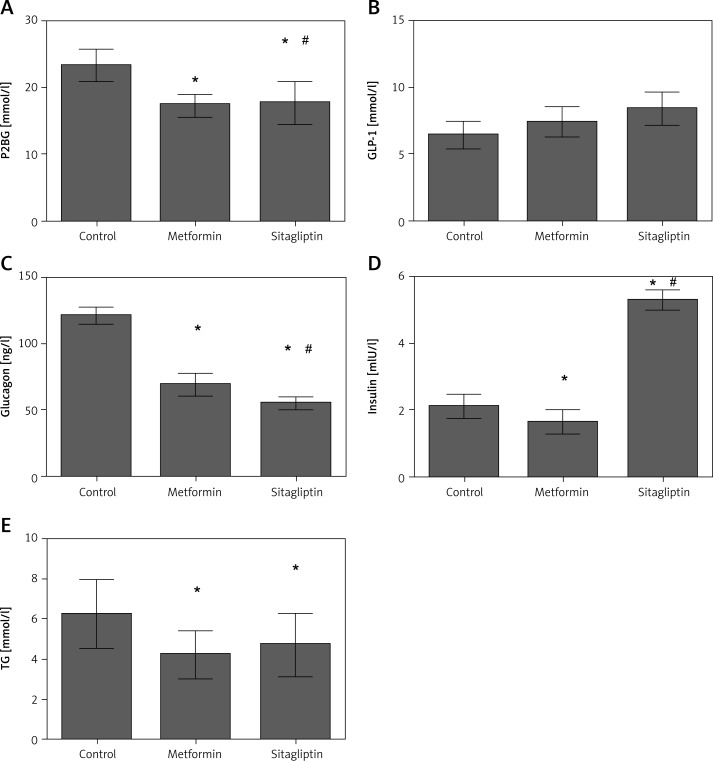
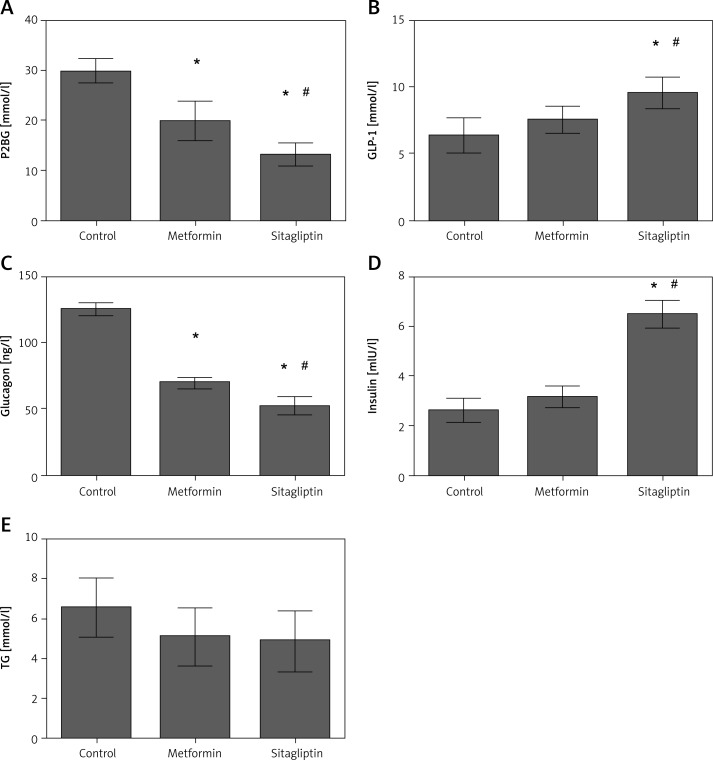
In the high carbohydrate group, sitagliptin was more efficient in lowering P2BG compared with metformin (p < 0.05). In the high-fat group, metformin was more powerful in lowering TG (p < 0.05) and P2BG (p < 0.05) levels because of its improvement of insulin sensitivity. In the high protein diet group, metformin did not reduce the P2BG level (p > 0.05), although it did reduce the TG level (p < 0.05). In the mixed diet group, metformin was more efficient in lowering P2BG (p < 0.05) but had a similar effect on TG (p > 0.05) compared with sitagliptin.
In the type 2 diabetic model, metformin and sitagliptin have different effects on glycolipid metabolism after different diets. If it is proved in type 2 diabetic patients, then different medicines may be recommended according to different diets in order to improve glycolipid metabolism.
本研究旨在探讨二甲双胍和西格列汀在不同饮食后对2型糖尿病患者糖脂代谢的影响。
70只雄性Sprague Dawley大鼠先喂食高脂饮食,随后用链脲佐菌素处理以诱导2型糖尿病。然后将所有大鼠随机分为对照组、二甲双胍组(200毫克/千克)和西格列汀组(10毫克/千克)。每组再进一步分为4组,分别接受一次高碳水化合物饮食(45%葡萄糖,4.5毫升/千克)、高脂饮食(20%脂质乳剂,4.5毫升/千克)、高蛋白饮食(20%乳清蛋白,10毫升/千克)或混合餐。热量密度均为33千焦/千克。测量餐后血糖(P2BG)、甘油三酯(TG)、胰高血糖素样肽-1(GLP-1)、胰高血糖素和胰岛素水平。
在高碳水化合物组中,与二甲双胍相比,西格列汀在降低P2BG方面更有效(p < 0.05)。在高脂组中,由于二甲双胍改善了胰岛素敏感性,其在降低TG(p < 0.05)和P2BG(p < 0.05)水平方面更有效。在高蛋白饮食组中,二甲双胍虽降低了TG水平(p < 0.05),但未降低P2BG水平(p > 0.05)。在混合饮食组中,与西格列汀相比,二甲双胍在降低P2BG方面更有效(p < 0.05),但对TG的影响相似(p > 0.05)。
在2型糖尿病模型中,二甲双胍和西格列汀在不同饮食后对糖脂代谢有不同影响。若在2型糖尿病患者中得到证实,则可根据不同饮食推荐不同药物以改善糖脂代谢。