Fennema Diede, Phillips Ian R, Shephard Elizabeth A
Institute of Structural and Molecular Biology, University College London (D.F., I.R.P., E.A.S.), and School of Biological and Chemical Sciences, Queen Mary University of London (I.R.P.), London, United Kingdom.
Institute of Structural and Molecular Biology, University College London (D.F., I.R.P., E.A.S.), and School of Biological and Chemical Sciences, Queen Mary University of London (I.R.P.), London, United Kingdom
Drug Metab Dispos. 2016 Nov;44(11):1839-1850. doi: 10.1124/dmd.116.070615. Epub 2016 May 17.
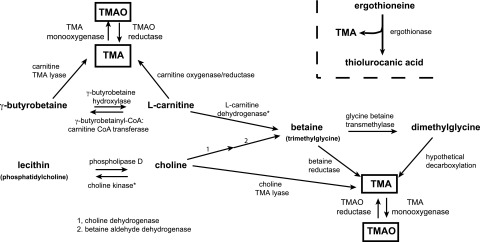
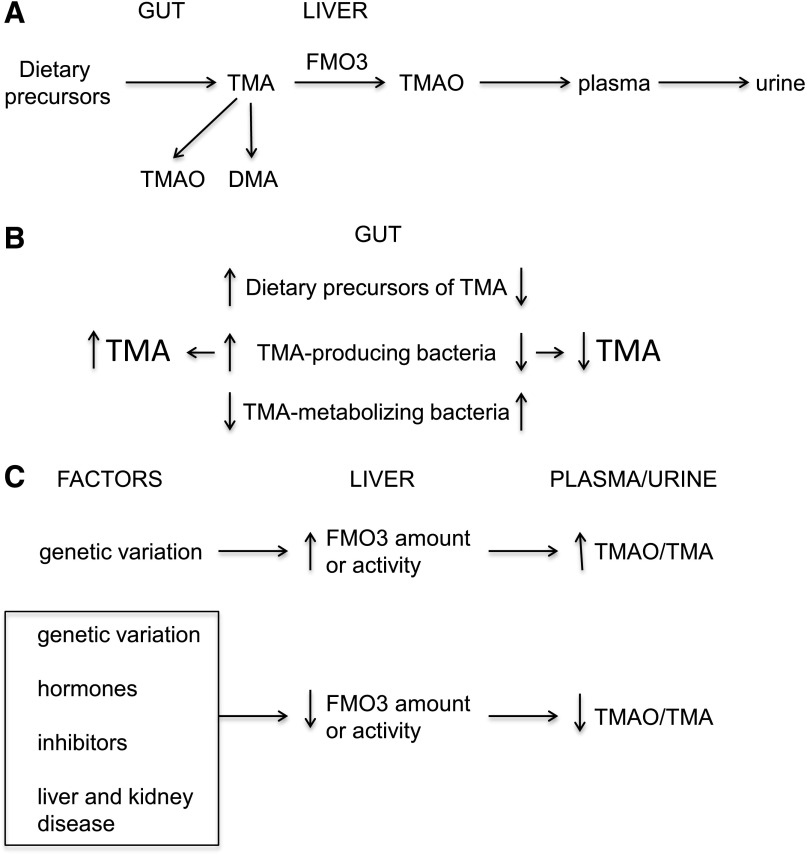
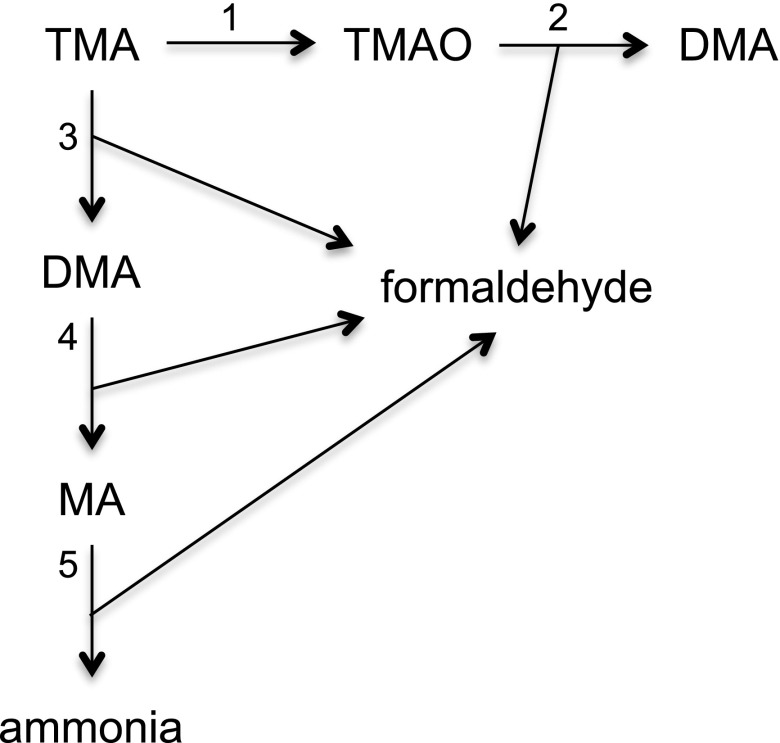
Flavin-containing monooxygenase 3 (FMO3) is known primarily as an enzyme involved in the metabolism of therapeutic drugs. On a daily basis, however, we are exposed to one of the most abundant substrates of the enzyme trimethylamine (TMA), which is released from various dietary components by the action of gut bacteria. FMO3 converts the odorous TMA to nonodorous TMA N-oxide (TMAO), which is excreted in urine. Impaired FMO3 activity gives rise to the inherited disorder primary trimethylaminuria (TMAU). Affected individuals cannot produce TMAO and, consequently, excrete large amounts of TMA. A dysbiosis in gut bacteria can give rise to secondary TMAU. Recently, there has been much interest in FMO3 and its catalytic product, TMAO, because TMAO has been implicated in various conditions affecting health, including cardiovascular disease, reverse cholesterol transport, and glucose and lipid homeostasis. In this review, we consider the dietary components that can give rise to TMA, the gut bacteria involved in the production of TMA from dietary precursors, the metabolic reactions by which bacteria produce and use TMA, and the enzymes that catalyze the reactions. Also included is information on bacteria that produce TMA in the oral cavity and vagina, two key microbiome niches that can influence health. Finally, we discuss the importance of the TMA/TMAO microbiome-host axis in health and disease, considering factors that affect bacterial production and host metabolism of TMA, the involvement of TMAO and FMO3 in disease, and the implications of the host-microbiome axis for management of TMAU.
含黄素单加氧酶3(FMO3)主要作为一种参与治疗药物代谢的酶而为人所知。然而,我们每天都会接触到该酶最丰富的底物之一三甲胺(TMA),它是由肠道细菌作用于各种饮食成分而释放出来的。FMO3将有气味的TMA转化为无气味的氧化三甲胺(TMAO),后者经尿液排出。FMO3活性受损会导致遗传性疾病原发性三甲胺尿症(TMAU)。受影响的个体无法产生TMAO,因此会排出大量TMA。肠道细菌生态失调可导致继发性TMAU。最近,人们对FMO3及其催化产物TMAO产生了浓厚兴趣,因为TMAO与包括心血管疾病、逆向胆固醇转运以及葡萄糖和脂质稳态在内的各种影响健康的状况有关。在这篇综述中,我们考虑了可产生TMA的饮食成分、参与从饮食前体产生TMA的肠道细菌、细菌产生和利用TMA的代谢反应以及催化这些反应的酶。还包括有关口腔和阴道中产生TMA的细菌的信息,这两个关键的微生物群落生态位可影响健康。最后,我们讨论了TMA/TMAO微生物群落-宿主轴在健康和疾病中的重要性,考虑了影响TMA细菌产生和宿主代谢的因素、TMAO和FMO3在疾病中的作用以及宿主-微生物群落轴对TMAU管理的影响。