Scott Emma C, Gardner Eugene J, Masood Ashiq, Chuang Nelson T, Vertino Paula M, Devine Scott E
Graduate Program in Molecular Medicine, University of Maryland School of Medicine, Baltimore, Maryland 21201, USA; Institute for Genome Sciences, University of Maryland School of Medicine, Baltimore, Maryland 21201, USA;
Institute for Genome Sciences, University of Maryland School of Medicine, Baltimore, Maryland 21201, USA; Greenebaum Cancer Center, University of Maryland School of Medicine, Baltimore, Maryland 21201, USA; Department of Medicine, University of Maryland School of Medicine, Baltimore, Maryland 21201, USA;
Genome Res. 2016 Jun;26(6):745-55. doi: 10.1101/gr.201814.115. Epub 2016 May 10.
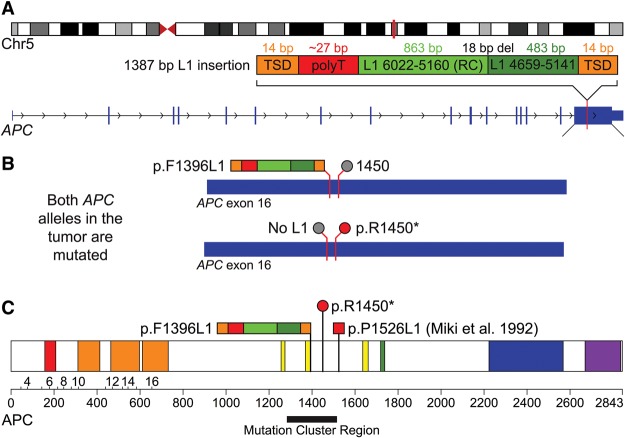
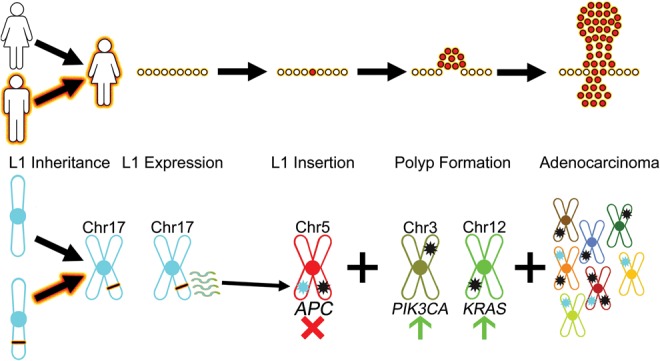
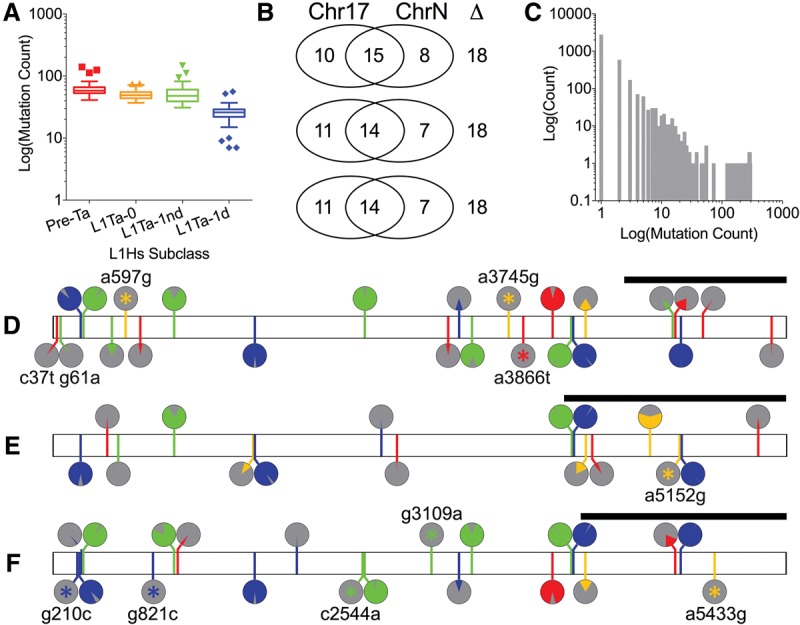
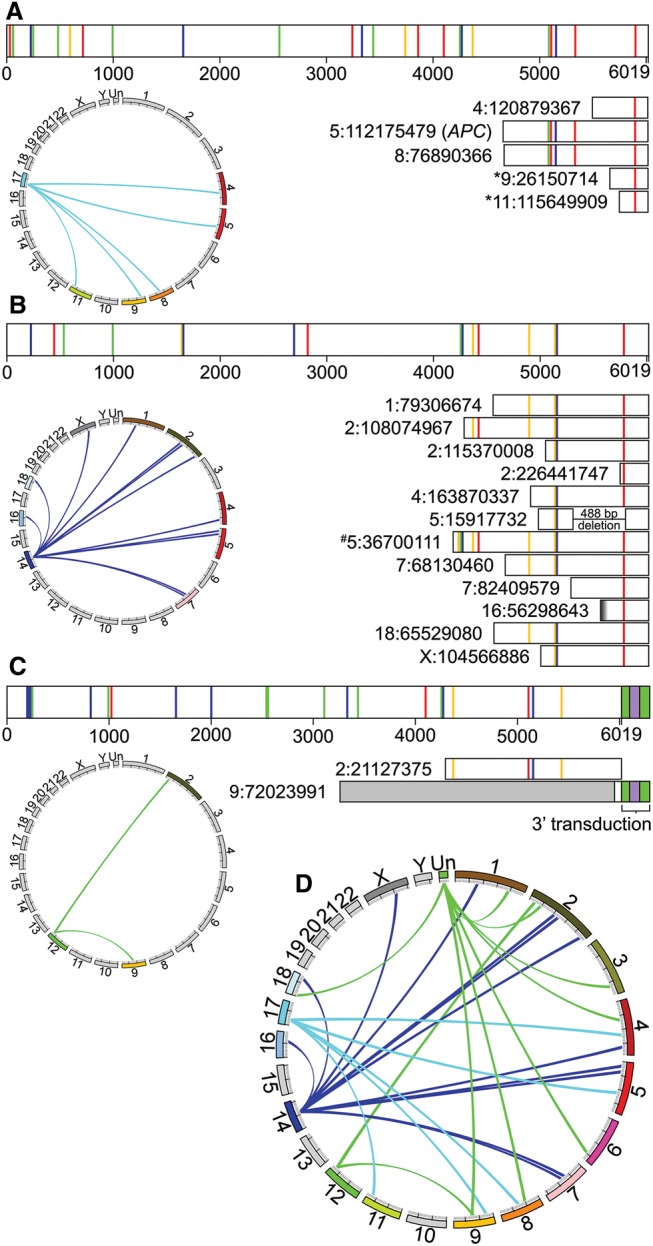
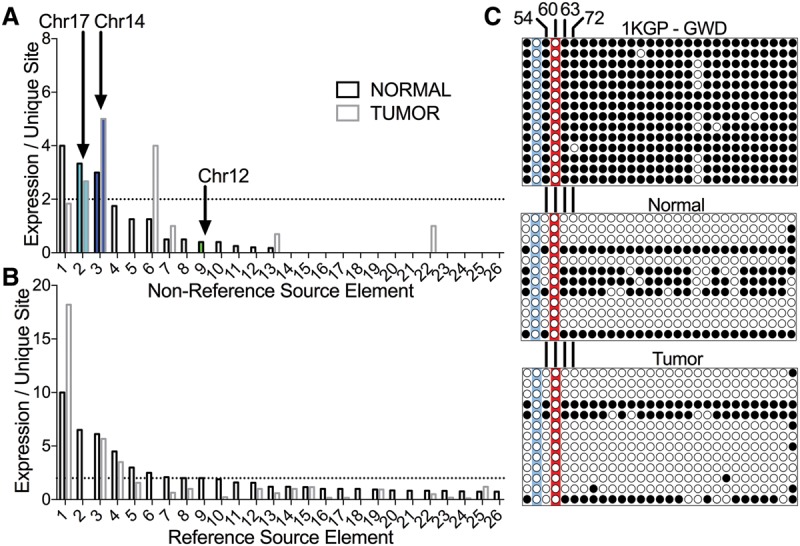
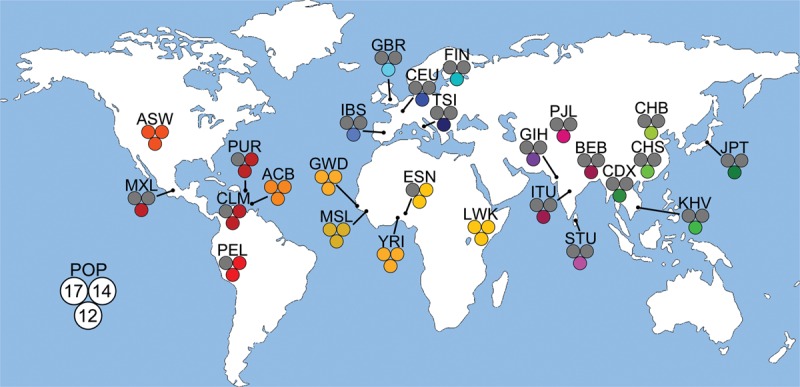
Although human LINE-1 (L1) elements are actively mobilized in many cancers, a role for somatic L1 retrotransposition in tumor initiation has not been conclusively demonstrated. Here, we identify a novel somatic L1 insertion in the APC tumor suppressor gene that provided us with a unique opportunity to determine whether such insertions can actually initiate colorectal cancer (CRC), and if so, how this might occur. Our data support a model whereby a hot L1 source element on Chromosome 17 of the patient's genome evaded somatic repression in normal colon tissues and thereby initiated CRC by mutating the APC gene. This insertion worked together with a point mutation in the second APC allele to initiate tumorigenesis through the classic two-hit CRC pathway. We also show that L1 source profiles vary considerably depending on the ancestry of an individual, and that population-specific hot L1 elements represent a novel form of cancer risk.
尽管人类LINE-1(L1)元件在许多癌症中被积极动员,但体细胞L1逆转录转座在肿瘤发生中的作用尚未得到确凿证明。在这里,我们在APC肿瘤抑制基因中鉴定出一种新的体细胞L1插入,这为我们提供了一个独特的机会来确定这种插入是否真的能引发结直肠癌(CRC),如果是,这可能是如何发生的。我们的数据支持一种模型,即患者基因组17号染色体上的一个活跃的L1源元件在正常结肠组织中逃避了体细胞抑制,从而通过突变APC基因引发了CRC。这种插入与第二个APC等位基因中的一个点突变共同作用,通过经典的双打击CRC途径启动肿瘤发生。我们还表明,L1源谱因个体的祖先不同而有很大差异,并且特定人群的活跃L1元件代表了一种新的癌症风险形式。