Roach Neil T, Hatala Kevin G, Ostrofsky Kelly R, Villmoare Brian, Reeves Jonathan S, Du Andrew, Braun David R, Harris John W K, Behrensmeyer Anna K, Richmond Brian G
Department of Human Evolutionary Biology, Harvard University, Cambridge, Massachusetts 02138, USA.
Division of Anthropology, American Museum of Natural History, New York, New York 10024, USA.
Sci Rep. 2016 May 20;6:26374. doi: 10.1038/srep26374.
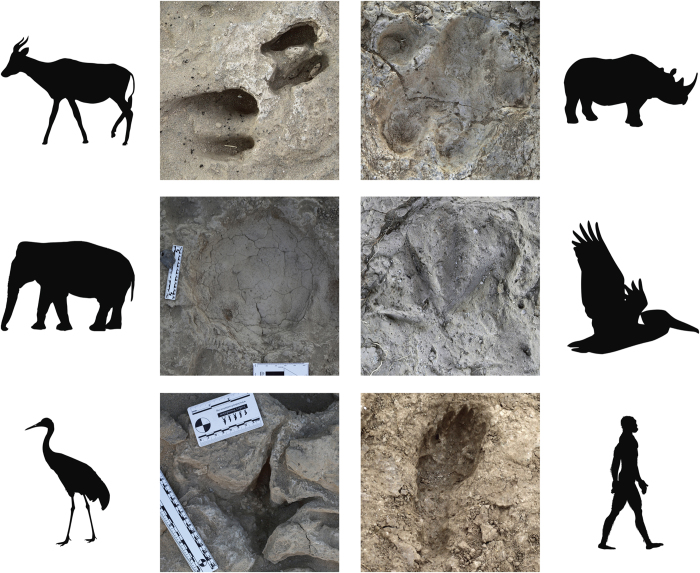
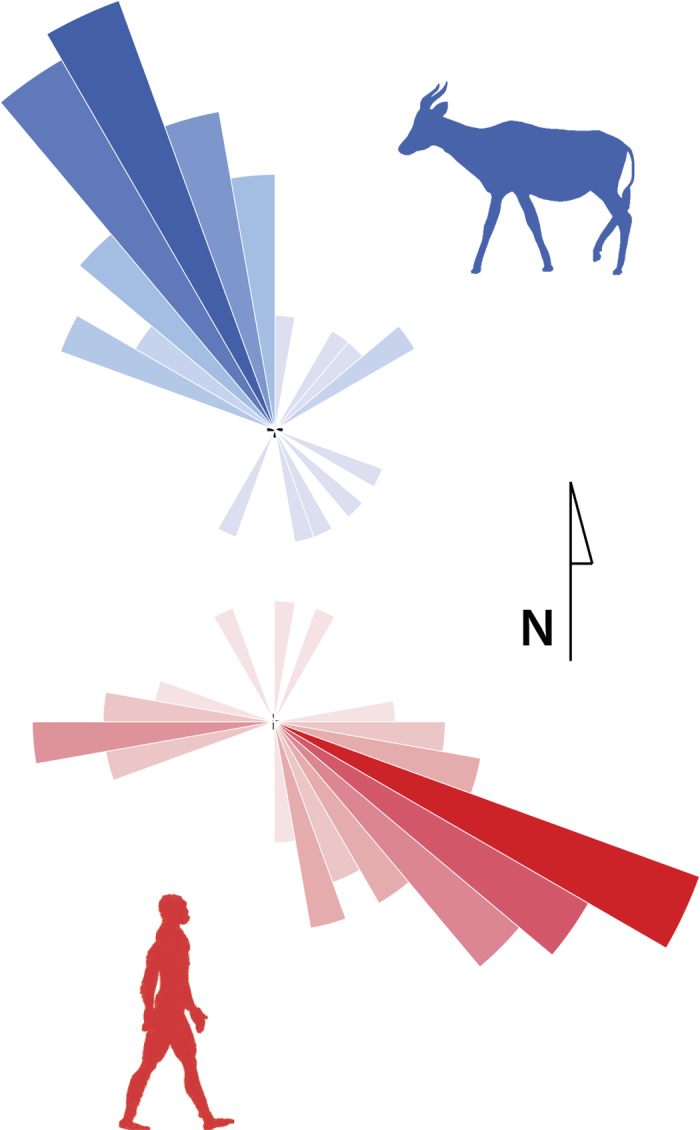
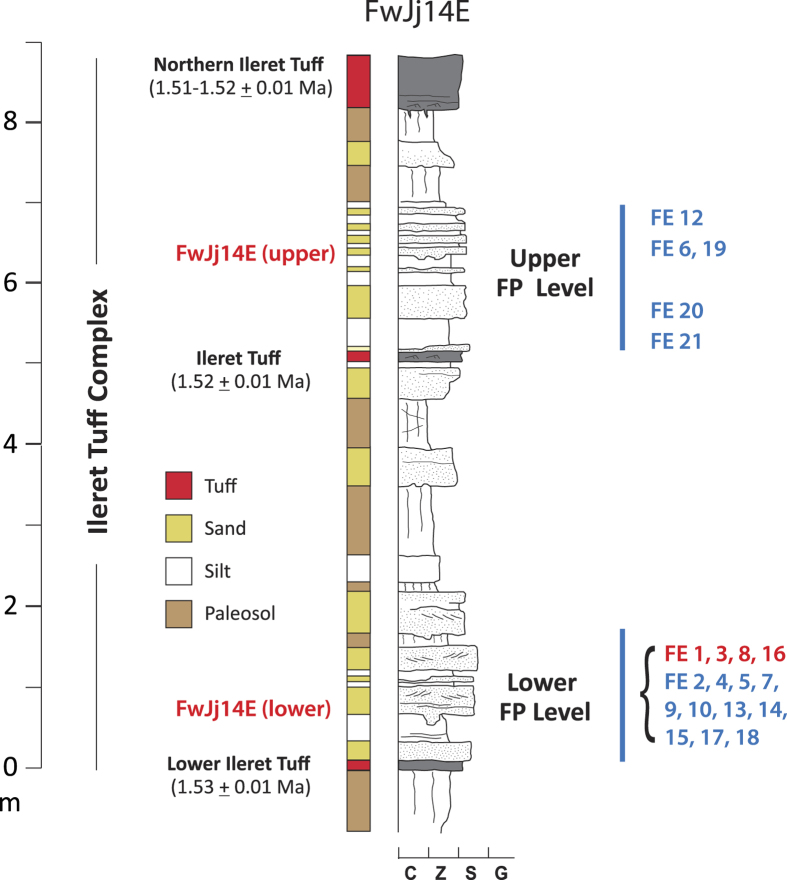
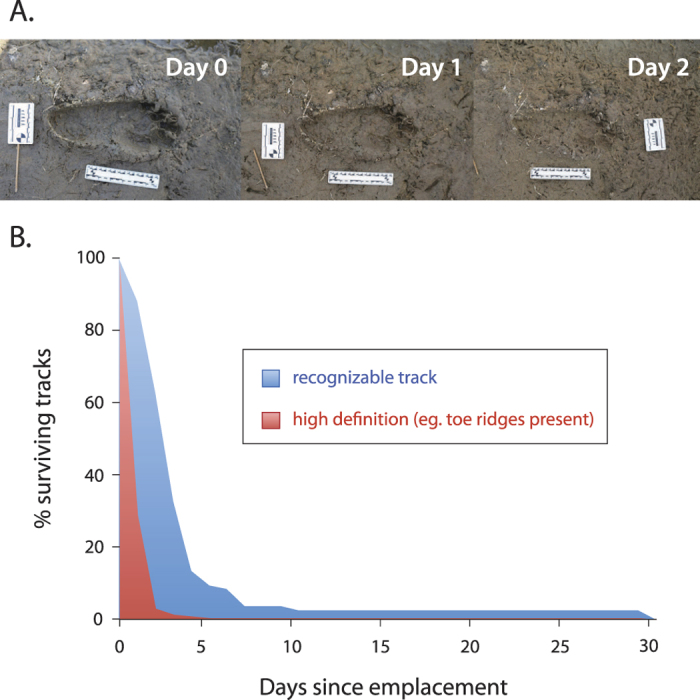
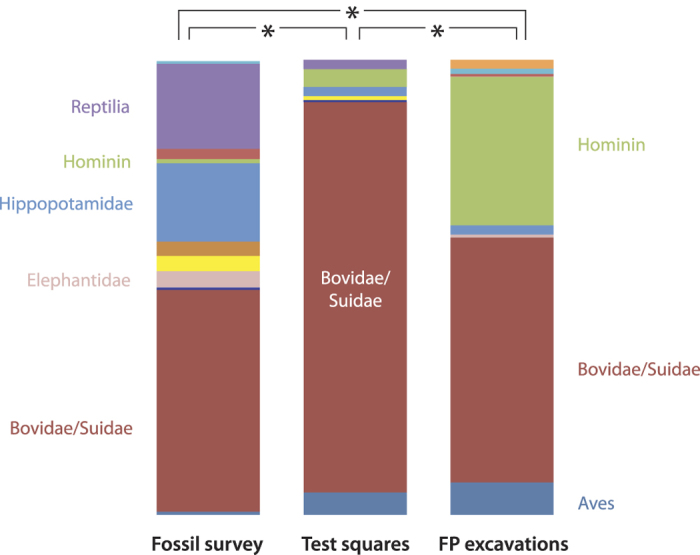
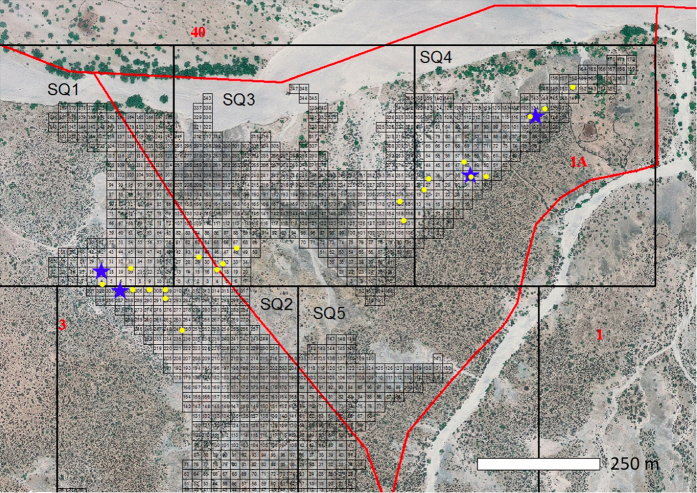
Reconstructing hominin paleoecology is critical for understanding our ancestors' diets, social organizations and interactions with other animals. Most paleoecological models lack fine-scale resolution due to fossil hominin scarcity and the time-averaged accumulation of faunal assemblages. Here we present data from 481 fossil tracks from northwestern Kenya, including 97 hominin footprints attributed to Homo erectus. These tracks are found in multiple sedimentary layers spanning approximately 20 thousand years. Taphonomic experiments show that each of these trackways represents minutes to no more than a few days in the lives of the individuals moving across these paleolandscapes. The geology and associated vertebrate fauna place these tracks in a deltaic setting, near a lakeshore bordered by open grasslands. Hominin footprints are disproportionately abundant in this lake margin environment, relative to hominin skeletal fossil frequency in the same deposits. Accounting for preservation bias, this abundance of hominin footprints indicates repeated use of lakeshore habitats by Homo erectus. Clusters of very large prints moving in the same direction further suggest these hominins traversed this lakeshore in multi-male groups. Such reliance on near water environments, and possibly aquatic-linked foods, may have influenced hominin foraging behavior and migratory routes across and out of Africa.
重建古人类古生态学对于理解我们祖先的饮食、社会组织以及与其他动物的互动至关重要。由于古人类化石稀少以及动物群组合的时间平均积累,大多数古生态模型缺乏精细尺度的分辨率。在此,我们展示了来自肯尼亚西北部481个化石足迹的数据,其中包括97个归因于直立人的古人类脚印。这些足迹发现于跨越约两万年的多个沉积层中。埋藏学实验表明,这些足迹中的每一个都代表着在穿越这些古景观的个体生命中的几分钟到不超过几天的时间。地质情况和相关的脊椎动物群将这些足迹置于一个三角洲环境中,靠近一个以开阔草原为边界的湖岸。相对于同一沉积物中古人类骨骼化石的频率,在这个湖岸环境中古人类脚印的数量极为丰富。考虑到保存偏差,古人类脚印的这种丰富性表明直立人反复使用湖岸栖息地。朝着同一方向移动的非常大的脚印群进一步表明,这些古人类是以多男性群体的形式穿越这个湖岸的。这种对近水环境以及可能与水相关的食物的依赖,可能影响了古人类在非洲各地以及离开非洲的觅食行为和迁徙路线。