Marta Bałabusta, Szafrańska Katarzyna, Posmyk Małgorzata M
Department of Ecophysiology and Plant Development, Faculty of Biology and Environmental Protection, University of Lodz Lodz, Poland.
Front Plant Sci. 2016 Apr 28;7:575. doi: 10.3389/fpls.2016.00575. eCollection 2016.
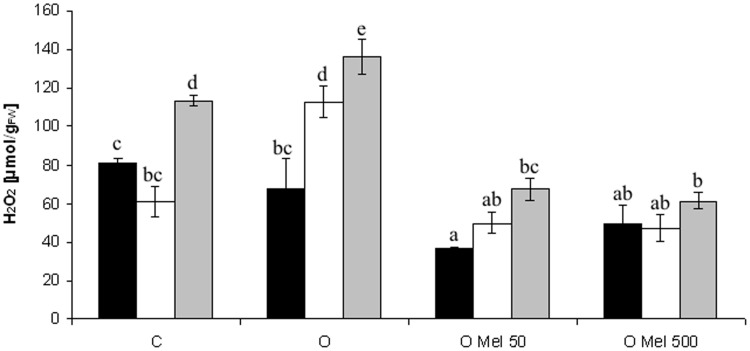
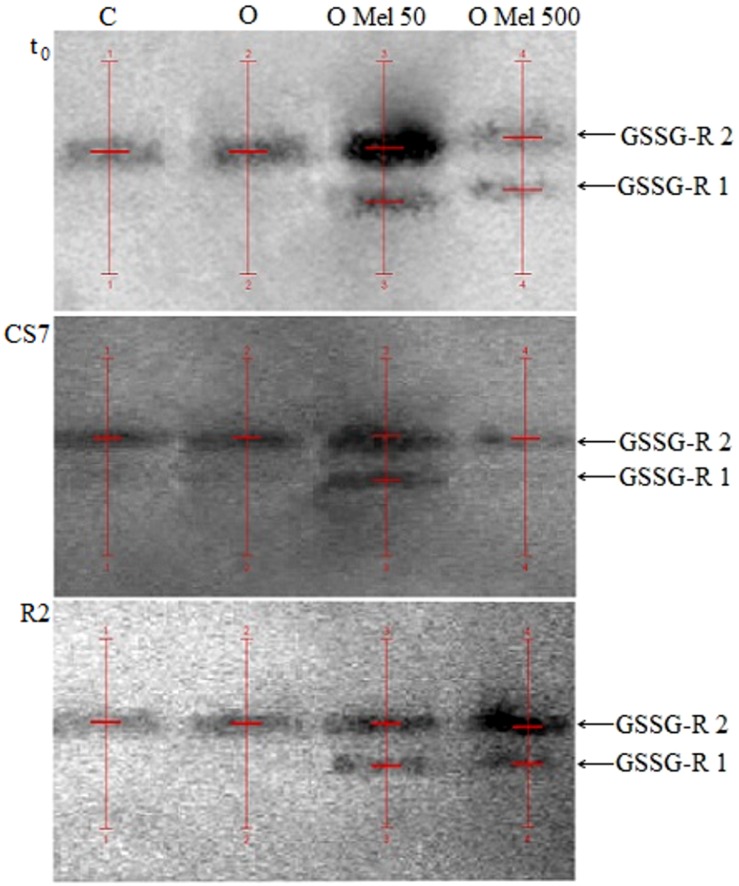
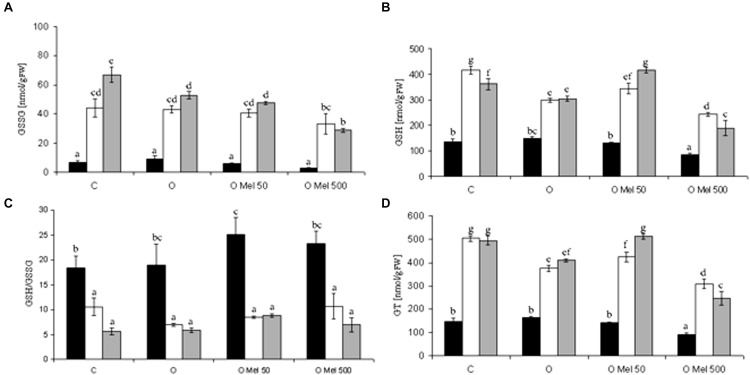
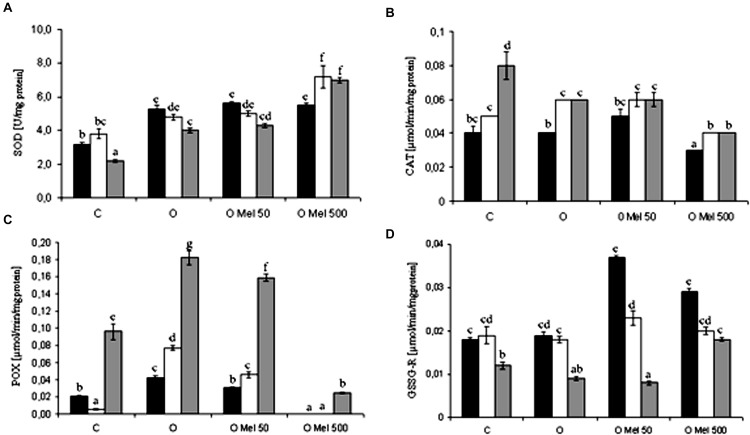
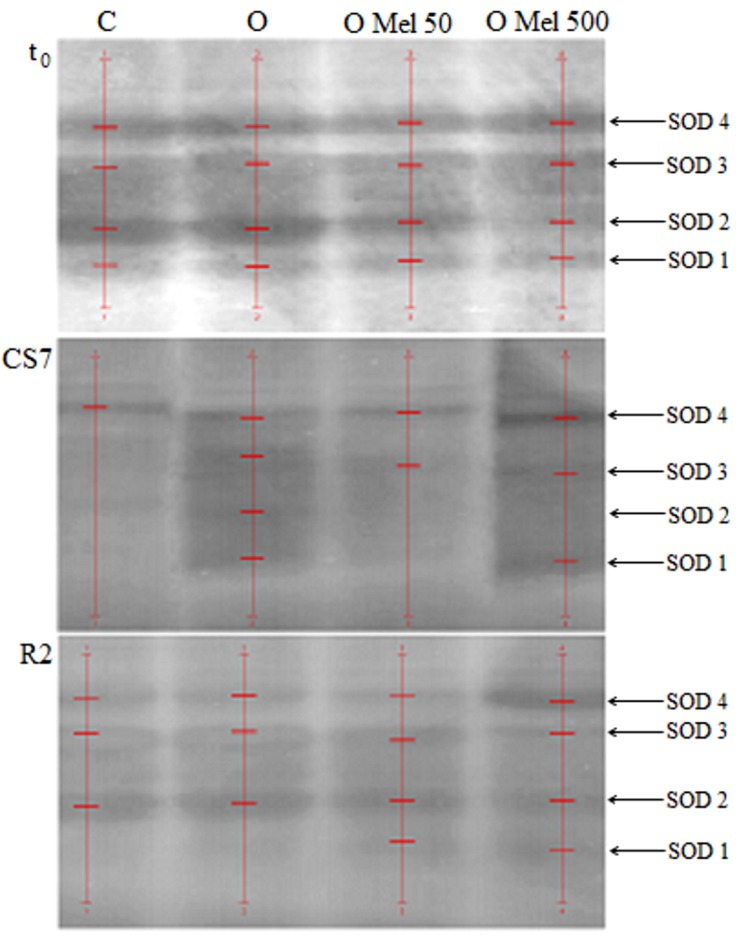
The relationship between exogenous melatonin applied into cucumber seeds during osmopriming and modifications of their antioxidant defense was studied. Accumulation of hydrogen peroxide, antioxidant enzyme activities and glutathione pool were investigated in embryonic axes isolated from the control, osmoprimed, and osmoprimed with melatonin seeds. Germinating cucumber seeds are very sensitive to chilling. Temperature 10°C causes oxidative stress in young seedlings. Seed pre-treatment with melatonin seemed to limit H2O2 accumulation during germination under optimal condition as well as during chilling stress and recovery period. Melatonin affected superoxide dismutase (SOD) activity and its isoforms during stress and recovery period but did not influence CAT and POX activities. Thus it is possible that in cucumber this indoleamine could act mostly as a direct H2O2 scavenger, but superoxide anion combat via SOD stimulation. The GSH/GSSG ratio is considered as an indirect determinant of oxidative stress. When the cells are exposed to oxidative stress GSSG is accumulated and the ratio of GSH to GSSG decreases. In our research pre-sowing melatonin application into the cucumber seeds caused high beneficial value of GSH/GSSG ratio that could be helpful for stress countering. Glutathione reductase (GSSG-R) activity in the axes isolated from these seeds was two fold higher than in those isolated from the control and from the osmoprimed without melatonin ones. Additional isoforms of GSSG-R in melatonin treated seeds were also observed. It explains high and effective GSH pool restoration in the seeds pre-treated with melatonin. We confirmed that melatonin could protect cucumber seeds and young seedlings against oxidative stress directly and indirectly detoxifying ROS, thereby plants grown better even in harmful environmental conditions. This work is the first that investigated on plant in vivo model and documented melatonin influence on redox state during seed germination. This way we try to fill lack of information about melatonin-regulated pathways involved in antioxidant strategy of plant defense.
研究了渗透引发期间施加于黄瓜种子的外源褪黑素与其抗氧化防御机制改变之间的关系。对从对照种子、渗透引发种子以及用褪黑素渗透引发的种子中分离出的胚轴,研究了过氧化氢的积累、抗氧化酶活性和谷胱甘肽库。发芽的黄瓜种子对低温非常敏感。10°C的温度会在幼苗中引起氧化应激。褪黑素预处理种子似乎能在最佳条件下的发芽过程中以及低温胁迫和恢复期限制过氧化氢的积累。褪黑素在胁迫和恢复期影响超氧化物歧化酶(SOD)活性及其同工型,但不影响过氧化氢酶(CAT)和过氧化物酶(POX)活性。因此,在黄瓜中这种吲哚胺可能主要作为直接的过氧化氢清除剂起作用,但通过刺激SOD对抗超氧阴离子。谷胱甘肽氧化还原比(GSH/GSSG)被认为是氧化应激的间接决定因素。当细胞暴露于氧化应激时,氧化型谷胱甘肽(GSSG)会积累,谷胱甘肽(GSH)与GSSG的比值会降低。在我们的研究中,播种前将褪黑素施加到黄瓜种子上导致GSH/GSSG比值具有很高的有益价值,这可能有助于应对胁迫。从这些种子中分离出的胚轴中的谷胱甘肽还原酶(GSSG-R)活性比从对照种子和未用褪黑素渗透引发的种子中分离出的胚轴中的活性高两倍。在用褪黑素处理的种子中还观察到了GSSG-R的其他同工型。这解释了用褪黑素预处理的种子中谷胱甘肽库的高效恢复。我们证实,褪黑素可以直接和间接清除活性氧,保护黄瓜种子和幼苗免受氧化应激,从而使植物即使在有害环境条件下也能生长得更好。这项工作是首次在植物体内模型上进行研究,并记录了褪黑素对种子萌发过程中氧化还原状态的影响。通过这种方式,我们试图填补关于参与植物防御抗氧化策略的褪黑素调节途径的信息空白。