Sengupta Urmi, Nilson Ashley N, Kayed Rakez
Mitchell Center for Neurodegenerative Diseases, University of Texas Medical Branch, Galveston, TX 77555, USA; Department of Neurology, University of Texas Medical Branch, Galveston, TX 77555, USA; Department of Neuroscience and Cell Biology, University of Texas Medical Branch, Galveston, TX 77555, USA.
Mitchell Center for Neurodegenerative Diseases, University of Texas Medical Branch, Galveston, TX 77555, USA; Department of Neurology, University of Texas Medical Branch, Galveston, TX 77555, USA; Department of Neuroscience and Cell Biology, University of Texas Medical Branch, Galveston, TX 77555, USA; Sealy Center for Vaccine Development, University of Texas Medical Branch, Galveston, TX 77555, USA.
EBioMedicine. 2016 Apr;6:42-49. doi: 10.1016/j.ebiom.2016.03.035. Epub 2016 Apr 5.
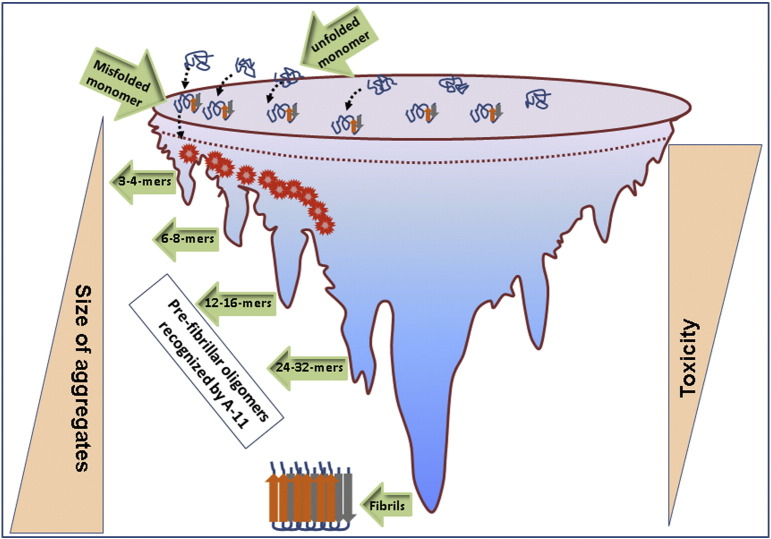
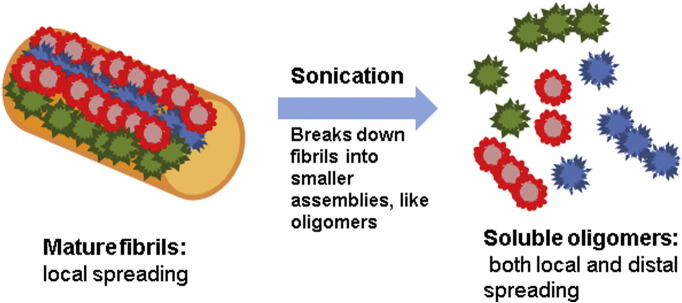
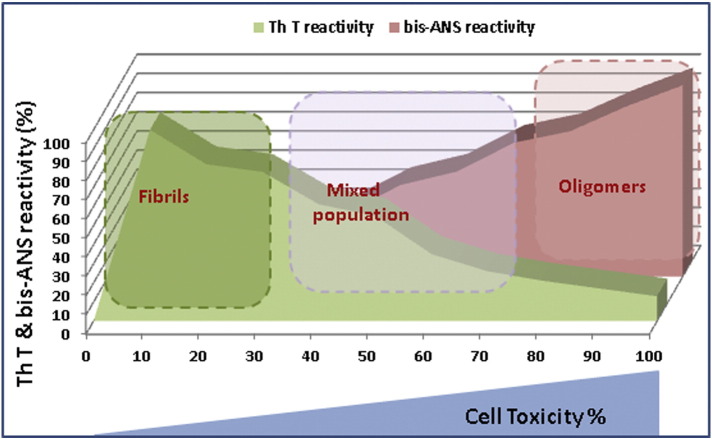
The incidence of Alzheimer's disease (AD) is growing every day and finding an effective treatment is becoming more vital. Amyloid-β (Aβ) has been the focus of research for several decades. The recent shift in the Aβ cascade hypothesis from all Aβ to small soluble oligomeric intermediates is directing the search for therapeutics towards the toxic mediators of the disease. Targeting the most toxic oligomers may prove to be an effective treatment by preventing their spread. Specific targeting of oligomers has been shown to protect cognition in rodent models. Additionally, the heterogeneity of research on Aβ oligomers may seem contradictory until size and conformation are taken into account. In this review, we will discuss Aβ oligomers and their toxicity in relation to size and conformation as well as their influence on inflammation and the potential of Aβ oligomer immunotherapy.
阿尔茨海默病(AD)的发病率日益上升,寻找有效的治疗方法变得愈发重要。几十年来,β-淀粉样蛋白(Aβ)一直是研究的焦点。最近,Aβ级联假说从所有Aβ转向小的可溶性寡聚中间体,这使得对该疾病毒性介质的治疗研究方向发生了转变。靶向最具毒性的寡聚体可能通过防止其扩散而被证明是一种有效的治疗方法。在啮齿动物模型中,对寡聚体进行特异性靶向已被证明可保护认知功能。此外,在考虑大小和构象之前,关于Aβ寡聚体的研究异质性可能看起来相互矛盾。在这篇综述中,我们将讨论Aβ寡聚体及其与大小和构象相关的毒性,以及它们对炎症的影响和Aβ寡聚体免疫治疗的潜力。