Jin Zhihui, Lu Yan, Tang Huifang, Cui Huashun
Department of Acupuncture and Moxibustion, Shuguang Hospital Affiliated to Shanghai University of Traditional Chinese Medicine, Shanghai, P.R. China.
Department of Neurology, Nanjing Hospital of Chinese Medicine Affiliated to Nanjing University of Chinese Medicine, Nanjing, P.R. China.
Alzheimers Dement. 2025 Aug;21(8):e70472. doi: 10.1002/alz.70472.
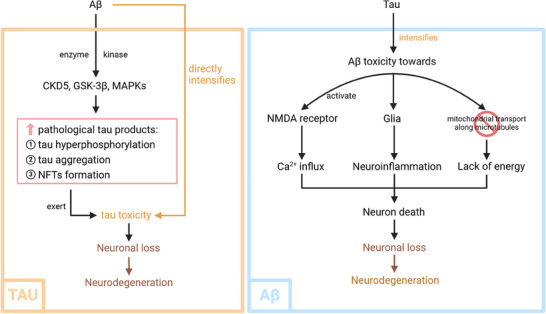
The amyloid/tau/neurodegeneration (ATN) biomarker framework has greatly progressed the diagnosis and staging of Alzheimer's disease (AD). However, recent research highlights neuroinflammation as an equally critical factor in AD pathology across humans, rodents, and non-human primates (NHPs). This review evaluates the combined use of ATN and neuroinflammatory biomarkers-such as glial fibrillary acidic protein (GFAP) (astrocytic marker) and triggering receptor expressed on myeloid cells 2 (TREM2)/ ionized calcium-binding adapter molecule 1 (IBA-1) (microglial markers)-in elucidating AD mechanisms, promoting early diagnosis, and shaping therapeutic strategies. It also summarizes the key features and translational potential of NHP models that closely mimic human AD pathology, highlighting the promising prospects of integrating these models with the ATN(X) biomarker system. These insights strengthen the link between biomarkers, NHP research, and clinical practice, opening new avenues for the early detection and treatment strategies of AD. HIGHLIGHTS: Neuroinflammation biomarkers, including glial fibrillary acidic protein (GFAP), triggering receptor expressed on myeloid cells 2 (TREM2)/sTREM2, and YKL-40, show strong clinical potential in Alzheimer's disease (AD). Incorporating neuroinflammation biomarkers into the ATN(X) framework may enhance diagnostic precision. Advanced non-human primate (NHP) models closely replicate human brain pathology, addressing key limitations of mouse models. Measuring ATN(X) biomarkers in NHPs may improve clinical translation and support early diagnosis of AD. Optimizing NHP models-including ApoE4 status, injection protocols, and gene-editing approaches-is crucial for reproducibility and efficiency.
淀粉样蛋白/ tau蛋白/神经退行性变(ATN)生物标志物框架极大地推动了阿尔茨海默病(AD)的诊断和分期。然而,最近的研究强调神经炎症在人类、啮齿动物和非人类灵长类动物(NHP)的AD病理学中是一个同样关键的因素。本综述评估了ATN和神经炎症生物标志物(如胶质纤维酸性蛋白(GFAP)(星形胶质细胞标志物)和髓系细胞表面表达的触发受体2(TREM2)/离子钙结合衔接分子1(IBA-1)(小胶质细胞标志物))的联合应用在阐明AD机制、促进早期诊断和制定治疗策略方面的作用。它还总结了紧密模拟人类AD病理学的NHP模型的关键特征和转化潜力,强调了将这些模型与ATN(X)生物标志物系统整合的广阔前景。这些见解加强了生物标志物、NHP研究和临床实践之间的联系,为AD的早期检测和治疗策略开辟了新途径。要点:神经炎症生物标志物,包括胶质纤维酸性蛋白(GFAP)、髓系细胞表面表达的触发受体2(TREM2)/可溶性TREM2(sTREM2)和YKL-40,在阿尔茨海默病(AD)中显示出强大的临床潜力。将神经炎症生物标志物纳入ATN(X)框架可能会提高诊断精度。先进的非人类灵长类动物(NHP)模型紧密复制人类大脑病理学,解决了小鼠模型的关键局限性。在NHP中测量ATN(X)生物标志物可能会改善临床转化并支持AD的早期诊断。优化NHP模型(包括载脂蛋白E4(ApoE4)状态、注射方案和基因编辑方法)对于可重复性和效率至关重要。