Roy Koushik, Mandloi Sapan, Chakrabarti Saikat, Roy Syamal
Infectious Diseases and Immunology Division, CSIR-Indian Institute of Chemical Biology, Kolkata, India.
Structural Biology and Bioinformatics Division, CSIR-Indian Institute of Chemical Biology, Kolkata, India.
PLoS Negl Trop Dis. 2016 May 23;10(5):e0004710. doi: 10.1371/journal.pntd.0004710. eCollection 2016 May.
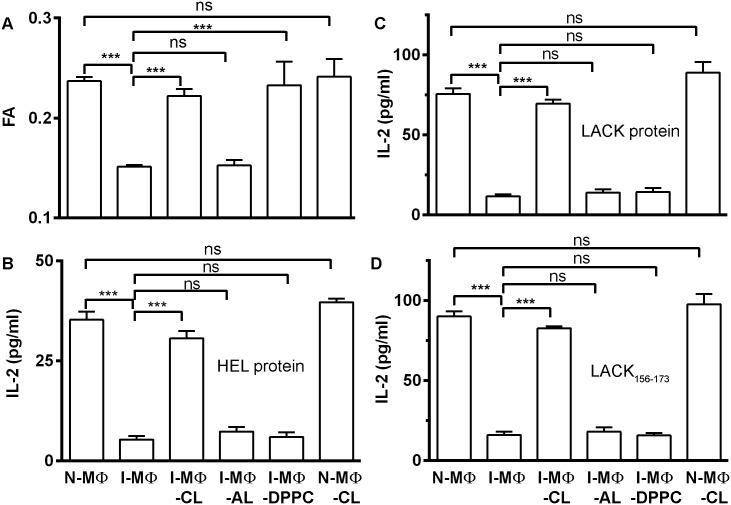
Previously we reported that Kala-azar patients show progressive decrease in serum cholesterol as a function of splenic parasite burden. Splenic macrophages (MΦ) of Leishmania donovani (LD) infected mice show decrease in membrane cholesterol, while LD infected macrophages (I-MΦ) show defective T cell stimulating ability that could be corrected by liposomal delivery of cholesterol. T helper cells recognize peptide antigen in the context of class II MHC molecule. It is known that the conformation of a large number of membrane proteins is dependent on membrane cholesterol. In this investigation we tried to understand the influence of decreased membrane cholesterol in I-MΦ on the conformation of MHC-II protein and peptide-MHC-II stability, and its bearing on the antigen specific T-cell activation.
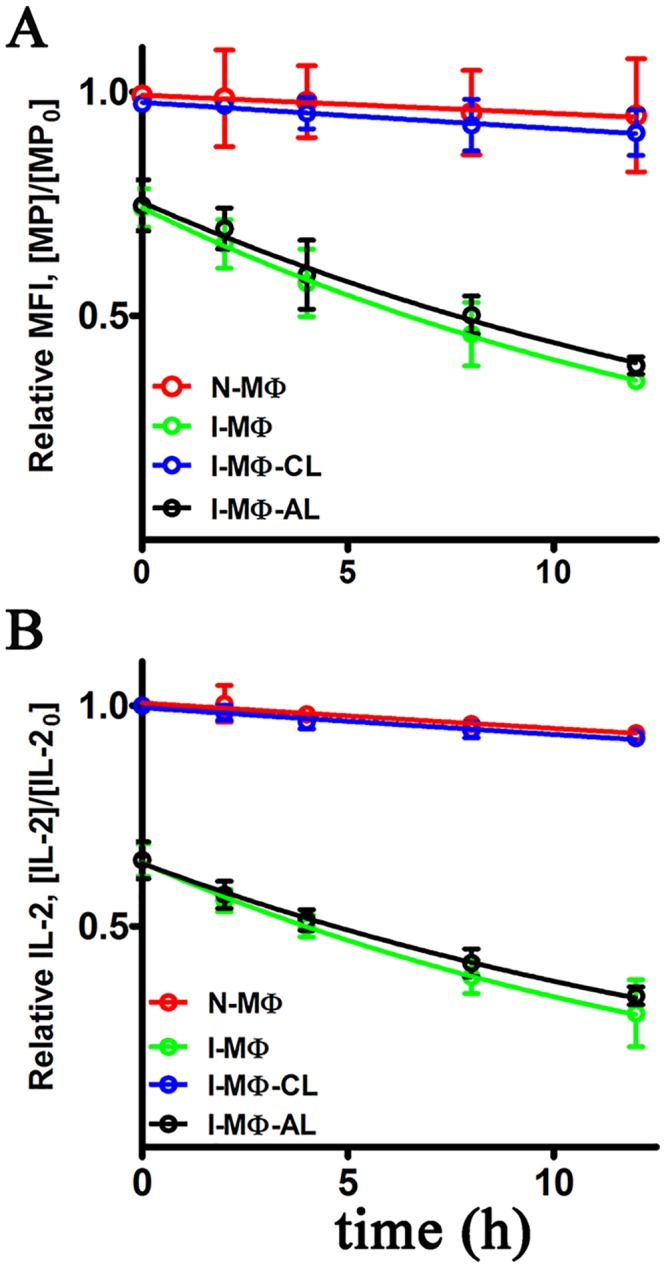
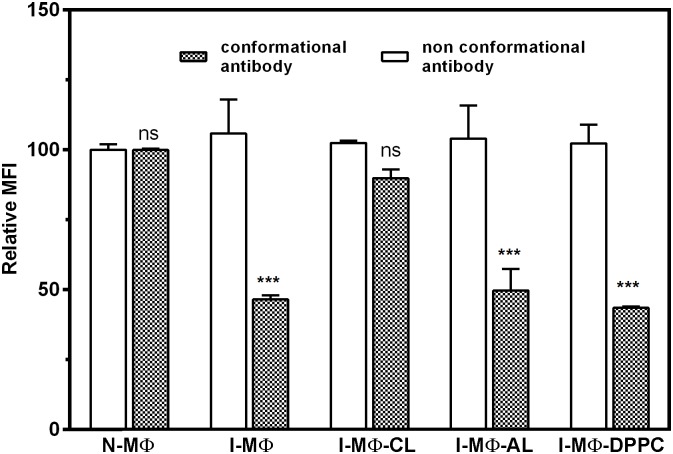
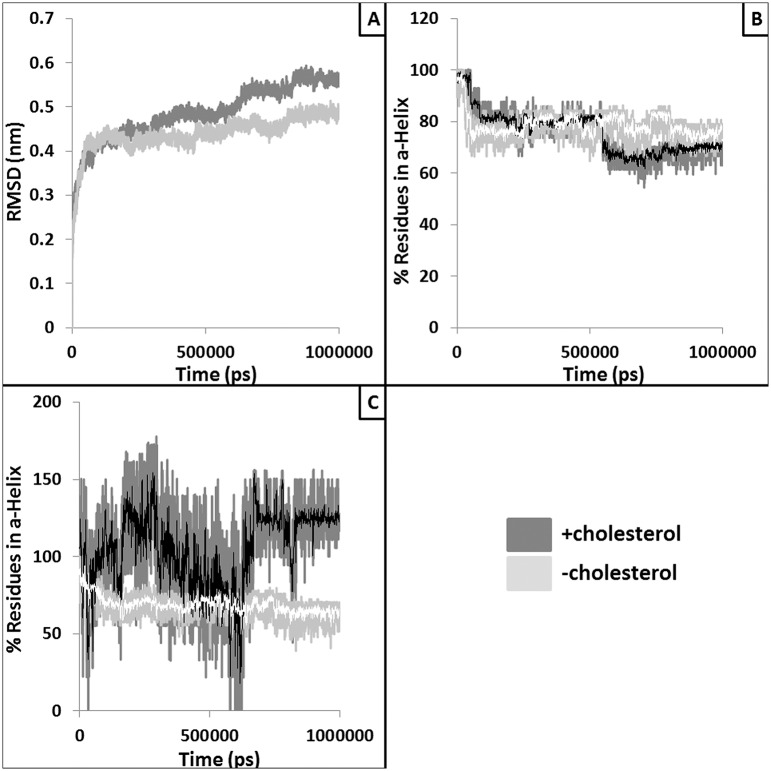
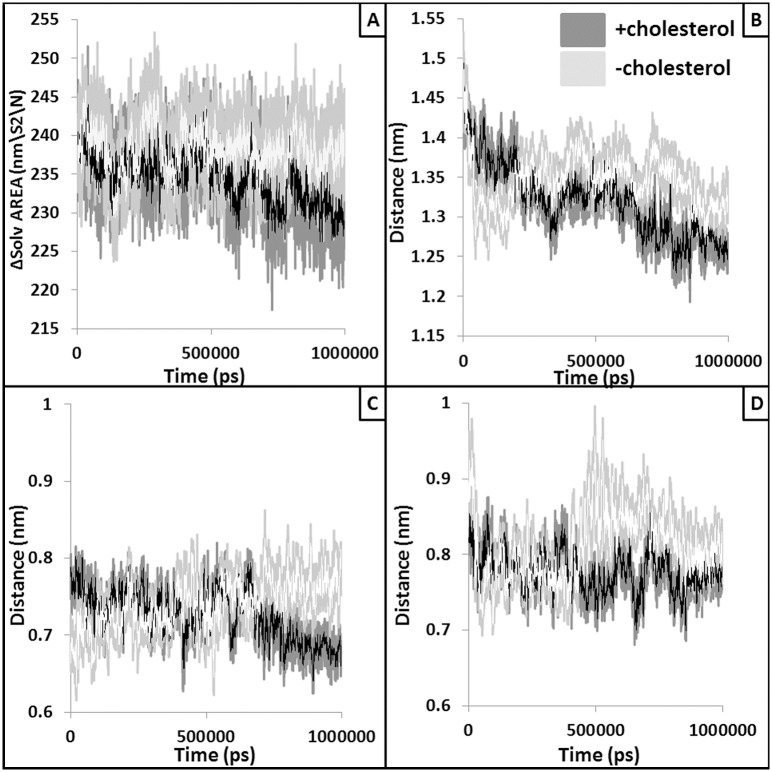
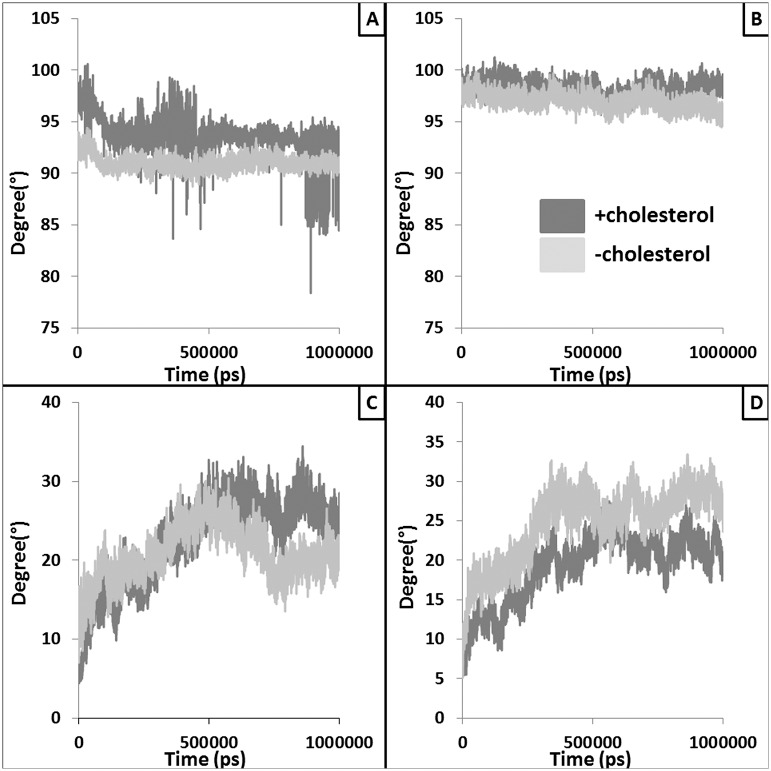
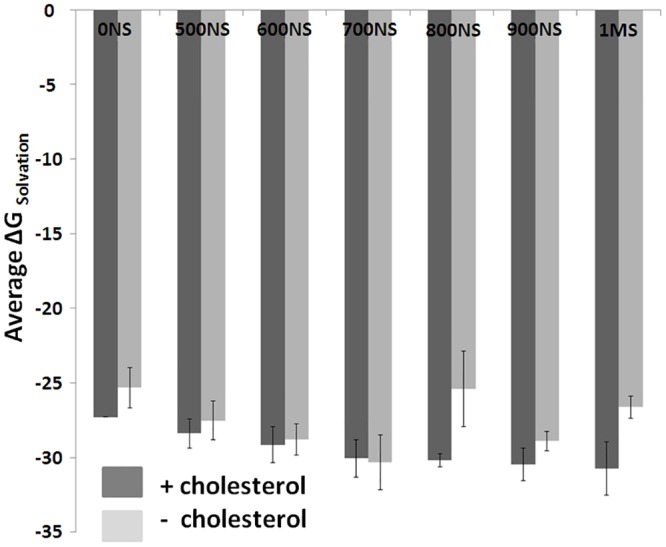
METHODOLOGY/PRINCIPAL FINDINGS: MΦ of CBA/j mice were infected with Leishmania donovani (I-MΦ). Two different anti-Aκ mAbs were used to monitor the status of MHC-II protein under parasitized condition. One of them (11.5-2) was conformation specific, whereas the other one (10.2.16) was not. Under parasitized condition, the binding of 11.5-2 decreased significantly with respect to the normal counterpart, whereas that of 10.2.16 remained unaltered. The binding of 11.5-2 was restored to normal upon liposomal delivery of cholesterol in I-MΦ. By molecular dynamics (MD) simulation studies we found that there was considerable conformational fluctuation in the transmembrane domain of the MHC-II protein in the presence of membrane cholesterol than in its absence, which possibly influenced the distal peptide binding groove. This was evident from the faster dissociation of the cognate peptide from peptide-MHC complex under parasitized condition, which could be corrected by liposomal delivery of cholesterol in I-MΦ.
The decrease in membrane cholesterol in I-MΦ may lead to altered conformation of MHC II, and this may contribute to a faster dissociation of the peptide. Furthermore, liposomal delivery of cholesterol in I-MΦ restored its normal antigen presenting function. This observation brings strength to our previous observation on host directed therapeutic application of liposomal cholesterol in experimental visceral leishmaniasis.
此前我们报道过,黑热病患者的血清胆固醇水平会随着脾脏寄生虫负荷的增加而逐渐降低。感染杜氏利什曼原虫(LD)的小鼠脾脏巨噬细胞(MΦ)的膜胆固醇含量降低,而感染LD的巨噬细胞(I-MΦ)的T细胞刺激能力存在缺陷,通过脂质体递送胆固醇可纠正这一缺陷。辅助性T细胞在II类主要组织相容性复合体(MHC)分子的背景下识别肽抗原。已知大量膜蛋白的构象依赖于膜胆固醇。在本研究中,我们试图了解I-MΦ中膜胆固醇降低对MHC-II蛋白构象和肽-MHC-II稳定性的影响,及其与抗原特异性T细胞活化的关系。
方法/主要发现:用杜氏利什曼原虫感染CBA/j小鼠的MΦ(I-MΦ)。使用两种不同的抗Aκ单克隆抗体(mAb)来监测寄生虫感染条件下MHC-II蛋白的状态。其中一种(11.5-2)具有构象特异性,而另一种(10.2.16)则不具有。在寄生虫感染条件下,11.5-2的结合相对于正常对照显著降低,而10.2.16的结合保持不变。在I-MΦ中通过脂质体递送胆固醇后,11.5-2的结合恢复正常。通过分子动力学(MD)模拟研究,我们发现与不存在膜胆固醇时相比,存在膜胆固醇时MHC-II蛋白跨膜结构域的构象波动更大,这可能影响了远端肽结合槽。这从寄生虫感染条件下同源肽从肽-MHC复合物中更快解离得到证明,可以通过在I-MΦ中脂质体递送胆固醇来纠正。
I-MΦ中膜胆固醇的降低可能导致MHC II构象改变,这可能导致肽更快解离。此外脂质体递送胆固醇可恢复I-MΦ正常的抗原呈递功能。这一观察结果支持了我们之前关于脂质体胆固醇在实验性内脏利什曼病中宿主导向治疗应用的观察。