Jiang M, Polepalli J, Chen L Y, Zhang B, Südhof T C, Malenka R C
Department of Molecular and Cellular Physiology, Stanford University School of Medicine, Stanford, CA, USA.
Howard Hughes Medical Institute, Stanford University, Stanford, CA, USA.
Mol Psychiatry. 2017 Mar;22(3):375-383. doi: 10.1038/mp.2016.80. Epub 2016 May 24.
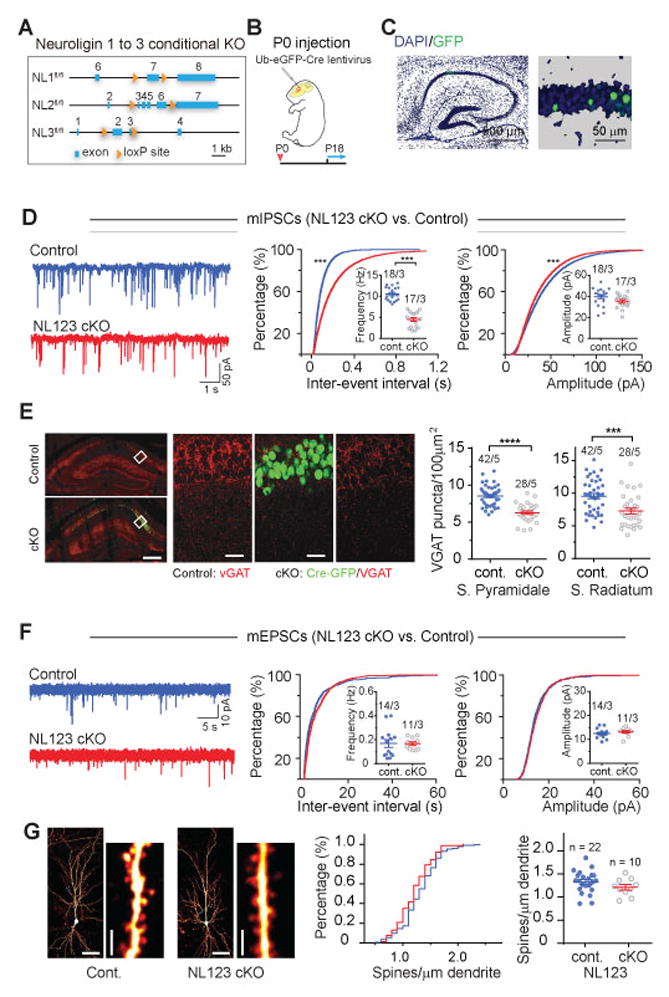
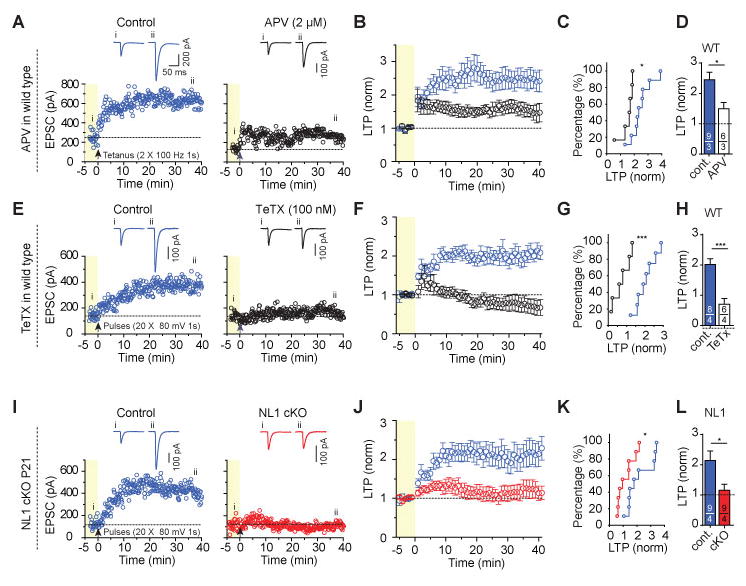
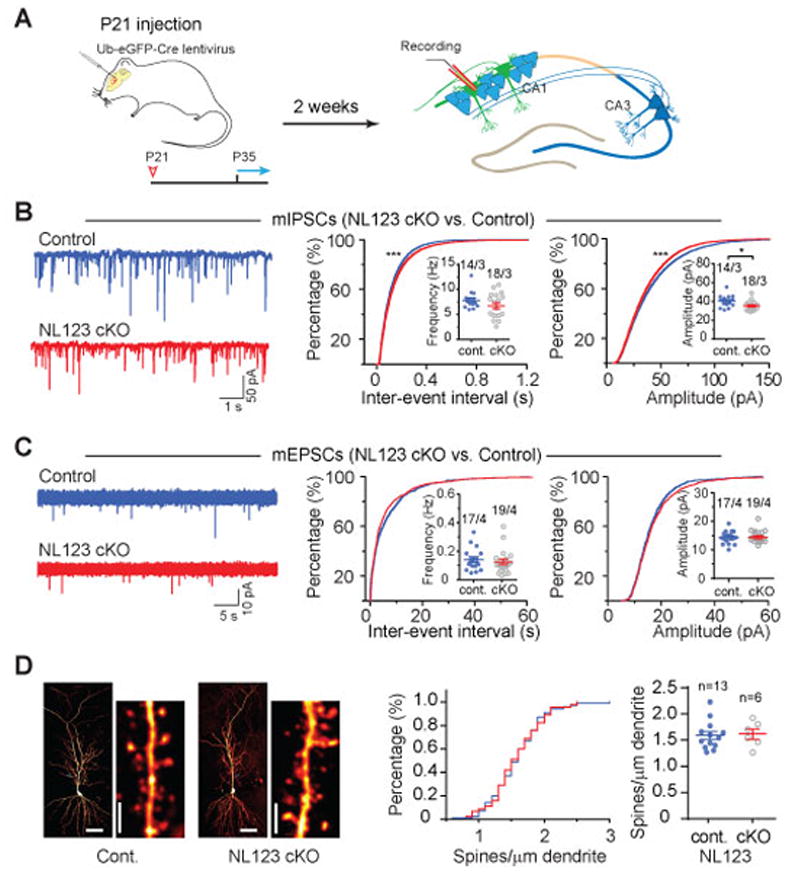
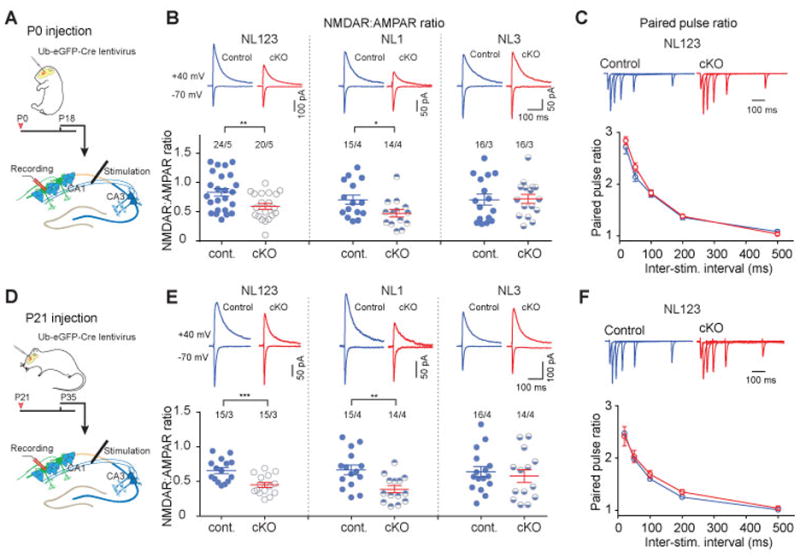
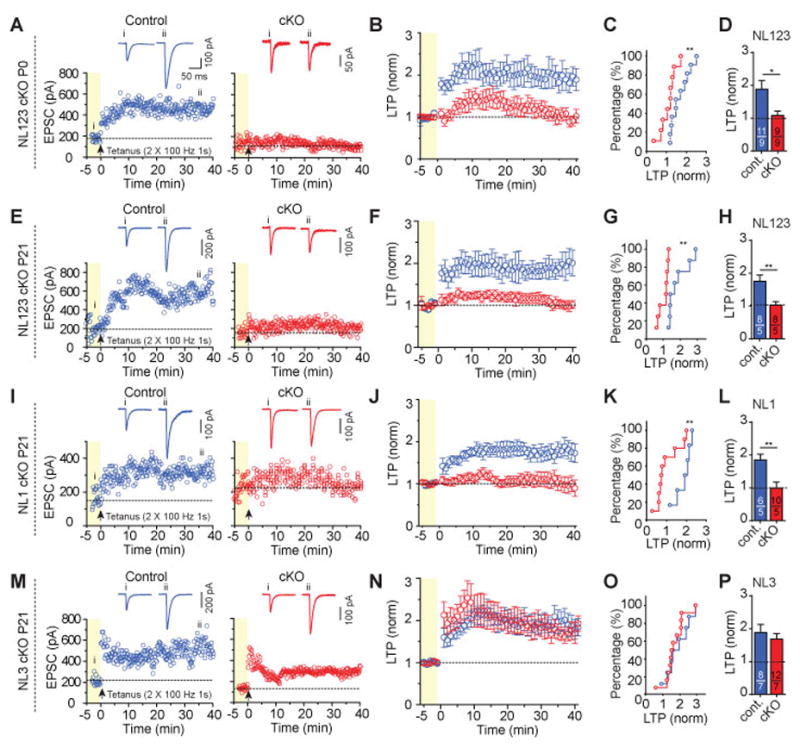
Neuroligins are postsynaptic cell-adhesion molecules implicated in autism and other neuropsychiatric disorders. Despite extensive work, the role of neuroligins in synapse function and plasticity, especially N-methyl-d-aspartate (NMDA) receptor (NMDAR)-dependent long-term potentiation (LTP), remains unclear. To establish which synaptic functions unequivocally require neuroligins, we analyzed single and triple conditional knockout (cKO) mice for all three major neuroligin isoforms (NL1-NL3). We inactivated neuroligins by stereotactic viral expression of Cre-recombinase in hippocampal CA1 region pyramidal neurons at postnatal day 0 (P0) or day 21 (P21) and measured synaptic function, synaptic plasticity and spine numbers in acute hippocampal slices 2-3 weeks later. Surprisingly, we find that ablation of neuroligins in newborn or juvenile mice only modestly impaired basal synaptic function in hippocampus and caused no alteration in postsynaptic spine numbers. However, triple cKO of NL1-NL3 or single cKO of NL1 impaired NMDAR-mediated excitatory postsynaptic currents and abolished NMDAR-dependent LTP. Strikingly, the NL1 cKO also abolished LTP elicited by activation of L-type Ca-channels during blockade of NMDARs. These findings demonstrate that neuroligins are generally not essential for synapse formation in CA1 pyramidal neurons but shape synaptic properties and that NL1 specifically is required for LTP induced by postsynaptic Ca-elevations, a function which may contribute to the pathophysiological role of neuroligins in brain disorders.
神经连接蛋白是突触后细胞粘附分子,与自闭症和其他神经精神疾病有关。尽管进行了大量研究,但神经连接蛋白在突触功能和可塑性中的作用,尤其是N-甲基-D-天冬氨酸(NMDA)受体(NMDAR)依赖性长时程增强(LTP),仍不清楚。为了明确哪些突触功能明确需要神经连接蛋白,我们分析了所有三种主要神经连接蛋白亚型(NL1-NL3)的单条件和三条件基因敲除(cKO)小鼠。我们在出生后第0天(P0)或第21天(P21)通过立体定向病毒在海马CA1区锥体神经元中表达Cre重组酶来使神经连接蛋白失活,并在2-3周后测量急性海马切片中的突触功能、突触可塑性和棘突数量。令人惊讶的是,我们发现新生或幼年小鼠中神经连接蛋白的缺失仅适度损害了海马中的基础突触功能,且未导致突触后棘突数量的改变。然而,NL1-NL3的三条件基因敲除或NL1的单条件基因敲除损害了NMDAR介导的兴奋性突触后电流,并消除了NMDAR依赖性LTP。引人注目的是,NL1基因敲除还消除了在NMDAR阻断期间由L型钙通道激活引发的LTP。这些发现表明,神经连接蛋白通常对CA1锥体神经元中的突触形成不是必需的,但塑造了突触特性,并且NL1特别需要用于由突触后钙升高诱导的LTP,这一功能可能有助于神经连接蛋白在脑部疾病中的病理生理作用。