Kim Charles C, Nakamura Mary C, Hsieh Christine L
Department of Medicine, Division of Experimental Medicine, University of California, San Francisco, 1001 Potrero Avenue, Building 3, Room 603, Box 1234, San Francisco, CA, 94143-1234, USA.
Current address: Verily, Mountain View, CA, 94043, USA.
J Neuroinflammation. 2016 May 24;13(1):117. doi: 10.1186/s12974-016-0581-z.
Macrophage polarization programs, commonly referred to as "classical" and "alternative" activation, are widely considered as distinct states that are exclusive of one another and are associated with different functions such as inflammation and wound healing, respectively. In a number of disease contexts, such as traumatic brain injury (TBI), macrophage polarization influences the extent of pathogenesis, and efforts are underway to eliminate pathogenic subsets. However, previous studies have not distinguished whether the simultaneous presence of both classical and alternative activation signatures represents the admixture of differentially polarized macrophages or if they have adopted a unique state characterized by components of both classical and alternative activation.
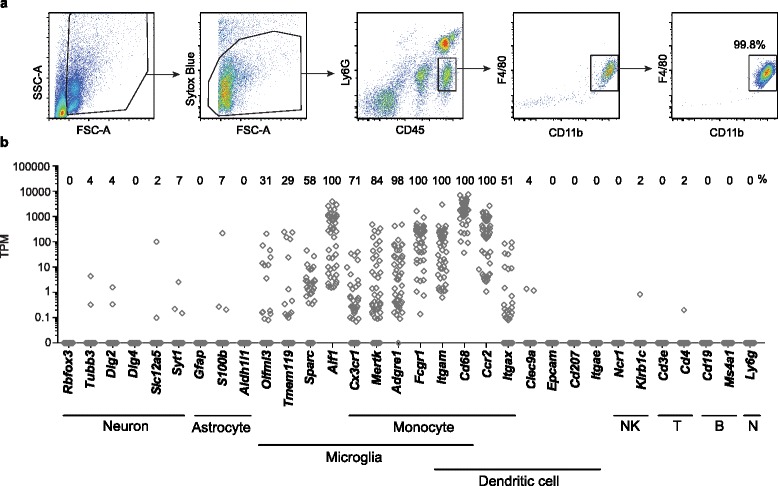
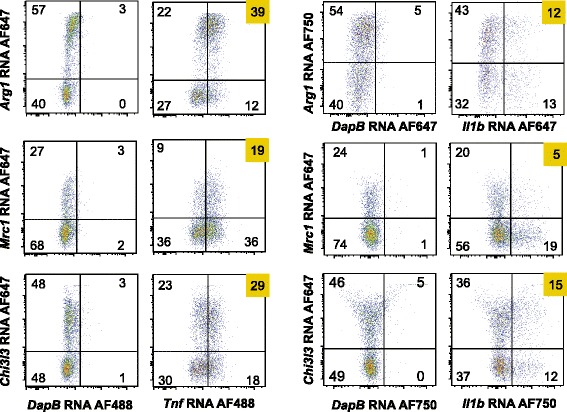
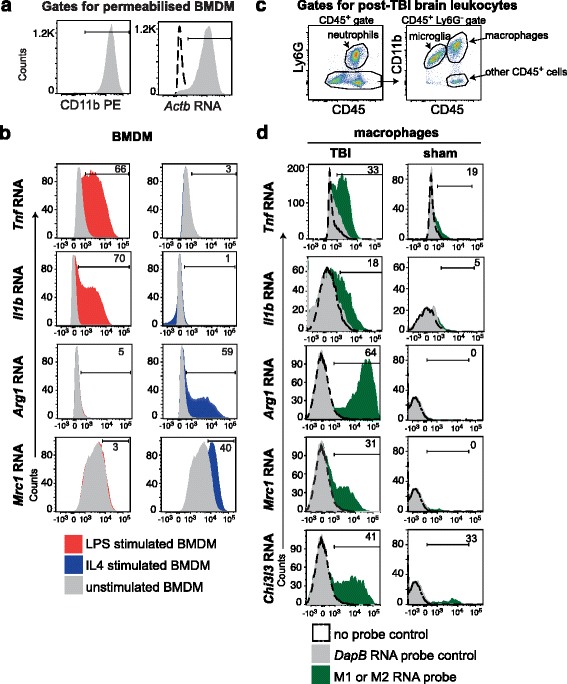
We analyzed the gene expression profiles of individual monocyte-derived brain macrophages responding to TBI using single-cell RNA sequencing. RNA flow cytometry was used as another single-cell analysis technique to validate the single-cell RNA sequencing results.
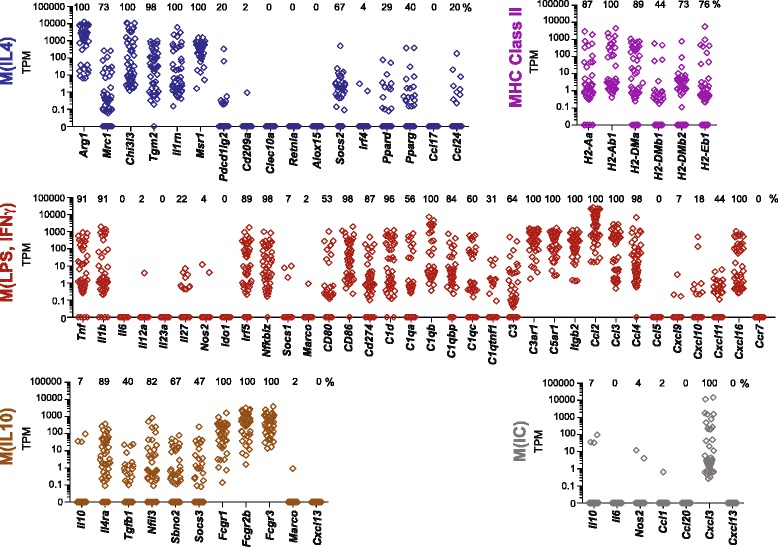
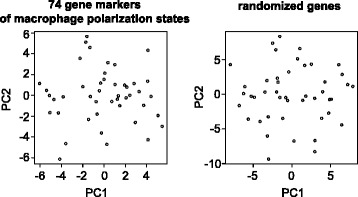
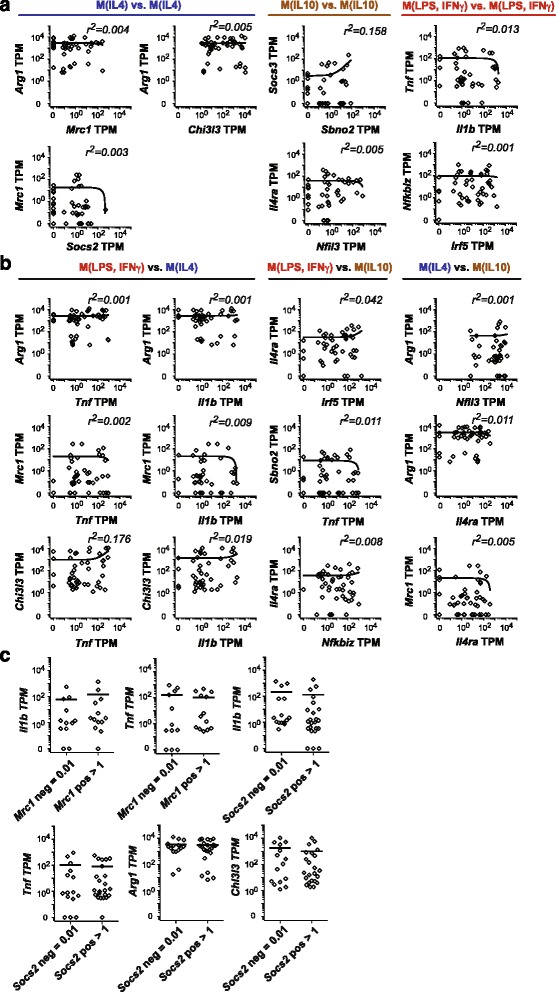
The analysis of signature polarization genes by single-cell RNA sequencing revealed the presence of diverse activation states, including M(IL4), M(IL10), and M(LPS, IFNγ). However, the expression of a given polarization marker was no more likely than at random to predict simultaneous expression or repression of markers of another polarization program within the same cell, suggesting a lack of exclusivity in macrophage polarization states in vivo in TBI. Also unexpectedly, individual TBI macrophages simultaneously expressed high levels of signature polarization genes across two or three different polarization states and in several distinct and seemingly incompatible combinations.
Single-cell gene expression profiling demonstrated that monocytic macrophages in TBI are not comprised of distinctly polarized subsets but are uniquely and broadly activated. TBI macrophage activation in vivo is deeply complex, with individual cells concurrently adopting both inflammatory and reparative features with a lack of exclusivity. These data provide physiologically relevant evidence that the early macrophage response to TBI is comprised of novel activation states that are discordant with the current paradigm of macrophage polarization-a key consideration for therapeutic modulation.
巨噬细胞极化程序,通常被称为“经典”和“替代”激活,被广泛认为是相互排斥的不同状态,分别与炎症和伤口愈合等不同功能相关。在许多疾病背景下,如创伤性脑损伤(TBI),巨噬细胞极化会影响发病机制的程度,并且正在努力消除致病性亚群。然而,先前的研究尚未区分经典和替代激活特征的同时存在是代表不同极化巨噬细胞的混合,还是它们采用了一种以经典和替代激活成分特征的独特状态。
我们使用单细胞RNA测序分析了单个单核细胞衍生的脑巨噬细胞对TBI的基因表达谱。RNA流式细胞术作为另一种单细胞分析技术来验证单细胞RNA测序结果。
通过单细胞RNA测序对标志性极化基因的分析揭示了多种激活状态的存在,包括M(IL4)、M(IL10)和M(LPS,IFNγ)。然而,给定极化标志物的表达并不比随机情况更有可能预测同一细胞内另一种极化程序标志物的同时表达或抑制,这表明在TBI体内巨噬细胞极化状态缺乏排他性。同样出乎意料的是,单个TBI巨噬细胞同时在两种或三种不同的极化状态下以及几种不同且看似不兼容的组合中高水平表达标志性极化基因。
单细胞基因表达谱表明,TBI中的单核巨噬细胞不是由明显极化的亚群组成,而是独特且广泛地被激活。TBI巨噬细胞在体内的激活非常复杂,单个细胞同时具有炎症和修复特征且缺乏排他性。这些数据提供了生理学相关证据,表明巨噬细胞对TBI的早期反应由与当前巨噬细胞极化范式不一致的新型激活状态组成——这是治疗调节的一个关键考虑因素。