Lieber Michael R
USC Norris Comprehensive Cancer Center, Room 5428, University of Southern California Keck School of Medicine, 1441 Eastlake Avenue, MC9176, Los Angeles, California 90089-9176, USA.
Nat Rev Cancer. 2016 May 25;16(6):387-98. doi: 10.1038/nrc.2016.40.
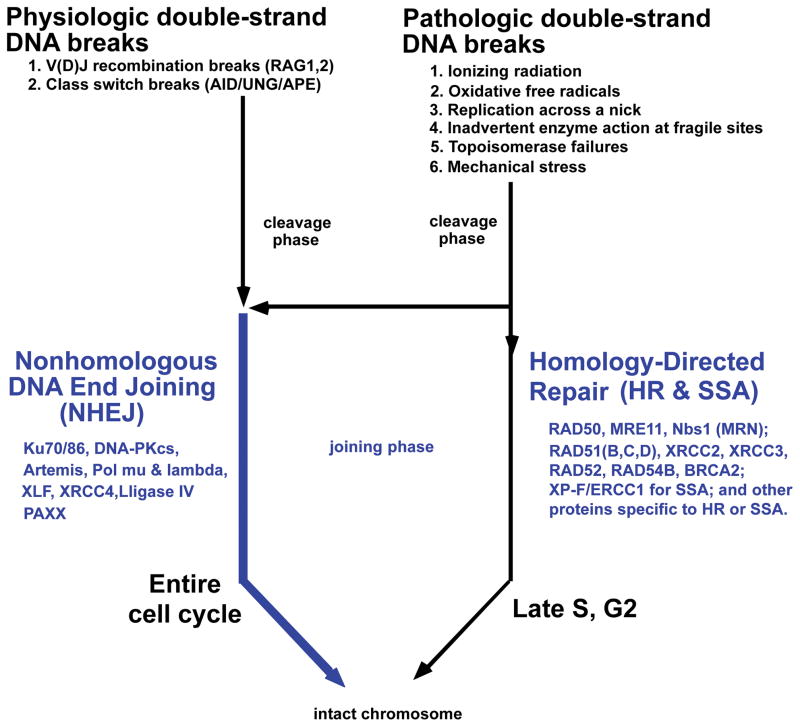
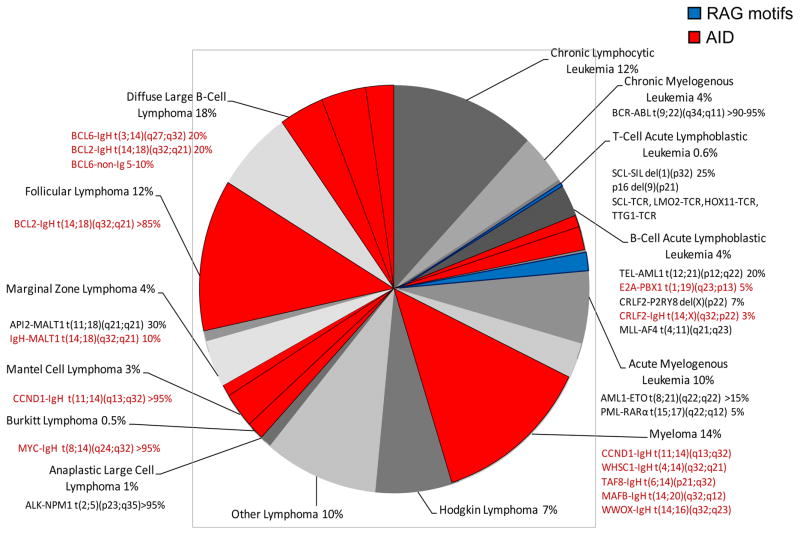
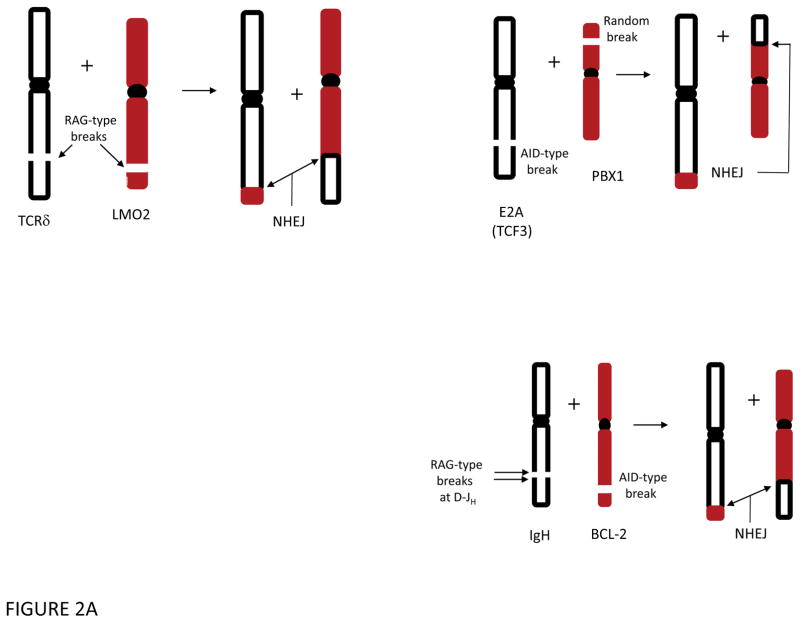
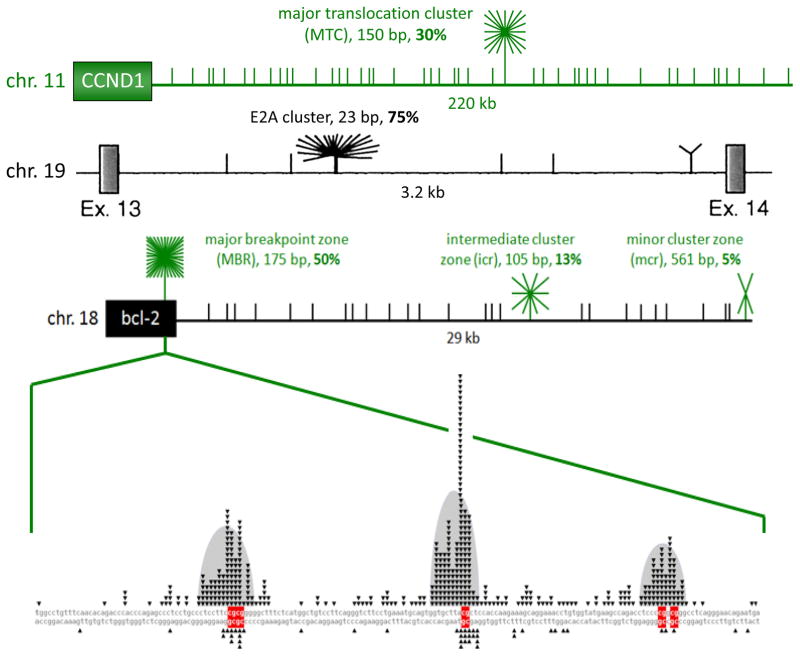
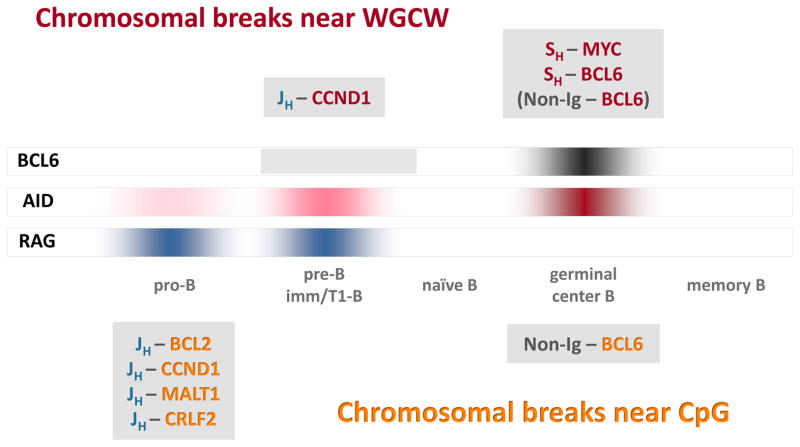
Analysis of chromosomal translocation sequence locations in human lymphomas has provided valuable clues about the mechanism of the translocations and when they occur. Biochemical analyses on the mechanisms of DNA breakage and rejoining permit formulation of detailed models of the human chromosomal translocation process in lymphoid neoplasms. Most human lymphomas are derived from B cells in which a DNA break at an oncogene is initiated by activation-induced deaminase (AID). The partner locus in many cases is located at one of the antigen receptor loci, and this break is generated by the recombination activating gene (RAG) complex or by AID. After breakage, the joining process typically occurs by non-homologous DNA end-joining (NHEJ). Some of the insights into this mechanism also apply to translocations that occur in non-lymphoid neoplasms.
对人类淋巴瘤中染色体易位序列位置的分析,为易位机制及其发生时间提供了有价值的线索。对DNA断裂和重新连接机制的生化分析,有助于构建淋巴细胞肿瘤中人类染色体易位过程的详细模型。大多数人类淋巴瘤源自B细胞,其中致癌基因处的DNA断裂由激活诱导脱氨酶(AID)引发。在许多情况下,伙伴基因座位于抗原受体基因座之一,这种断裂由重组激活基因(RAG)复合体或AID产生。断裂后,连接过程通常通过非同源DNA末端连接(NHEJ)发生。对这一机制的一些见解也适用于非淋巴细胞肿瘤中发生的易位。