Yue Wei, Yan Feng, Zhang Yue-Lin, Liu Shu-Ling, Hou Shu-Ping, Mao Guo-Chao, Liu Ning, Ji Yong
Department of Neurology, Tianjin Huanhu Hospital, Tianjing, China (mainland).
Department of Neurosurgery, The Third Affiliate Hospital of Xi'an Jiaotong University, Shanxi Provincial People's Hospital, Xi'an, Shaanxi, China (mainland).
Med Sci Monit. 2016 May 26;22:1766-72. doi: 10.12659/msm.898441.
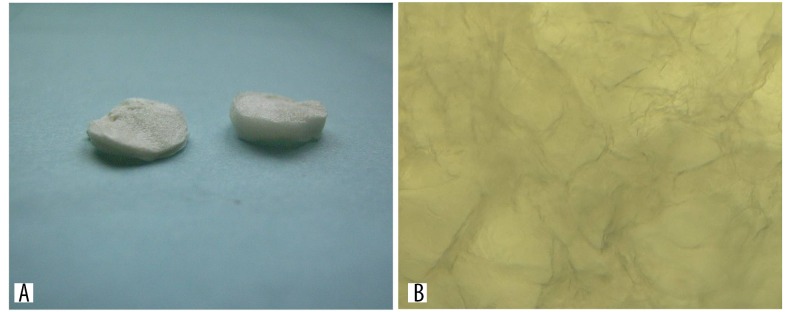
BACKGROUND Autograft and allograft transplantation are used to prompt the regeneration of axons after nerve injury. However, the poor self-regeneration caused by the glial scar and growth inhibitory factors after neuronal necrosis limit the efficacy of these methods. The purpose of this study was to develop a new chitosan porous scaffold for cell seeding. MATERIAL AND METHODS The bone marrow mesenchymal stem cells (BMSCs) and tissue-engineered biomaterial scaffold compound were constructed and co-cultured in vitro with the differentiated BMSCs of Wistar rats and chitosan scaffold in a 3D environment. The purity of the third-generation BMSCs culture was identified using flow cytometry and assessment of induced neuronal differentiation. The scaffolds were prepared by the freeze-drying method. The internal structure of scaffolds and the change of cells' growth and morphology were observed under a scanning electron microscope. The proliferation of cells was detected with the MTT method. RESULTS On day 5 there was a significant difference in the absorbance value of the experimental group (0.549±0.0256) and the control group (0.487±0.0357) (P>0.05); but on day 7 there was no significant difference in the proliferation of the experimental group (0.751±0.011) and the control group and (0.78±0.017) (P>0.05). CONCLUSIONS Tissue engineering technology can provide a carrier for cells seeding and is expected to become an effective method for the regeneration and repair of nerve cells. Our study showed that chitosan porous scaffolds can be used for such purposes.
背景 自体移植和同种异体移植用于促进神经损伤后轴突的再生。然而,神经元坏死后由胶质瘢痕和生长抑制因子导致的较差的自我再生能力限制了这些方法的疗效。本研究的目的是开发一种用于细胞接种的新型壳聚糖多孔支架。
材料与方法 构建骨髓间充质干细胞(BMSCs)与组织工程生物材料支架复合物,并在三维环境中与Wistar大鼠分化的BMSCs和壳聚糖支架进行体外共培养。使用流式细胞术和诱导神经元分化评估来鉴定第三代BMSCs培养物的纯度。通过冷冻干燥法制备支架。在扫描电子显微镜下观察支架的内部结构以及细胞生长和形态的变化。用MTT法检测细胞的增殖情况。
结果 第5天时,实验组(0.549±0.0256)和对照组(0.487±0.0357)的吸光度值存在显著差异(P>0.05);但第7天时,实验组(0.751±0.011)和对照组(0.78±0.017)的增殖情况无显著差异(P>0.05)。
结论 组织工程技术可为细胞接种提供载体,有望成为神经细胞再生和修复的有效方法。我们的研究表明壳聚糖多孔支架可用于此目的。