Liu Huiyong, Reiter Sydney, Zhou Xiangyue, Chen Hanmin, Ou Yibo, Lenahan Cameron, He Yue
Department of Neurosurgery, Tongji Hospital, Tongji Medical College, Huazhong University of Science and Technology, Wuhan, China.
Department of Kinesiology, University of Texas at Austin, Austin, TX, United States.
Front Cell Neurosci. 2021 Feb 25;15:637210. doi: 10.3389/fncel.2021.637210. eCollection 2021.
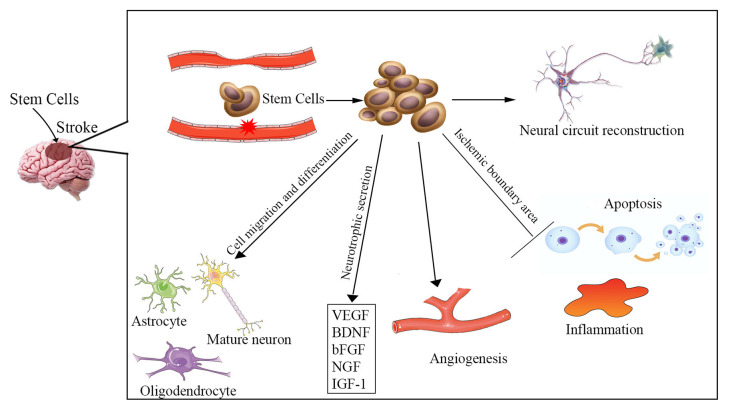
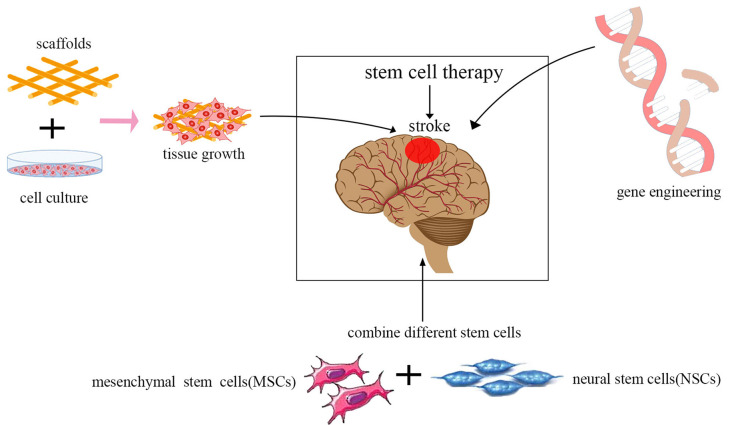
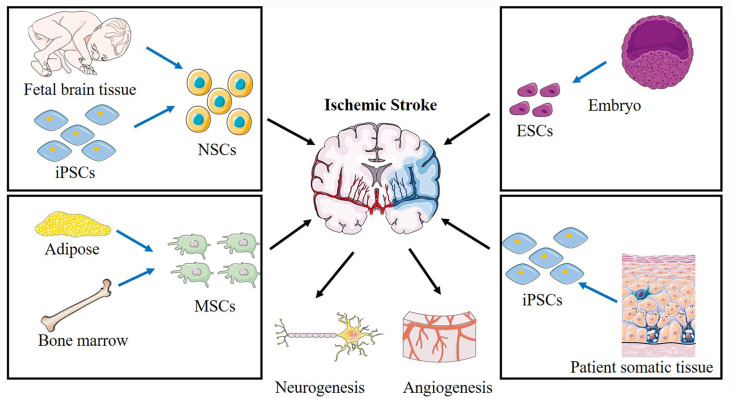
Strokes are the most common types of cerebrovascular disease and remain a major cause of death and disability worldwide. Cerebral ischemic stroke is caused by a reduction in blood flow to the brain. In this disease, two major zones of injury are identified: the lesion core, in which cells rapidly progress toward death, and the ischemic penumbra (surrounding the lesion core), which is defined as hypoperfusion tissue where cells may remain viable and can be repaired. Two methods that are approved by the Food and Drug Administration (FDA) include intravenous thrombolytic therapy and endovascular thrombectomy, however, the narrow therapeutic window poses a limitation, and therefore a low percentage of stroke patients actually receive these treatments. Developments in stem cell therapy have introduced renewed hope to patients with ischemic stroke due to its potential effect for reversing the neurological sequelae. Over the last few decades, animal tests and clinical trials have been used to treat ischemic stroke experimentally with various types of stem cells. However, several technical and ethical challenges must be overcome before stem cells can become a choice for the treatment of stroke. In this review, we summarize the mechanisms, processes, and challenges of using stem cells in stroke treatment. We also discuss new developing trends in this field.
中风是最常见的脑血管疾病类型,在全球范围内仍然是导致死亡和残疾的主要原因。脑缺血性中风是由大脑血流减少引起的。在这种疾病中,确定了两个主要损伤区域:病变核心,其中细胞迅速走向死亡;以及缺血半暗带(围绕病变核心),其被定义为低灌注组织,其中细胞可能保持存活并可修复。美国食品药品监督管理局(FDA)批准的两种方法包括静脉溶栓治疗和血管内血栓切除术,然而,狭窄的治疗窗口构成了限制,因此实际接受这些治疗的中风患者比例较低。干细胞治疗的发展为缺血性中风患者带来了新的希望,因为其具有逆转神经后遗症的潜在作用。在过去几十年中,动物试验和临床试验已被用于用各种类型的干细胞对缺血性中风进行实验性治疗。然而,在干细胞成为中风治疗的一种选择之前,必须克服几个技术和伦理挑战。在这篇综述中,我们总结了在中风治疗中使用干细胞的机制、过程和挑战。我们还讨论了该领域新的发展趋势。