Hu Xuejiao, Peng Wu, Chen Xuerong, Zhao Zhenzhen, Zhang Jingya, Zhou Juan, Cai Bei, Chen Jie, Zhou Yanhong, Lu Xiaojun, Ying Binwu
From the Department of Laboratory Medicine (XH, WP, ZZ, JZhang, JZhou, BC, JC, YZ, XL, BY) and Division of Tuberculosis (XC), West China Hospital, Sichuan University, Chengdu, P.R. China.
Medicine (Baltimore). 2016 May;95(21):e3703. doi: 10.1097/MD.0000000000003703.
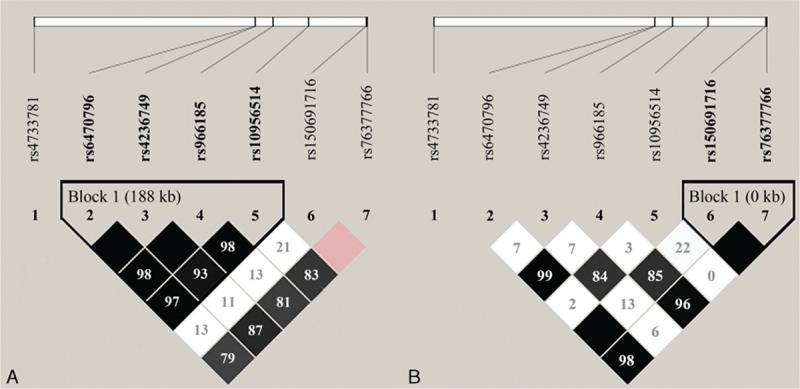
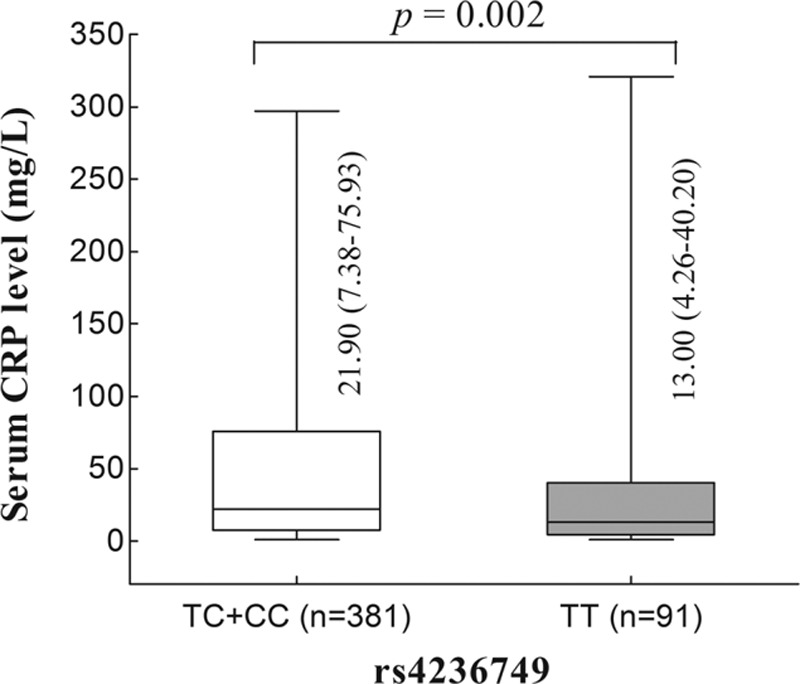
Recent studies have proposed that the ASAP1 gene participates in regulating the adaptive immune response to Mycobacterium tuberculosis infection. A GWAS study has reported that ASAP1 polymorphisms (rs4733781 and rs10956514) were associated with the risk of tuberculosis (TB) in Russians. But due to population heterogeneity, different races would have different causative polymorphisms, and the aim of this study was to investigate the association between single nucleotide polymorphisms (SNPs) of the ASAP1 gene and TB risk in Chinese population.A total of 7 SNPs in the ASAP1 gene were genotyped in 1115 Western Chinese Han and 914 Tibetan population using an improved multiplex ligation detection reaction (iMLDR) method. The associations of SNPs with TB risk and clinical phenotypes were determined based on the distributions of allelic frequencies and different genetic models. A meta-analysis was carried out to further assess the relationship between ASAP1 polymorphism and TB risk.Statistical comparisons of cases and controls after correction for multiple testing did not yield any significant associations with the risk of TB via analyses of a single locus, haplotype, and subgroup differences. Meta-analysis showed no evidence supporting association between rs10956514 and overall risk for TB. Subsequent analysis referring to the genotypes of SNPs in relationship to clinical phenotypes identified that rs4236749 was associated with different serum C-reactive protein levels, suggesting a role of this locus in influencing the inflammatory state of Western Chinese Han patients with TB.Our present data revealed that ASAP1 polymorphisms are unlikely to confer susceptibility to TB in the Western Chinese Han and Tibetan populations, which challenges the promising roles of the ASAP1 gene in the development of TB and highlights the importance of validating the association findings across ethnicities.
最近的研究表明,ASAP1基因参与调节对结核分枝杆菌感染的适应性免疫反应。一项全基因组关联研究(GWAS)报告称,ASAP1基因多态性(rs4733781和rs10956514)与俄罗斯人患结核病(TB)的风险相关。但由于人群异质性,不同种族可能存在不同的致病多态性,本研究旨在探讨中国人群中ASAP1基因单核苷酸多态性(SNP)与结核病风险之间的关联。采用改进的多重连接检测反应(iMLDR)方法,对1115名中国西部汉族人和914名藏族人群中的ASAP1基因的7个SNP进行基因分型。基于等位基因频率分布和不同遗传模型,确定SNP与结核病风险及临床表型的关联。进行荟萃分析以进一步评估ASAP1基因多态性与结核病风险之间的关系。经多重检验校正后,病例组与对照组的统计学比较通过单基因座、单倍型和亚组差异分析未发现与结核病风险有任何显著关联。荟萃分析表明,没有证据支持rs10956514与结核病总体风险之间存在关联。随后,参考SNP基因型与临床表型关系的分析发现,rs4236749与不同的血清C反应蛋白水平相关,表明该基因座在影响中国西部汉族结核病患者炎症状态中起作用。我们目前的数据显示,ASAP1基因多态性不太可能使中国西部汉族和藏族人群易患结核病,这对ASAP1基因在结核病发生发展中的潜在作用提出了挑战,并强调了跨种族验证关联研究结果的重要性。