Corsaro Alessandro, Bajetto Adriana, Thellung Stefano, Begani Giulia, Villa Valentina, Nizzari Mario, Pattarozzi Alessandra, Solari Agnese, Gatti Monica, Pagano Aldo, Würth Roberto, Daga Antonio, Barbieri Federica, Florio Tullio
Sezione di Farmacologia, Dipartimento di Medicina Interna, University of Genova, Genova, Italy.
Centro di Eccellenza per la Ricerca Biomedica (CEBR), University of Genova, Genova, Italy.
Oncotarget. 2016 Jun 21;7(25):38638-38657. doi: 10.18632/oncotarget.9575.
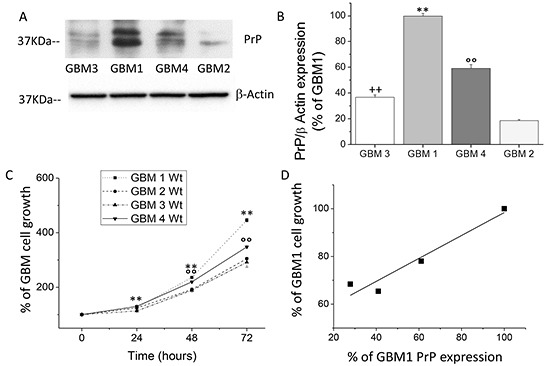
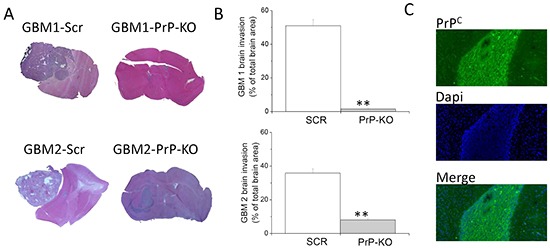
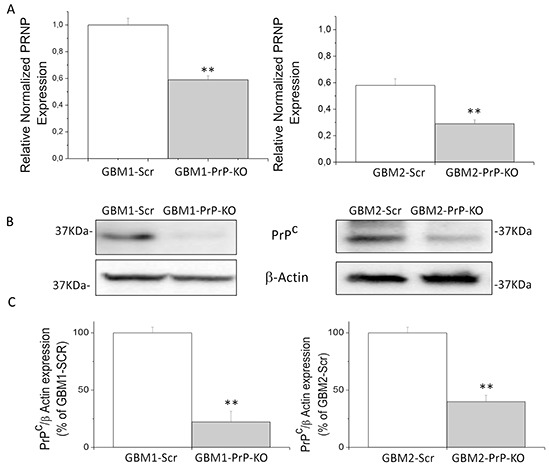
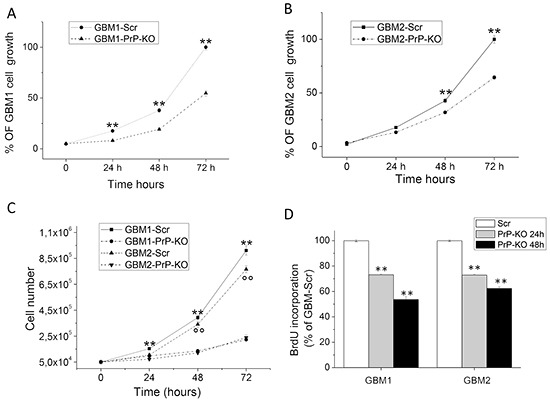
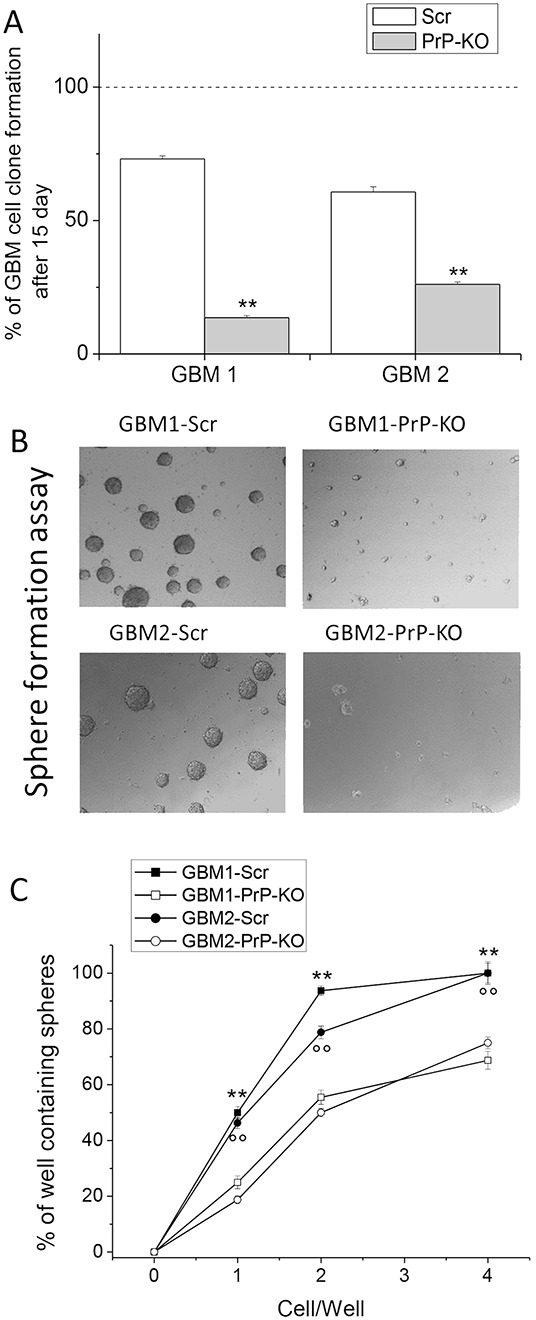
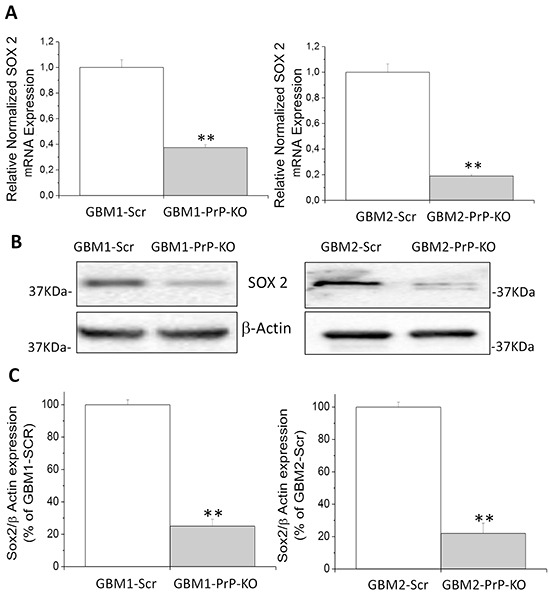
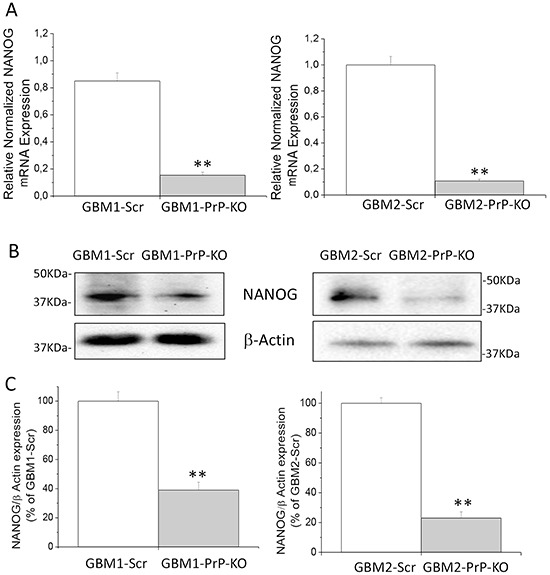
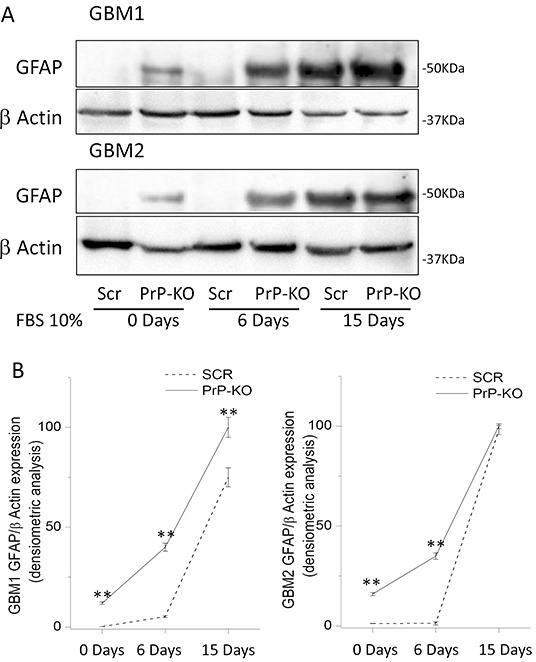
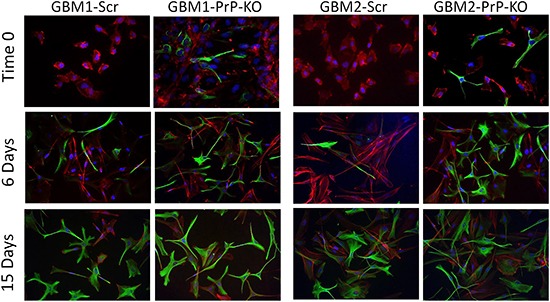
Prion protein (PrPC) is a cell surface glycoprotein whose misfolding is responsible for prion diseases. Although its physiological role is not completely defined, several lines of evidence propose that PrPC is involved in self-renewal, pluripotency gene expression, proliferation and differentiation of neural stem cells. Moreover, PrPC regulates different biological functions in human tumors, including glioblastoma (GBM). We analyzed the role of PrPC in GBM cell pathogenicity focusing on tumor-initiating cells (TICs, or cancer stem cells, CSCs), the subpopulation responsible for development, progression and recurrence of most malignancies. Analyzing four GBM CSC-enriched cultures, we show that PrPC expression is directly correlated with the proliferation rate of the cells. To better define its role in CSC biology, we knocked-down PrPC expression in two of these GBM-derived CSC cultures by specific lentiviral-delivered shRNAs. We provide evidence that CSC proliferation rate, spherogenesis and in vivo tumorigenicity are significantly inhibited in PrPC down-regulated cells. Moreover, PrPC down-regulation caused loss of expression of the stemness and self-renewal markers (NANOG, Sox2) and the activation of differentiation pathways (i.e. increased GFAP expression). Our results suggest that PrPC controls the stemness properties of human GBM CSCs and that its down-regulation induces the acquisition of a more differentiated and less oncogenic phenotype.
朊病毒蛋白(PrPC)是一种细胞表面糖蛋白,其错误折叠会导致朊病毒疾病。尽管其生理作用尚未完全明确,但有多项证据表明,PrPC参与神经干细胞的自我更新、多能性基因表达、增殖和分化。此外,PrPC调节人类肿瘤中的不同生物学功能,包括胶质母细胞瘤(GBM)。我们分析了PrPC在GBM细胞致病性中的作用,重点关注肿瘤起始细胞(TICs,即癌症干细胞,CSCs),这是导致大多数恶性肿瘤发生、进展和复发的亚群。通过分析四种富含GBM CSC的培养物,我们发现PrPC表达与细胞增殖率直接相关。为了更好地确定其在CSC生物学中的作用,我们通过特异性慢病毒递送的短发夹RNA(shRNAs)敲低了其中两种源自GBM的CSC培养物中的PrPC表达。我们提供的证据表明,在PrPC下调的细胞中,CSC增殖率、球状体形成和体内致瘤性均受到显著抑制。此外,PrPC下调导致干性和自我更新标志物(NANOG、Sox2)表达丧失以及分化途径激活(即GFAP表达增加)。我们的结果表明,PrPC控制人类GBM CSCs的干性特性,其下调会诱导获得更分化、致癌性更低的表型。