Boon Lise, Ugarte-Berzal Estefania, Vandooren Jennifer, Opdenakker Ghislain
KU Leuven-University of Leuven, Rega Institute for Medical Research, Department of Microbiology and Immunology, Laboratory of Immunobiology, B-3000 Leuven, Belgium.
KU Leuven-University of Leuven, Rega Institute for Medical Research, Department of Microbiology and Immunology, Laboratory of Immunobiology, B-3000 Leuven, Belgium The Glycobiology Institute and Exeter College, University of Oxford, Oxford, UK
Biochem J. 2016 Jun 1;473(11):1471-82. doi: 10.1042/BJ20151154.
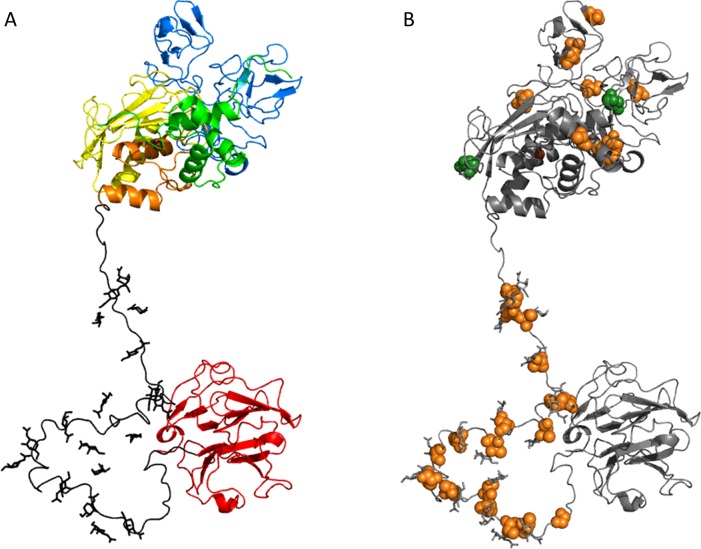
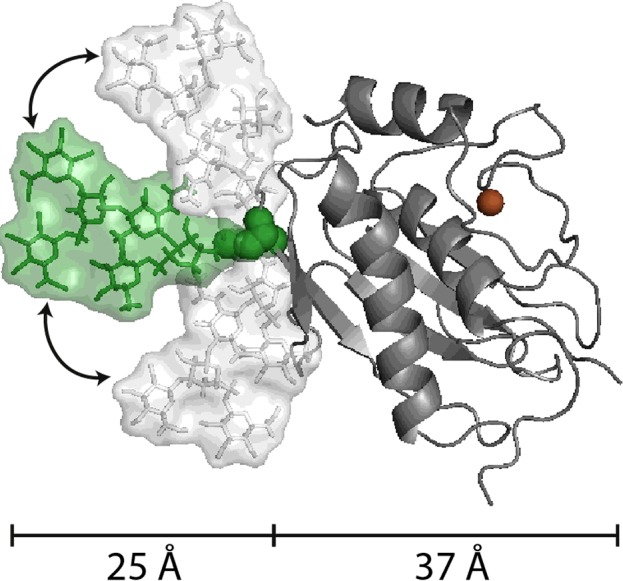
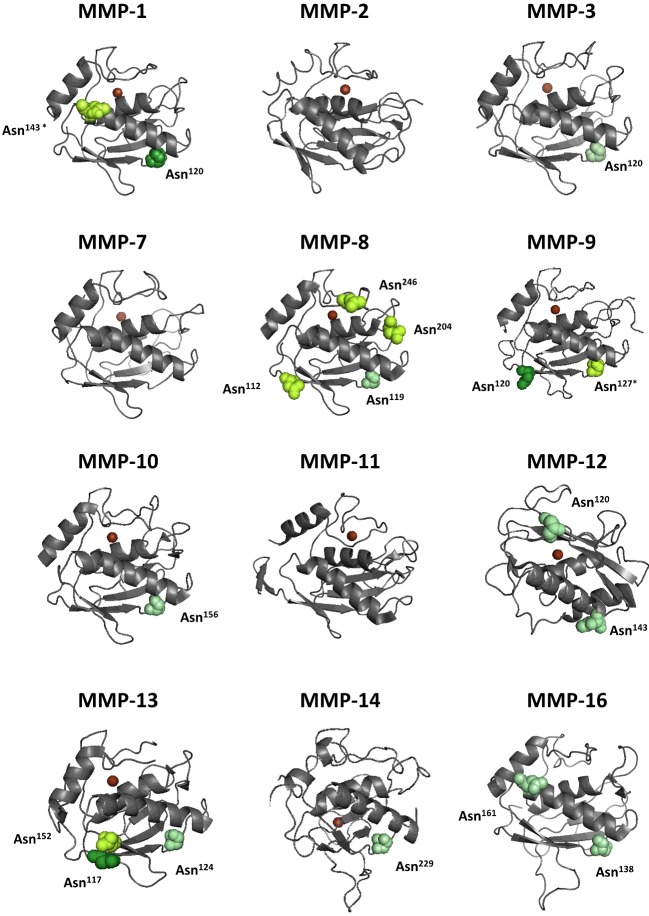
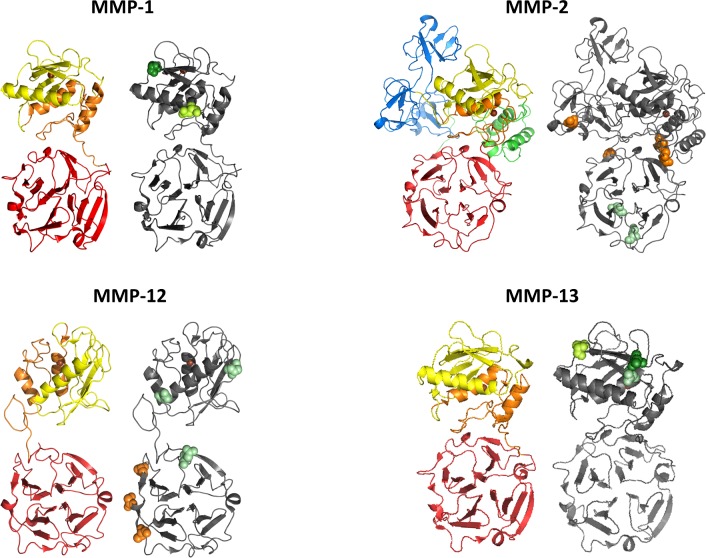
Matrix metalloproteases (MMPs) are crucial components of a complex and dynamic network of proteases. With a wide range of potential substrates, their production and activity are tightly controlled by a combination of signalling events, zymogen activation, post-translational modifications and extracellular inhibition. Slight imbalances may result in the initiation or progression of specific disease states, such as cancer and pathological inflammation. As glycosylation modifies the structures and functions of glycoproteins and many MMPs contain N- or O-linked oligosaccharides, we examine, compare and evaluate the evidence for whether glycosylation affects MMP catalytic activity and other functions. It is interesting that the catalytic sites of MMPs do not contain O-linked glycans, but instead possess a conserved N-linked glycosylation site. Both N- and O-linked oligosaccharides, attached to specific protein domains, endow these domains with novel functions such as the binding to lectins, cell-surface receptors and tissue inhibitors of metalloproteases (TIMPs). Validated glycobiological data on N- and O-linked oligosaccharides of gelatinase B/MMP-9 and on O-linked structures of membrane-type 1 MMP/MMP-14 indicate that in-depth research of other MMPs may yield important insights, e.g. about subcellular localizations and functions within macromolecular complexes.
基质金属蛋白酶(MMPs)是复杂且动态的蛋白酶网络的关键组成部分。由于其潜在底物范围广泛,它们的产生和活性受到信号事件、酶原激活、翻译后修饰和细胞外抑制等多种因素的严格控制。轻微的失衡可能导致特定疾病状态的发生或进展,如癌症和病理性炎症。由于糖基化修饰糖蛋白的结构和功能,且许多MMPs含有N-或O-连接的寡糖,我们研究、比较和评估糖基化是否影响MMP催化活性和其他功能的证据。有趣的是,MMPs的催化位点不含O-连接聚糖,而是具有一个保守的N-连接糖基化位点。连接到特定蛋白质结构域的N-和O-连接寡糖都赋予这些结构域新的功能,如与凝集素、细胞表面受体和金属蛋白酶组织抑制剂(TIMPs)结合。关于明胶酶B/MMP-9的N-和O-连接寡糖以及膜型1 MMP/MMP-14的O-连接结构的有效糖生物学数据表明,对其他MMPs的深入研究可能会产生重要见解,例如关于亚细胞定位和大分子复合物中的功能。