Bourdeau Annie, Van Slyke Paul, Kim Harold, Cruz Maribelle, Smith Tracy, Dumont Daniel J
Department of Immunology, University of Toronto, Toronto, ON, USA.
Sunnybrook Research Institute, Toronto, ON, USA.
BMC Res Notes. 2016 May 28;9:289. doi: 10.1186/s13104-015-1817-1.
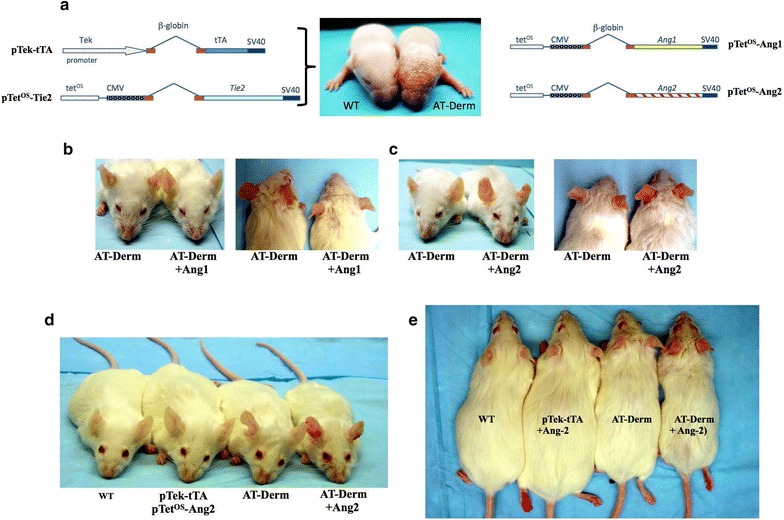
Earlier studies by our group have demonstrated that a transgenic animal engineered to express Tie2 under the control of the Tie2 promoter produced animals with a scaly skin phenotype that recapitulated many of the hallmarks of atopic dermatitis (AT-Derm). To test the hypothesis that this model of AT-Derm is driven by dysregulated Tie2-signalling, we have bred AT-Derm transgenic (TG) animals with TG-animals engineered to overexpress Angiopoietin-1 or -2, the cognate Tie2 ligands. These two ligands act to antagonize one another in a context-dependent manner. To further evaluate the role of Ang1-driven-Tie2 signalling, we examined the ability of Vasculotide, an Ang1-mimetic, to modulate the AT-Derm phenotype.
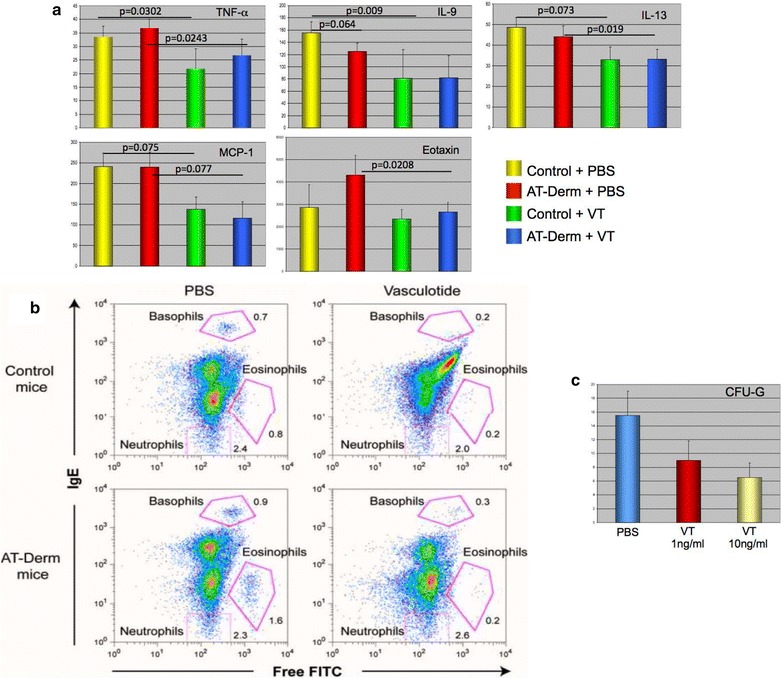
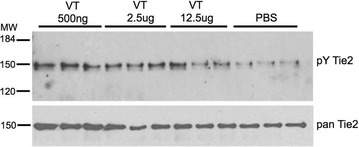
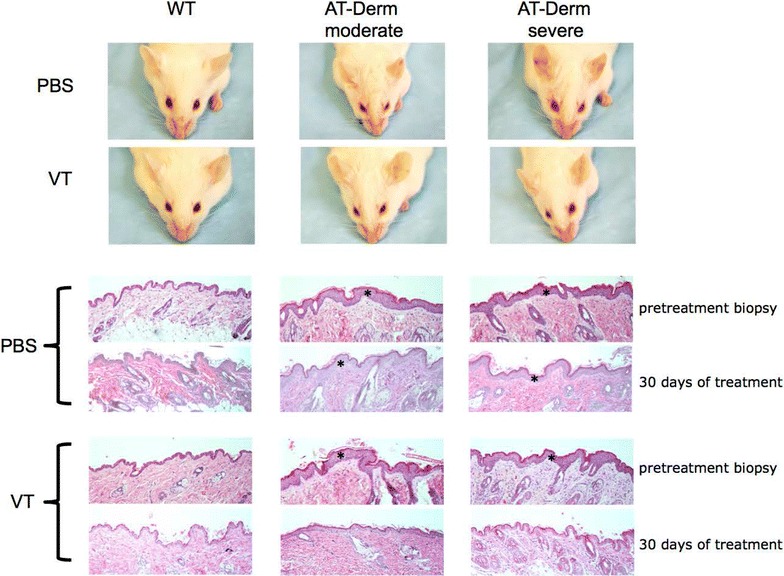
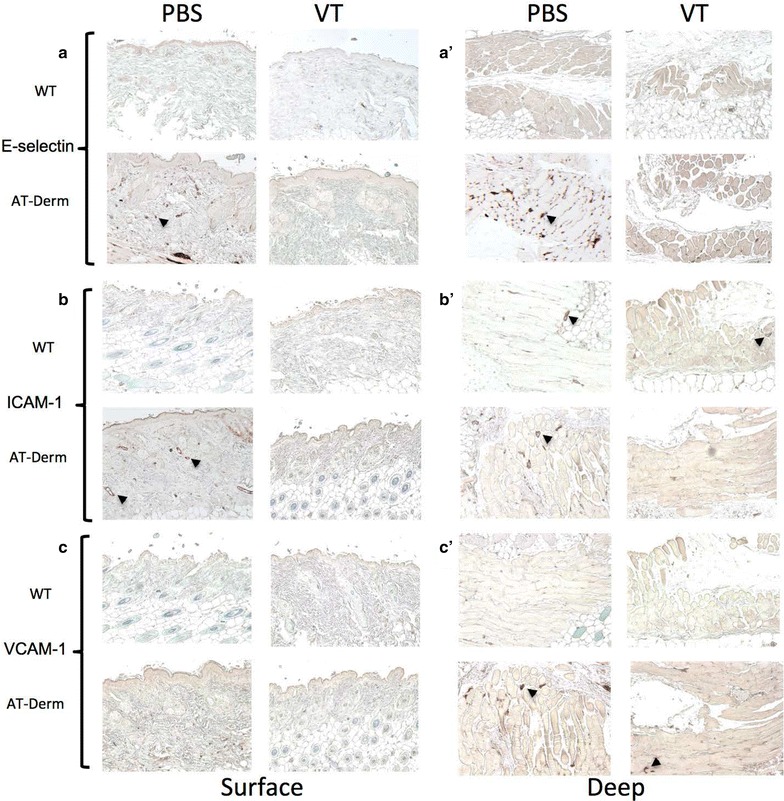
AT-Derm+Ang2 animals exhibited an accentuated phenotype, whereas AT-Derm+Ang1 presented with a markedly reduced skin disease, similarly VT-treated AT-Derm animals present with a clear decrease in the skin phenotype. Moreover, a decrease in several important inflammatory cytokines and a decrease in the number of eosinophils was noted in VT-treated animals. Bone marrow differentiation in the presence of VT produced fewer CFU-G colonies, further supporting a role for Tie2-signalling in eosinophil development. Importantly, we demonstrate activation of Tie2, the VT-target, in lung tissue from naïve animals treated with increasing amounts of VT.
The AT-Derm phenotype in these animals is driven through dysregulation of Tie2 receptor signalling and is augmented by supplemental Ang2-dependent stimulation. Overexpression of Ang1 or treatment with VT produced a similar amelioration of the phenotype supporting the contention that VT and Ang1 have a similar mechanism of action on the Tie2 receptor and can both counteract the signalling driven by Ang2. Our results also support a possible role for Tie2-signalling in the development of eosinophilic diseases and that activation of Tie2 may directly or indirectly modulate the differentiation of eosinophils, which express Tie2. In summary, these data support the hypothesis that this AT-Derm mouse model is driven by dysregulation of the Tie2 signalling pathway and increased Ang2 levels can aggravate it, whereas it can be reversed by either Ang1-overexpression or VT treatment. Moreover, our data supports the contention that VT acts as an Angiopoietin-1 mimetic and may provide a novel entry point for Tie2-agonist-based therapies for atopic diseases.
我们团队早期的研究表明,一种经基因工程改造的转基因动物,在 Tie2 启动子的控制下表达 Tie2,所产生的动物具有鳞状皮肤表型,重现了特应性皮炎(AT - Derm)的许多特征。为了验证这种 AT - Derm 模型是由 Tie2 信号失调驱动的这一假设,我们将 AT - Derm 转基因(TG)动物与经基因工程改造以过表达血管生成素 -1 或 -2(Tie2 的同源配体)的 TG 动物进行杂交。这两种配体在特定环境下相互拮抗。为了进一步评估 Ang1 驱动的 Tie2 信号的作用,我们研究了血管生成素 -1 模拟物 Vasculotide 调节 AT - Derm 表型的能力。
AT - Derm + Ang2 动物表现出加重的表型,而 AT - Derm + Ang1 动物的皮肤疾病明显减轻,同样,经 Vasculotide 处理的 AT - Derm 动物的皮肤表型也明显减轻。此外,在经 Vasculotide 处理的动物中,几种重要的炎性细胞因子减少,嗜酸性粒细胞数量也减少。在有 Vasculotide 的情况下骨髓分化产生的 CFU - G 集落减少,进一步支持了 Tie2 信号在嗜酸性粒细胞发育中的作用。重要的是,我们证明了在给予不同剂量 Vasculotide 处理的未处理动物的肺组织中,Vasculotide 的靶点 Tie2 被激活。
这些动物的 AT - Derm 表型是由 Tie2 受体信号失调驱动的,并因补充 Ang2 依赖性刺激而加剧。Ang1 的过表达或 Vasculotide 处理产生了类似的表型改善,支持了 Vasculotide 和 Ang1 对 Tie2 受体具有相似作用机制且都能抵消 Ang2 驱动的信号这一观点。我们的结果还支持 Tie2 信号在嗜酸性疾病发展中可能发挥作用,并且 Tie2 的激活可能直接或间接调节表达 Tie2 的嗜酸性粒细胞的分化。总之,这些数据支持了这一假设,即这种 AT - Derm 小鼠模型是由 Tie2 信号通路失调驱动的,Ang2 水平升高会使其加重,而 Ang1 过表达或 Vasculotide 处理可以使其逆转。此外,我们的数据支持 Vasculotide 作为血管生成素 -1 模拟物的观点,并可能为基于 Tie2 激动剂的特应性疾病治疗提供一个新的切入点。