Harvard Medical School, Boston, MA, USA.
Virulence. 2013 Aug 15;4(6):517-24. doi: 10.4161/viru.24906. Epub 2013 May 7.
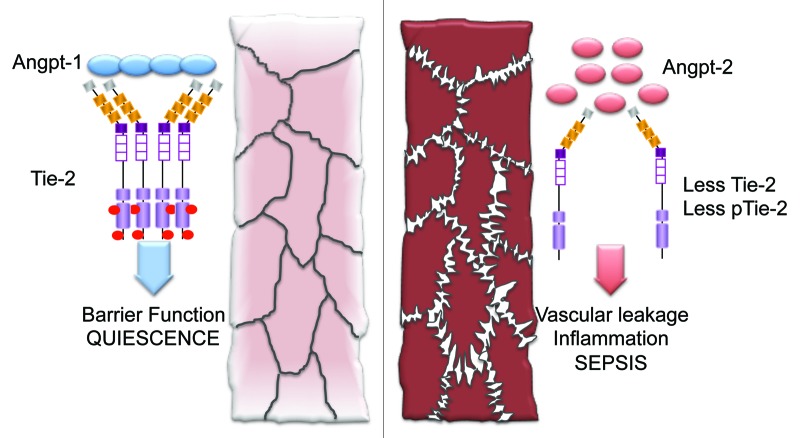
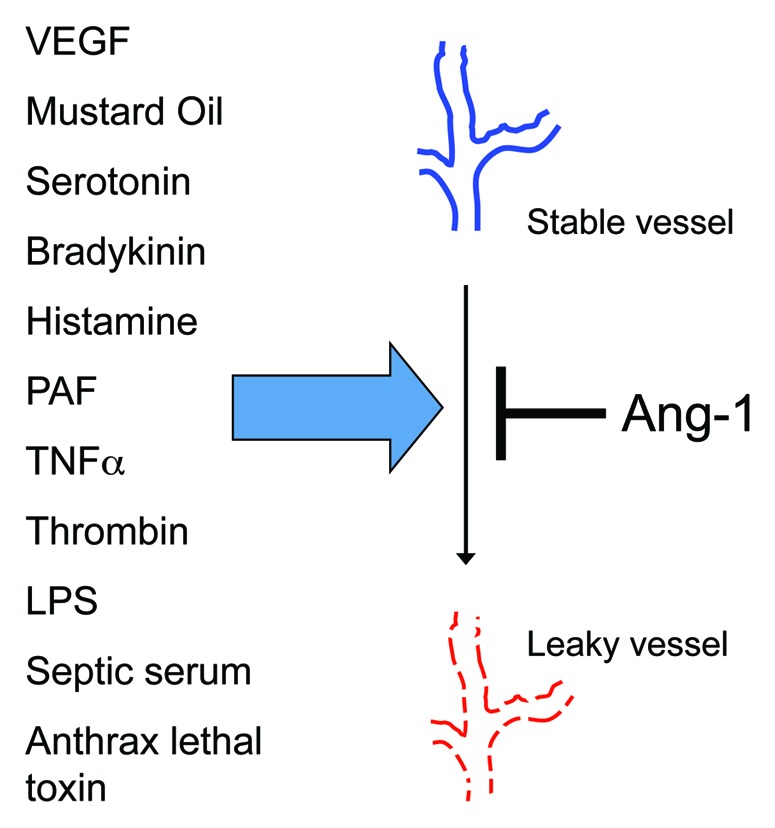
Dynamic changes in microvascular endothelial structure and function are pivotal in the acute inflammatory response, the body's rapid, coordinated effort to localize, sequester, and eliminate microbial invaders at their portal of entry. To achieve this, the endothelium becomes leaky and inflamed, providing innate immune cells and humoral effector molecules access to the site of infection. During sepsis this locally adaptive response becomes manifest throughout the body, leading to dangerous host consequences. Increased leakiness in the pulmonary circulation contributes to acute respiratory distress syndrome (ARDS), a complication of sepsis associated with 40% mortality. Understanding the molecular governance of vascular leak and inflammation has major diagnostic, prognostic, and potentially therapeutic implications for this common and pernicious disease. This review summarizes results from cell-based experiments, animal models, and observational human studies; together, these studies suggest that an endothelial receptor called Tie2 and its ligands, called angiopoietins, form a signaling axis key to the vascular dyshomeostasis that underlies sepsis.
微血管内皮结构和功能的动态变化在急性炎症反应中至关重要,这是机体快速协调的努力,旨在将微生物入侵者定位、隔离和消除在其入口处。为此,内皮细胞变得渗漏和炎症,使先天免疫细胞和体液效应分子能够进入感染部位。在脓毒症中,这种局部适应性反应会在全身显现,导致宿主出现危险的后果。肺循环中通透性的增加导致急性呼吸窘迫综合征(ARDS),这是与 40%死亡率相关的脓毒症的并发症。了解血管渗漏和炎症的分子调控对这种常见且有害的疾病具有重要的诊断、预后和潜在的治疗意义。这篇综述总结了基于细胞的实验、动物模型和观察性人体研究的结果;这些研究共同表明,一种称为 Tie2 的内皮受体及其配体称为血管生成素,形成了一个信号轴,是导致脓毒症中血管稳态失调的关键。