Furuta Y, Aizawa S, Suda Y, Ikawa Y, Kishimoto H, Asano Y, Tada T, Hikikoshi A, Yoshida M, Seiki M
Laboratory of Molecular Oncology, Tsukuba Life Science Center, Physical and Chemical Institute (RIKEN), Ibaraki, Japan.
J Virol. 1989 Jul;63(7):3185-9. doi: 10.1128/JVI.63.7.3185-3189.1989.
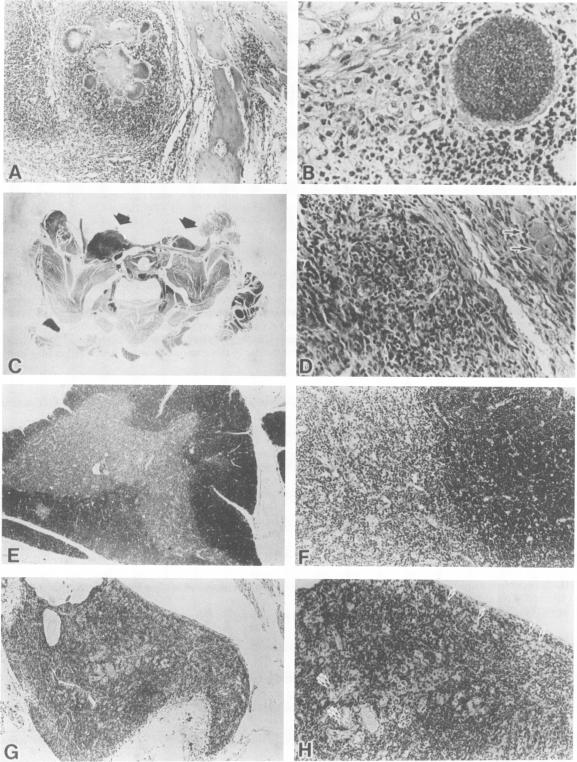
The human T-cell leukemia viruses (HTLV) are associated with T-cell malignancies in humans. The malignant transformation occurs after a long latency in some carriers, and its mechanism appears to be distinct from that of other classes of retroviruses which induce transformation through viral or cellular oncogenes. A widely postulated explanation is that the products of novel pX genes transactivate endogenous cellular genes which lead to tumor development in T cells. To directly examine the pathological effects of pX genes in vivo, we produced transgenic mice harboring the HTLV type I pX genes under several regulatory units: HTLV type I long terminal repeat, immunoglobulin enhancer-simian virus 40 promoter, and mouse mammary tumor virus long terminal repeat. Atrophy of the thymus was characteristic in these mice no matter which regulatory unit directed the expression of the genes.
人类T细胞白血病病毒(HTLV)与人类T细胞恶性肿瘤相关。在一些携带者中,恶性转化发生在长时间的潜伏期之后,其机制似乎与其他通过病毒或细胞癌基因诱导转化的逆转录病毒不同。一个广泛提出的解释是,新的pX基因产物反式激活内源性细胞基因,导致T细胞肿瘤发展。为了直接研究pX基因在体内的病理作用,我们构建了在几个调控元件控制下携带HTLV-Ⅰ型pX基因的转基因小鼠:HTLV-Ⅰ型长末端重复序列、免疫球蛋白增强子-猿猴病毒40启动子和小鼠乳腺肿瘤病毒长末端重复序列。无论哪个调控元件指导基因表达,这些小鼠的胸腺萎缩都是其特征。