Shapiro Jason W, Williams Elizabeth S C P, Turner Paul E
Department of Ecology and Evolutionary Biology, Yale University, New Haven, CT, United States; Department of Biology, Loyola University Chicago, Chicago, IL, United States.
Department of Ecology and Evolutionary Biology, Yale University , New Haven, CT , United States.
PeerJ. 2016 May 24;4:e2060. doi: 10.7717/peerj.2060. eCollection 2016.
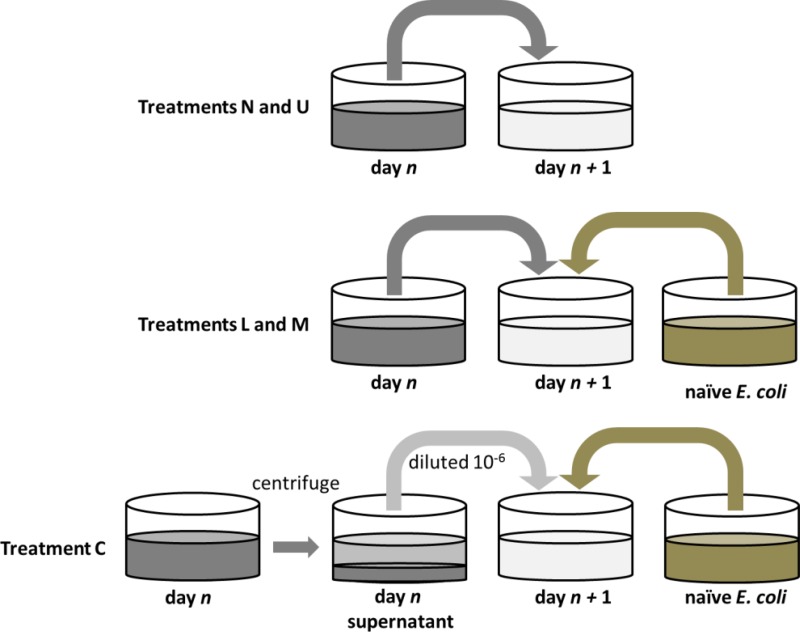
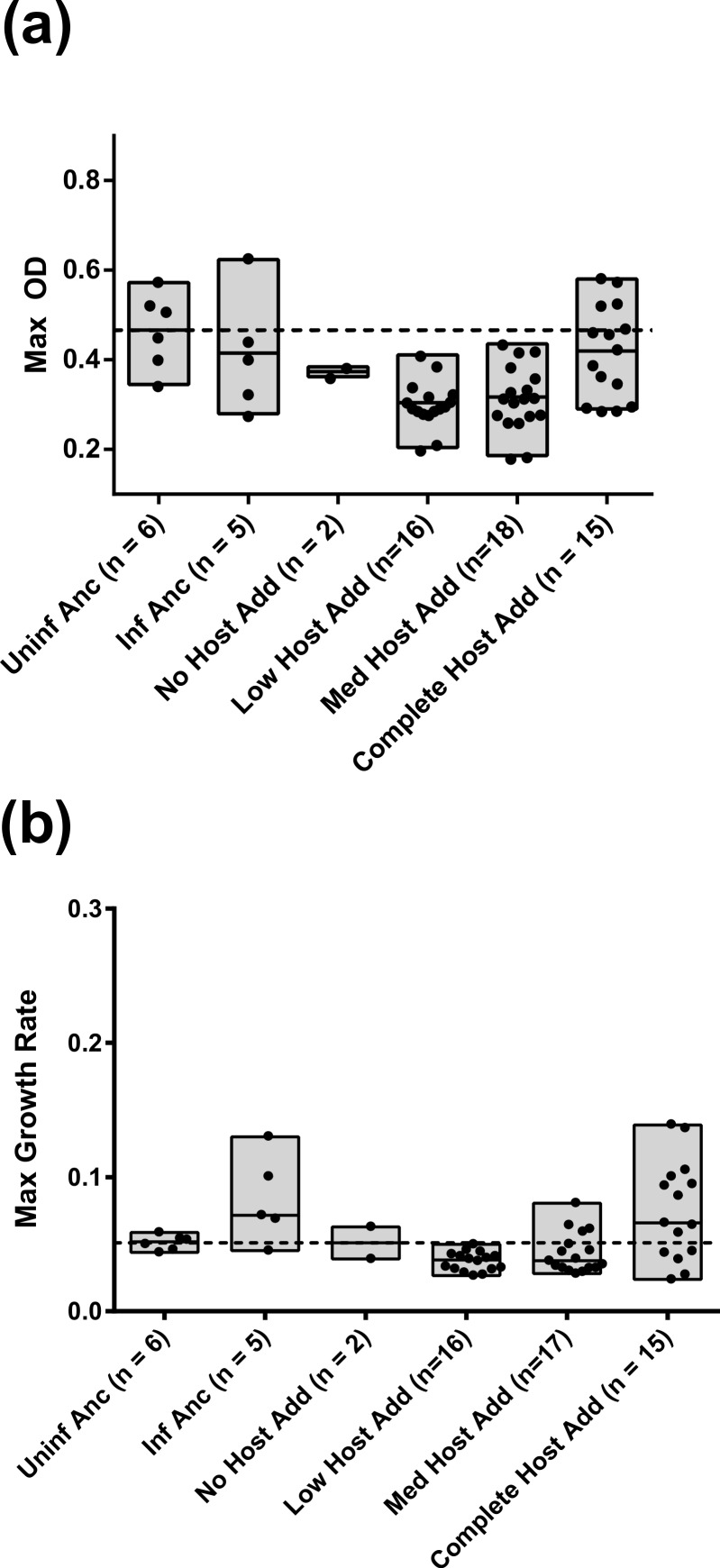
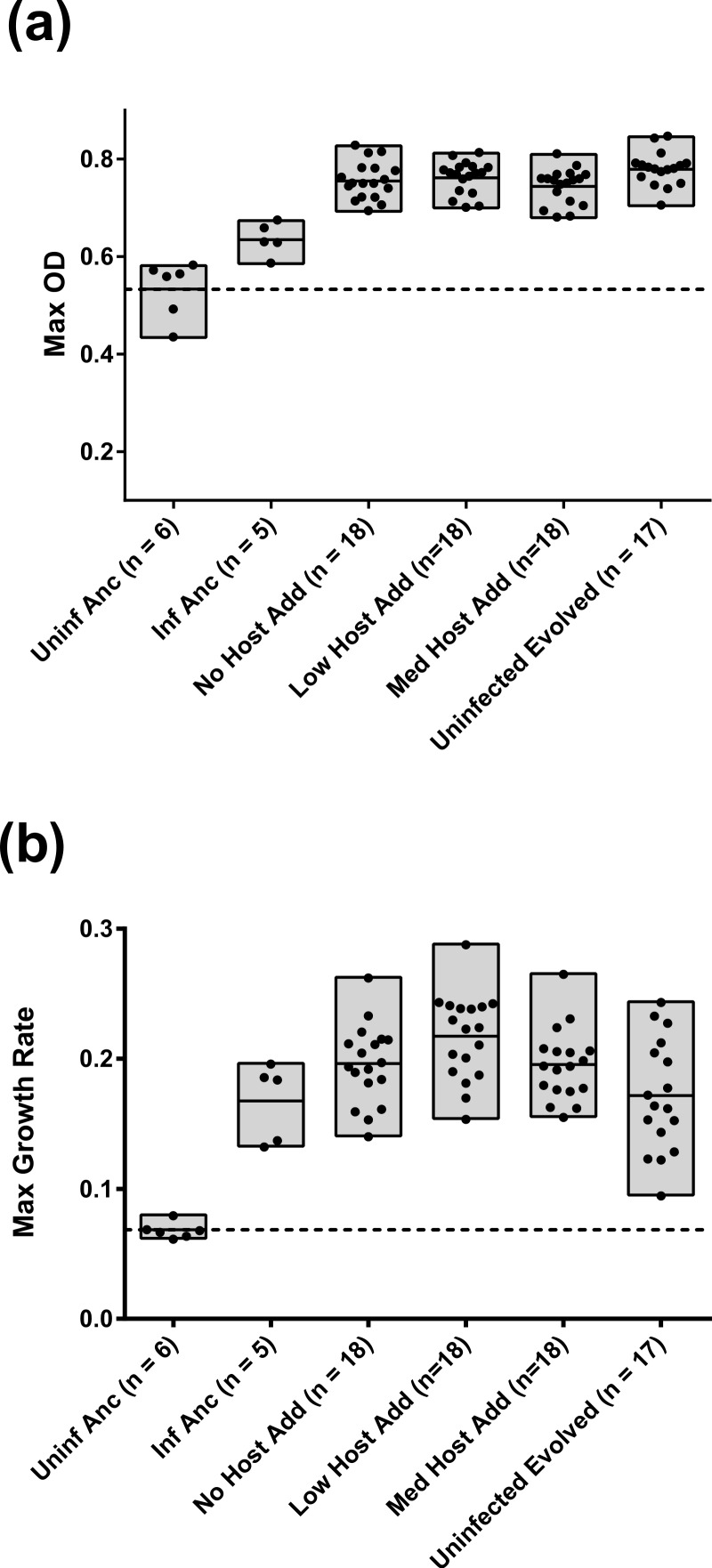
Background. How host-symbiont interactions coevolve between mutualism and parasitism depends on the ecology of the system and on the genetic and physiological constraints of the organisms involved. Theory often predicts that greater reliance on horizontal transmission favors increased costs of infection and may result in more virulent parasites or less beneficial mutualists. We set out to understand transitions between parasitism and mutualism by evolving the filamentous bacteriophage M13 and its host Escherichia coli. Results. The effect of phage M13 on bacterial fitness depends on the growth environment, and initial assays revealed that infected bacteria reproduce faster and to higher density than uninfected bacteria in 96-well microplates. These data suggested that M13 is, in fact, a facultative mutualist of E. coli. We then allowed E. coli and M13 to evolve in replicated environments, which varied in the relative opportunity for horizontal and vertical transmission of phage in order to assess the evolutionary stability of this mutualism. After 20 experimental passages, infected bacteria from treatments with both vertical and horizontal transmission of phage had evolved the fastest growth rates. At the same time, phage from these treatments no longer benefited the ancestral bacteria. Conclusions. These data suggest a positive correlation between the positive effects of M13 on E. coli hosts from the same culture and the negative effects of the same phage toward the ancestral bacterial genotype. The results also expose flaws in applying concepts from the virulence-transmission tradeoff hypothesis to mutualism evolution. We discuss the data in the context of more recent theory on how horizontal transmission affects mutualisms and explore how these effects influence phages encoding virulence factors in pathogenic bacteria.
背景。宿主与共生体之间的相互作用如何在互利共生和寄生之间共同进化,取决于系统的生态学以及所涉及生物体的遗传和生理限制。理论通常预测,对水平传播的更大依赖有利于增加感染成本,并可能导致更具毒性的寄生虫或益处较少的共生体。我们着手通过使丝状噬菌体M13及其宿主大肠杆菌进化来理解寄生与互利共生之间的转变。结果。噬菌体M13对细菌适应性的影响取决于生长环境,初步试验表明,在96孔微孔板中,被感染的细菌比未感染的细菌繁殖更快且密度更高。这些数据表明,M13实际上是大肠杆菌的兼性共生体。然后,我们让大肠杆菌和M13在复制环境中进化,这些环境在噬菌体水平和垂直传播的相对机会方面有所不同,以评估这种互利共生的进化稳定性。经过20次实验传代后,来自噬菌体既有垂直传播又有水平传播处理的被感染细菌进化出了最快的生长速度。与此同时,来自这些处理的噬菌体对原始细菌不再有益。结论。这些数据表明,来自同一培养物的M13对大肠杆菌宿主的积极影响与同一噬菌体对原始细菌基因型的负面影响之间存在正相关。结果还揭示了将毒力 - 传播权衡假说的概念应用于互利共生进化时存在的缺陷。我们在关于水平传播如何影响互利共生的最新理论背景下讨论这些数据,并探讨这些影响如何影响编码病原菌毒力因子的噬菌体。