Brzozowska Natalia, Li Kong M, Wang Xiao Suo, Booth Jessica, Stuart Jordyn, McGregor Iain S, Arnold Jonathon C
Discipline of Pharmacology, School of Medical Science, University of Sydney , Sydney, NSW , Australia.
Bosch Mass Spectrometry Facility, Bosch Institute, Sydney Medical School, University of Sydney , Sydney, NSW , Australia.
PeerJ. 2016 May 26;4:e2081. doi: 10.7717/peerj.2081. eCollection 2016.
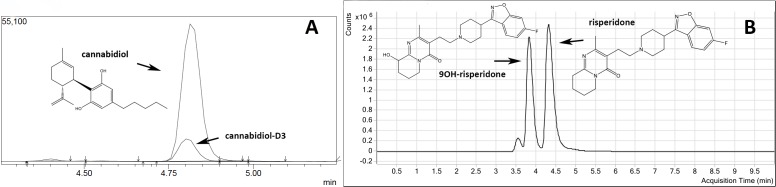
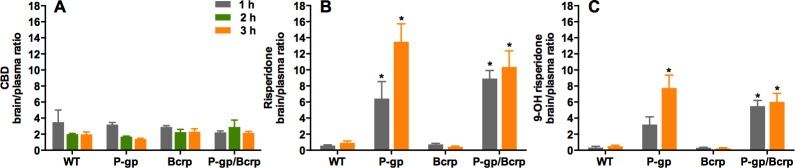
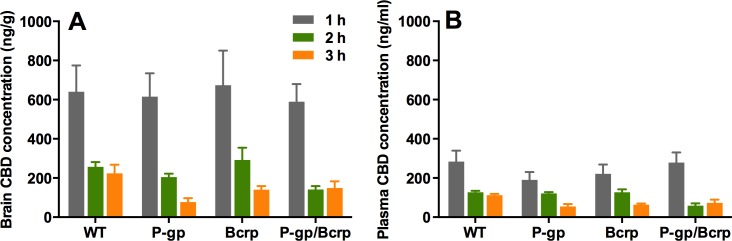
Cannabidiol (CBD) is currently being investigated as a novel therapeutic for the treatment of CNS disorders like schizophrenia and epilepsy. ABC transporters such as P-glycoprotein (P-gp) and breast cancer resistance protein (Bcrp) mediate pharmacoresistance in these disorders. P-gp and Bcrp are expressed at the blood brain barrier (BBB) and reduce the brain uptake of substrate drugs including various antipsychotics and anticonvulsants. It is therefore important to assess whether CBD is prone to treatment resistance mediated by P-gp and Bcrp. Moreover, it has become common practice in the drug development of CNS agents to screen against ABC transporters to help isolate lead compounds with optimal pharmacokinetic properties. The current study aimed to assess whether P-gp and Bcrp impacts the brain transport of CBD by comparing CBD tissue concentrations in wild-type (WT) mice versus mice devoid of ABC transporter genes. P-gp knockout (Abcb1a/b (-∕-)), Bcrp knockout (Abcg2 (-∕-)), combined P-gp/Bcrp knockout (Abcb1a/b (-∕-) Abcg2 (-∕-)) and WT mice were injected with CBD, before brain and plasma samples were collected at various time-points. CBD results were compared with the positive control risperidone and 9-hydroxy risperidone, antipsychotic drugs that are established ABC transporter substrates. Brain and plasma concentrations of CBD were not greater in P-gp, Bcrp or P-gp/Bcrp knockout mice than WT mice. In comparison, the brain/plasma concentration ratios of risperidone and 9-hydroxy risperidone were profoundly higher in P-gp knockout mice than WT mice. These results suggest that CBD is not a substrate of P-gp or Bcrp and may be free from the complication of reduced brain uptake by these transporters. Such findings provide favorable evidence for the therapeutic development of CBD in the treatment of various CNS disorders.
大麻二酚(CBD)目前正作为一种新型疗法进行研究,用于治疗精神分裂症和癫痫等中枢神经系统疾病。P-糖蛋白(P-gp)和乳腺癌耐药蛋白(Bcrp)等ABC转运蛋白介导这些疾病中的耐药性。P-gp和Bcrp在血脑屏障(BBB)处表达,并降低包括各种抗精神病药物和抗惊厥药物在内的底物药物的脑摄取。因此,评估CBD是否易于受到P-gp和Bcrp介导的治疗耐药性影响很重要。此外,在中枢神经系统药物的研发中,针对ABC转运蛋白进行筛选已成为常规做法,以帮助分离出具有最佳药代动力学特性的先导化合物。当前研究旨在通过比较野生型(WT)小鼠与缺乏ABC转运蛋白基因的小鼠中CBD的组织浓度,评估P-gp和Bcrp是否影响CBD的脑转运。向P-gp基因敲除(Abcb1a/b (-∕-))、Bcrp基因敲除(Abcg2 (-∕-))、P-gp/Bcrp联合基因敲除(Abcb1a/b (-∕-) Abcg2 (-∕-))小鼠和WT小鼠注射CBD,然后在不同时间点采集脑和血浆样本。将CBD的结果与阳性对照利培酮和9-羟基利培酮进行比较,利培酮和9-羟基利培酮是已确定的ABC转运蛋白底物的抗精神病药物。P-gp、Bcrp或P-gp/Bcrp基因敲除小鼠脑和血浆中的CBD浓度并不高于WT小鼠。相比之下,P-gp基因敲除小鼠中利培酮和9-羟基利培酮的脑/血浆浓度比显著高于WT小鼠。这些结果表明,CBD不是P-gp或Bcrp的底物,可能不受这些转运蛋白降低脑摄取的并发症影响。这些发现为CBD治疗各种中枢神经系统疾病的治疗开发提供了有利证据。