Zhou Feifei, Fang Keyan, Zhang Fen, Dong Zhipeng, Chen Dan
Key Laboratory of Humid Subtropical Eco-geographical Process (MOE), Fujian Normal University, Fuzhou 350007, China.
Key Laboratory of Cenozoic Geology and Environment, Institute of Geology and Geophysics, Chinese Academy of Sciences, Beijing 100029, China.
PLoS One. 2016 Jun 3;11(6):e0156126. doi: 10.1371/journal.pone.0156126. eCollection 2016.
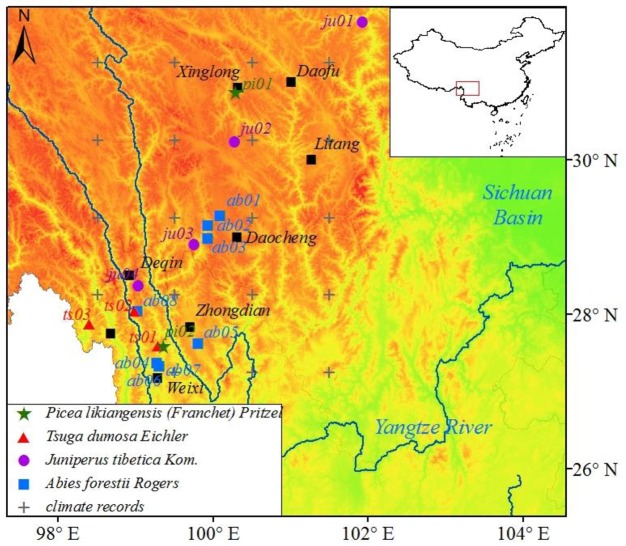
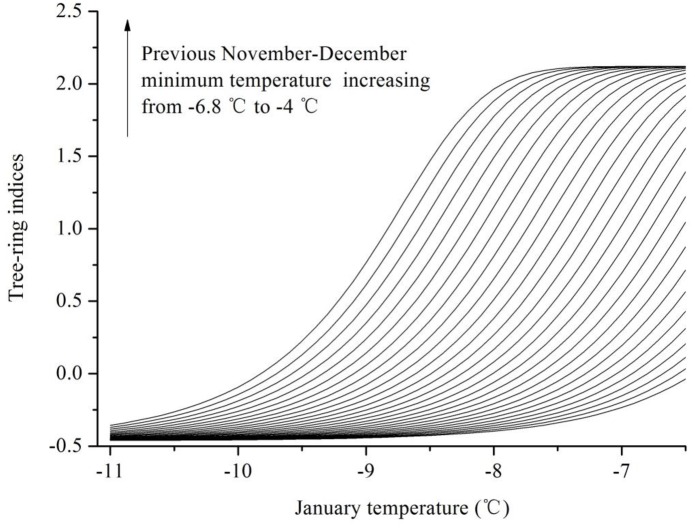
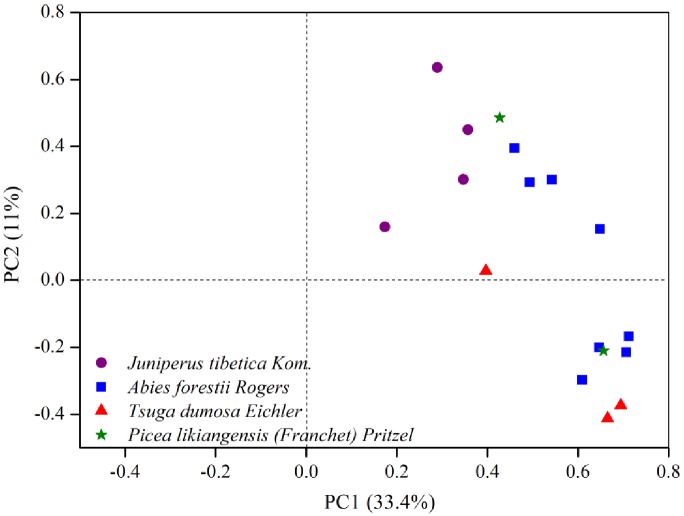
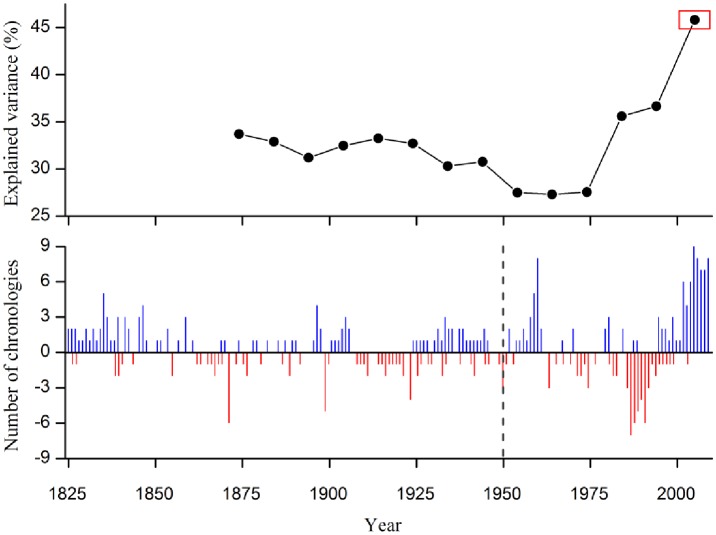
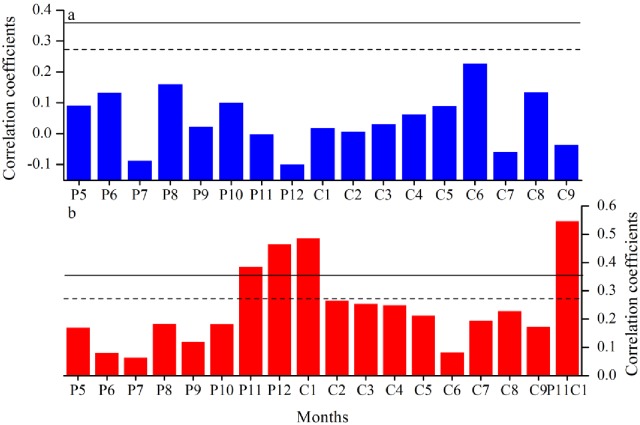
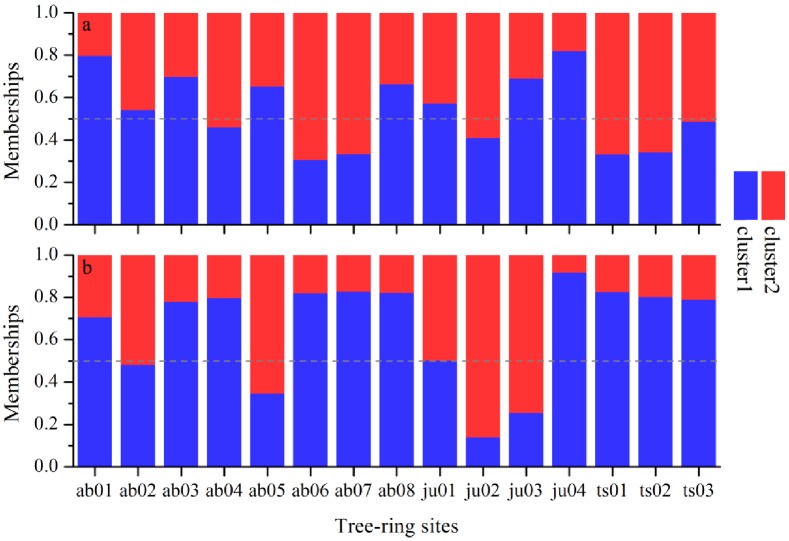
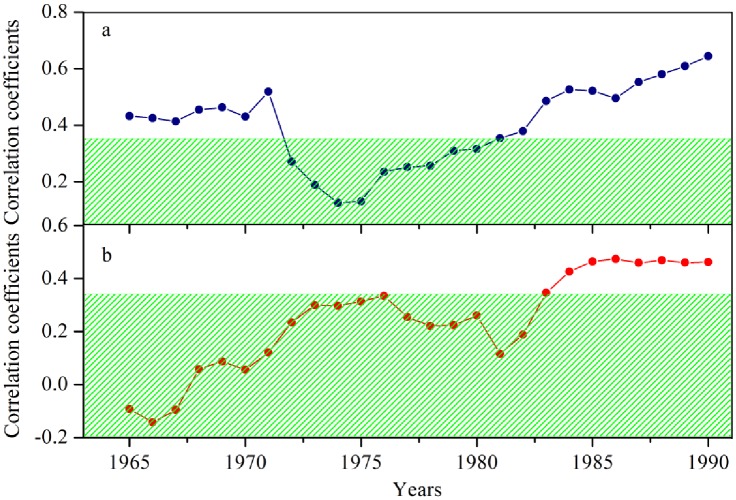
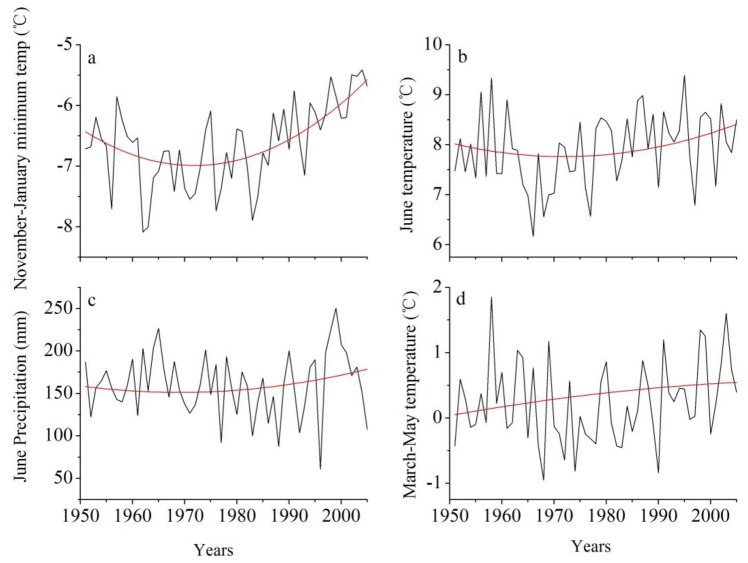
Knowledge about the spatiotemporal tree growth variability and its associations with climate provides key insights into forest dynamics under future scenarios of climate change. We synthesized 17 tree-ring width chronologies from four tree species at the high-elevation sites in the southeast Tibetan Plateau (SETP) to study the regional tree growth variability and climate-growth relationships. Despite of diverse habitats and different physiological characteristics of these species, these tree-ring chronologies shared a significant common variance in SETP. An unprecedented increase in the shared variance is found along the latter half of the 20th century, coinciding with the enhancement of the frequency of extreme rings among chronologies. It is found that minimum winter temperature tends to be the dominant climate for trees in this region. The site-specific responses in cold (1965-1980) and warm (1990-2005) intervals by means of Fuzzy Cmeans (FCM) clustering reveal that the remarkable enhancement of growth synchrony among trees mainly occur in warm conditions. This is different from previous findings indicating that increased consistence among temperature sensitive tree rings in cold periods. This may be related to the reduced temperature sensitivity of regional tree growth as winter minimum temperature is lower than a certain threshold, which is in agreement with the "principle of ecological amplitude". In addition, it is worth noting that precipitation in June have started to restrain the tree growth since the beginning of the 1980s, which is possibly an important contributor for synchronized growth among trees in SETP.
关于树木时空生长变异性及其与气候的关联的知识,为洞察气候变化未来情景下的森林动态提供了关键见解。我们综合了青藏高原东南部(SETP)高海拔地区四种树种的17个树轮宽度年表,以研究区域树木生长变异性和气候 - 生长关系。尽管这些树种的栖息地多样且生理特征不同,但这些树轮年表在SETP中具有显著的共同方差。在20世纪后半叶发现共同方差出现了前所未有的增加,这与年表中极端年轮频率的增强相吻合。研究发现,最低冬季温度往往是该地区树木生长的主导气候因素。通过模糊C均值(FCM)聚类对寒冷(1965 - 1980年)和温暖(1990 - 2005年)时期的特定地点响应表明,树木之间生长同步性的显著增强主要发生在温暖条件下。这与先前的研究结果不同,先前研究表明寒冷时期对温度敏感的树轮之间的一致性增加。这可能与区域树木生长的温度敏感性降低有关,因为冬季最低温度低于某个阈值,这与“生态幅度原理”一致。此外,值得注意的是,自20世纪80年代初以来,6月的降水开始抑制树木生长,这可能是SETP树木同步生长的一个重要因素。