Fang Pan, Wang Xin-Jian, Xue Yu, Liu Ming-Qi, Zeng Wen-Feng, Zhang Yang, Zhang Lei, Gao Xing, Yan Guo-Quan, Yao Jun, Shen Hua-Li, Yang Peng-Yuan
Minhang Hospital and Institutes of Biomedical Sciences, Fudan University, Shanghai, China.
State Key Laboratory of Medical Neurobiology, Institutes of Brain Science, and Collaborative Innovation Center for Brain Science, Fudan University, Shanghai, China.
Oncotarget. 2016 Jun 21;7(25):38796-38809. doi: 10.18632/oncotarget.9737.
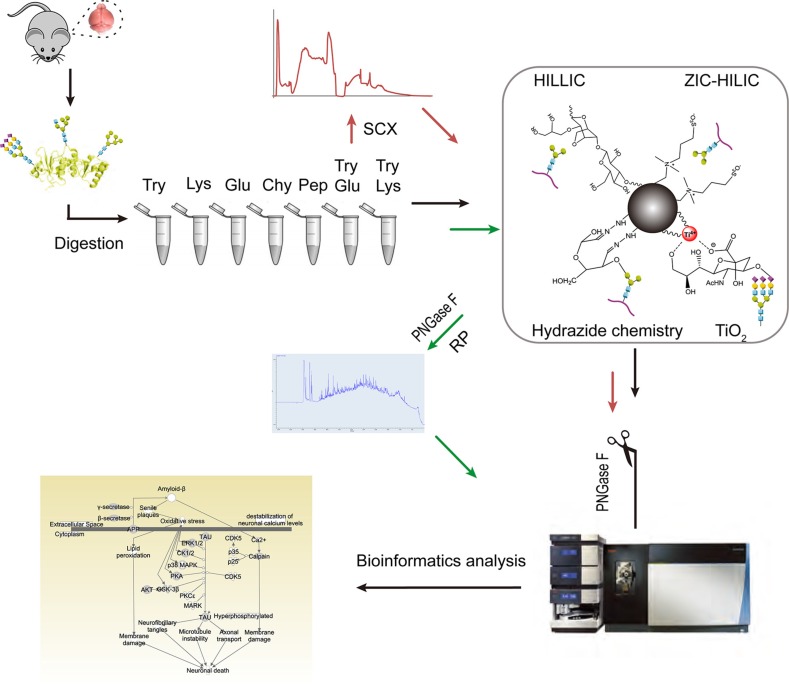
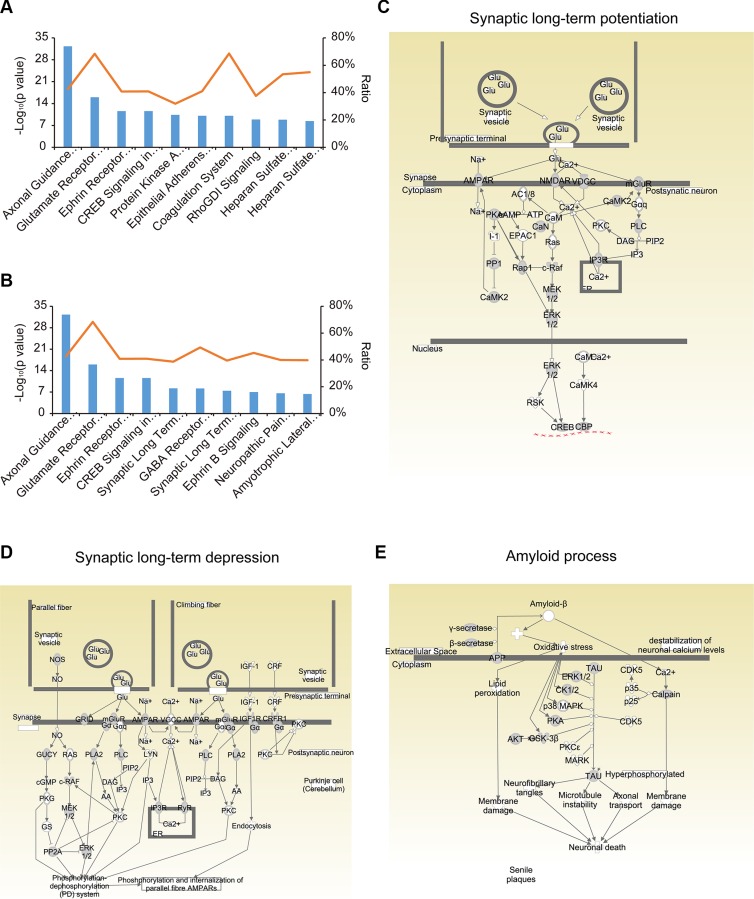
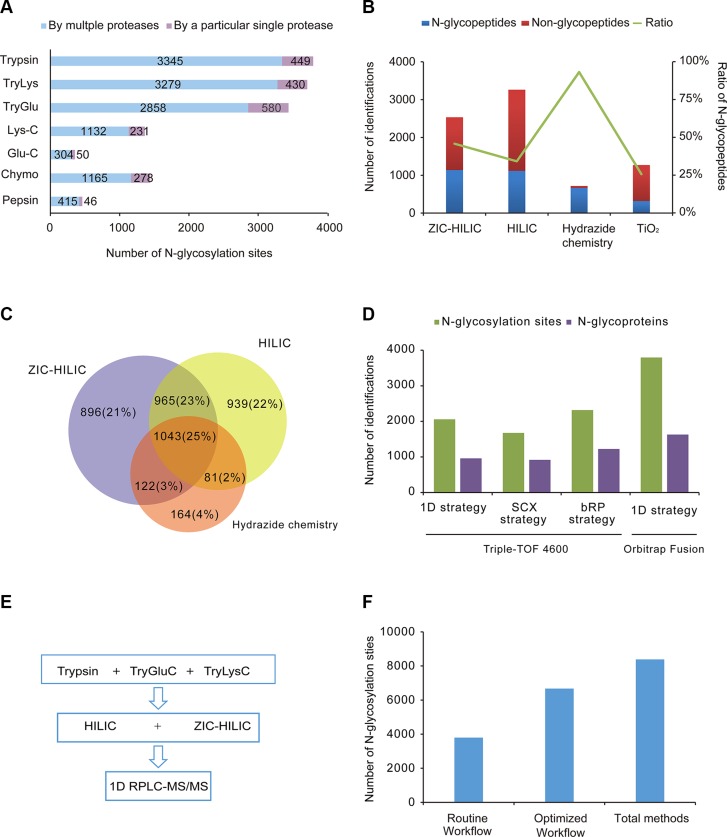
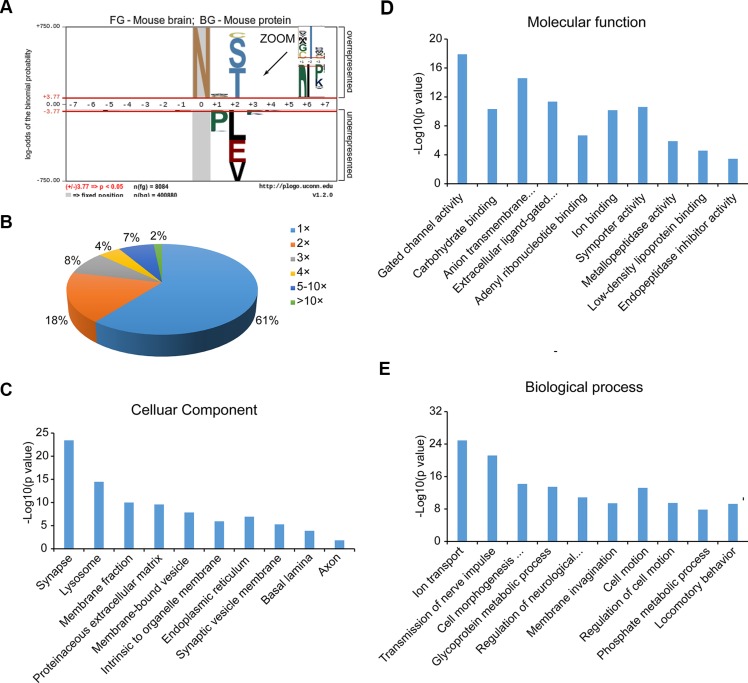
N-glycosylation is one of the most prominent and abundant posttranslational modifications of proteins. It is estimated that over 50% of mammalian proteins undergo glycosylation. However, the analysis of N-glycoproteins has been limited by the available analytical technology. In this study, we comprehensively mapped the N-glycosylation sites in the mouse brain proteome by combining complementary methods, which included seven protease treatments, four enrichment techniques and two fractionation strategies. Altogether, 13492 N-glycopeptides containing 8386 N-glycosylation sites on 3982 proteins were identified. After evaluating the performance of the above methods, we proposed a simple and efficient workflow for large-scale N-glycosylation site mapping. The optimized workflow yielded 80% of the initially identified N-glycosylation sites with considerably less effort. Analysis of the identified N-glycoproteins revealed that many of the mouse brain proteins are N-glycosylated, including those proteins in critical pathways for nervous system development and neurological disease. Additionally, several important biomarkers of various diseases were found to be N-glycosylated. These data confirm that N-glycosylation is important in both physiological and pathological processes in the brain, and provide useful details about numerous N-glycosylation sites in brain proteins.
N-糖基化是蛋白质最显著且最丰富的翻译后修饰之一。据估计,超过50%的哺乳动物蛋白质会发生糖基化。然而,N-糖蛋白的分析一直受到现有分析技术的限制。在本研究中,我们通过结合互补方法全面绘制了小鼠脑蛋白质组中的N-糖基化位点,这些方法包括七种蛋白酶处理、四种富集技术和两种分级分离策略。总共鉴定出3982种蛋白质上的13492个含8386个N-糖基化位点的N-糖肽。在评估上述方法的性能后,我们提出了一种用于大规模N-糖基化位点映射的简单高效工作流程。优化后的工作流程以少得多的工作量获得了最初鉴定的N-糖基化位点的80%。对鉴定出的N-糖蛋白的分析表明,许多小鼠脑蛋白都进行了N-糖基化,包括那些在神经系统发育和神经疾病关键途径中的蛋白质。此外,还发现了几种各种疾病的重要生物标志物是N-糖基化的。这些数据证实N-糖基化在大脑的生理和病理过程中都很重要,并提供了有关脑蛋白中众多N-糖基化位点的有用细节。