Kinzel Linda, Ernst Anne, Orth Michael, Albrecht Valerie, Hennel Roman, Brix Nikko, Frey Benjamin, Gaipl Udo S, Zuchtriegel Gabriele, Reichel Christoph A, Blutke Andreas, Schilling Daniela, Multhoff Gabriele, Li Minglun, Niyazi Maximilian, Friedl Anna A, Winssinger Nicolas, Belka Claus, Lauber Kirsten
Department of Radiation Oncology, Ludwig-Maximilians-University Munich, Munich, Germany.
Department of Radiation Oncology, Universitätsklinikum Erlangen, Friedrich-Alexander-Universität Erlangen-Nürnberg, Erlangen, Germany.
Oncotarget. 2016 Jul 12;7(28):43199-43219. doi: 10.18632/oncotarget.9774.
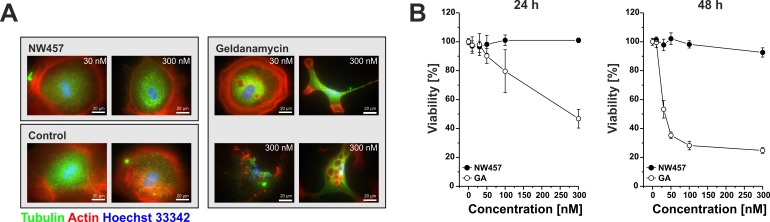
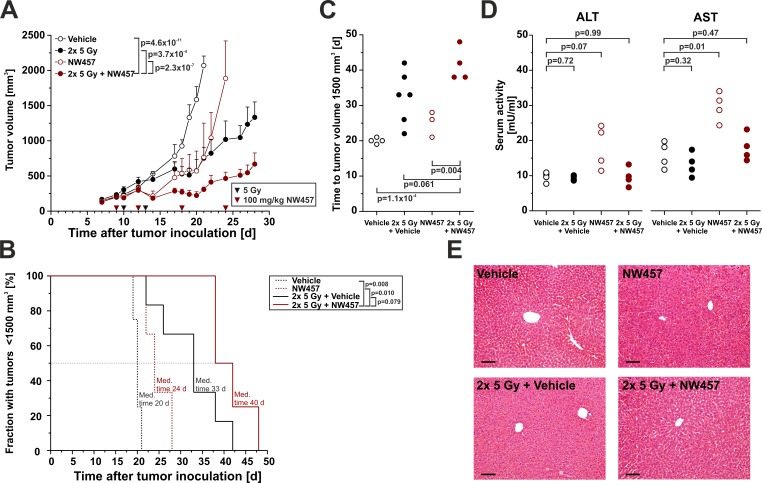
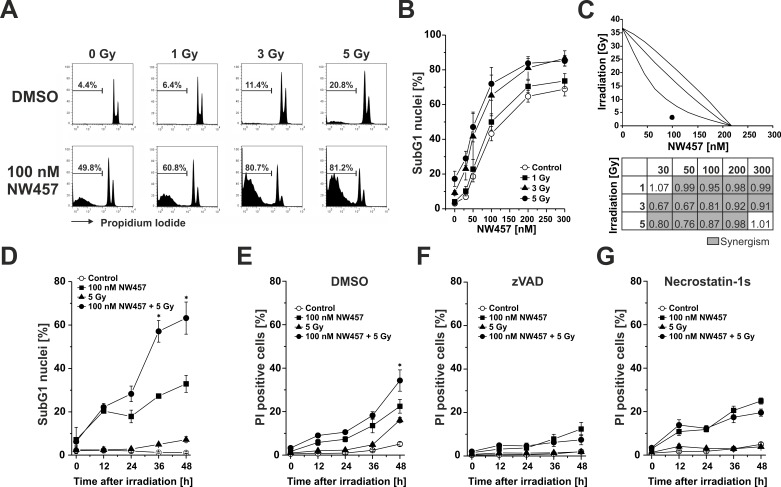
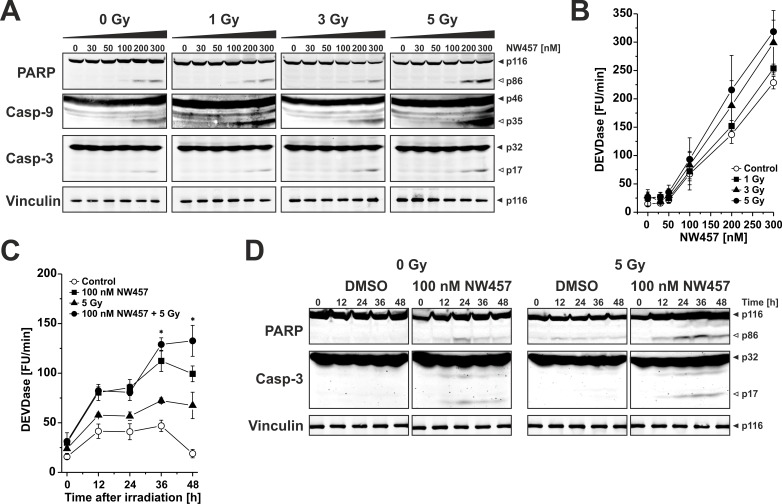
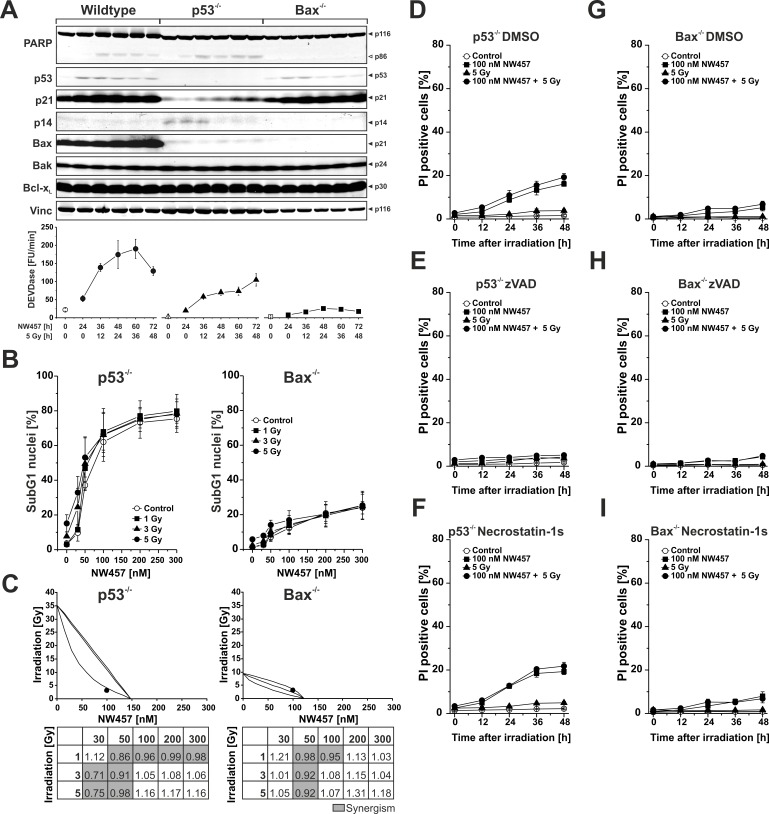
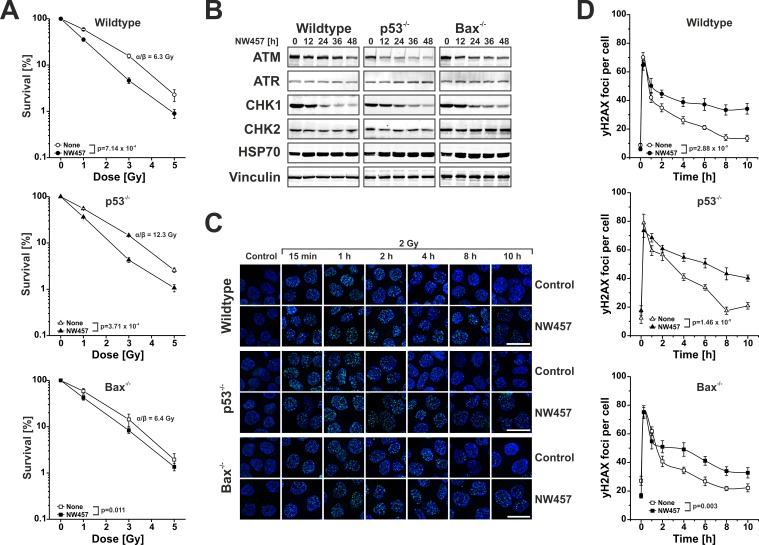
The chaperone heat shock protein 90 (HSP90) crucially supports the maturation, folding, and stability of a variety of client proteins which are of pivotal importance for the survival and proliferation of cancer cells. Consequently, targeting of HSP90 has emerged as an attractive strategy of anti-cancer therapy, and it appears to be particularly effective in the context of molecular sensitization towards radiotherapy as has been proven in preclinical models of different cancer entities. However, so far the clinical translation has largely been hampered by suboptimal pharmacological properties and serious hepatotoxicity of first- and second-generation HSP90 inhibitors. Here, we report on NW457, a novel radicicol-derived member of the pochoxime family with reduced hepatotoxicity, how it inhibits the DNA damage response and how it synergizes with ionizing irradiation to induce apoptosis, abrogate clonogenic survival, and improve tumor control in models of colorectal cancer in vitro and in vivo.
伴侣蛋白热休克蛋白90(HSP90)对多种客户蛋白的成熟、折叠和稳定性起着至关重要的支持作用,而这些客户蛋白对癌细胞的存活和增殖至关重要。因此,靶向HSP90已成为一种有吸引力的抗癌治疗策略,并且在不同癌症实体的临床前模型中已证明,在对放疗的分子致敏背景下,它似乎特别有效。然而,到目前为止,临床转化在很大程度上受到第一代和第二代HSP90抑制剂不理想的药理特性和严重肝毒性的阻碍。在此,我们报告了NW457,一种新型的源自根赤壳菌素的泊肟家族成员,其肝毒性降低,以及它如何抑制DNA损伤反应,如何与电离辐射协同作用以诱导细胞凋亡、消除克隆形成存活,并在体外和体内结直肠癌模型中改善肿瘤控制。