Kuang Jingyu, Li Li, Guo Limei, Su Yanrong, Wang Yuxuan, Xu Yongjie, Wang Xiaozhen, Meng Shucong, Lei Liandi, Xu Luzheng, Shao Genze
Department of Cell Biology, School of Basic Medical Sciences, Peking University Health Science Center, Beijing, 100191, China.
Department of Pathology, School of Basic Medical Sciences, Peking University Health Science Center, Beijing, 100191, China.
J Exp Clin Cancer Res. 2016 Jun 4;35(1):88. doi: 10.1186/s13046-016-0363-6.
Epithelial-mesenchymal transition (EMT) is a crucial step for solid tumor progression and plays an important role in cancer invasion and metastasis. RNF8 is an ubiquitin E3 ligase with RING domain, and plays essential roles in DNA damage response and cell cycle regulation. However the role of RNF8 in the pathogenesis of breast cancer is still unclear.
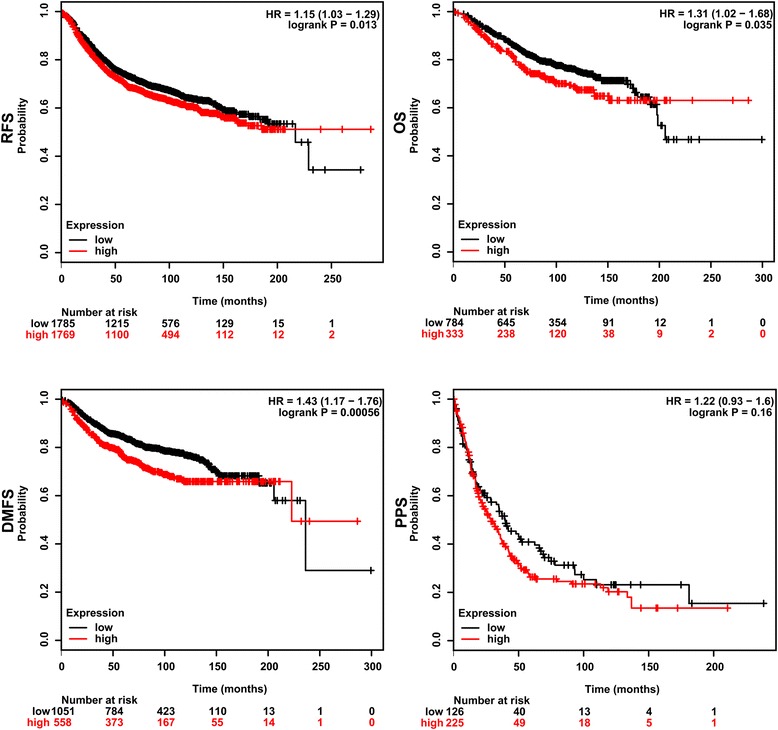
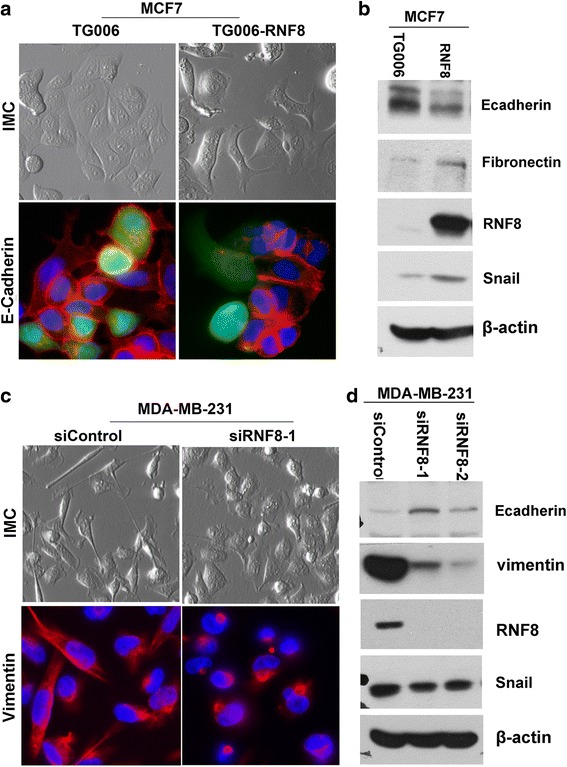
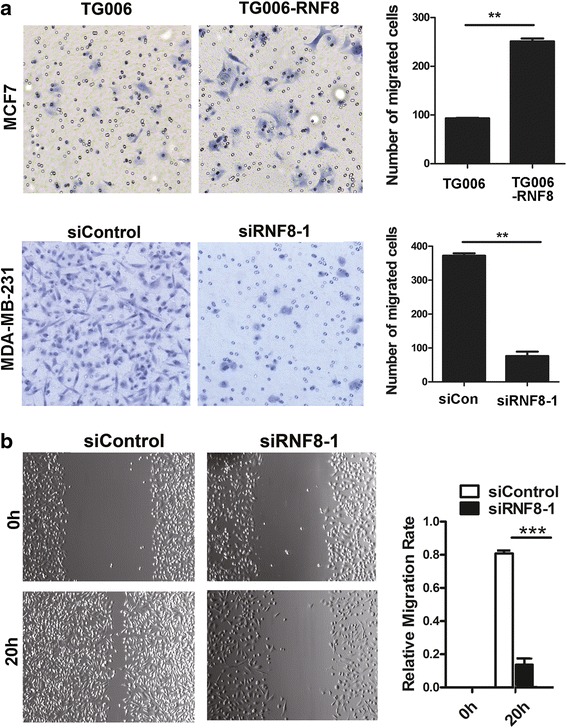
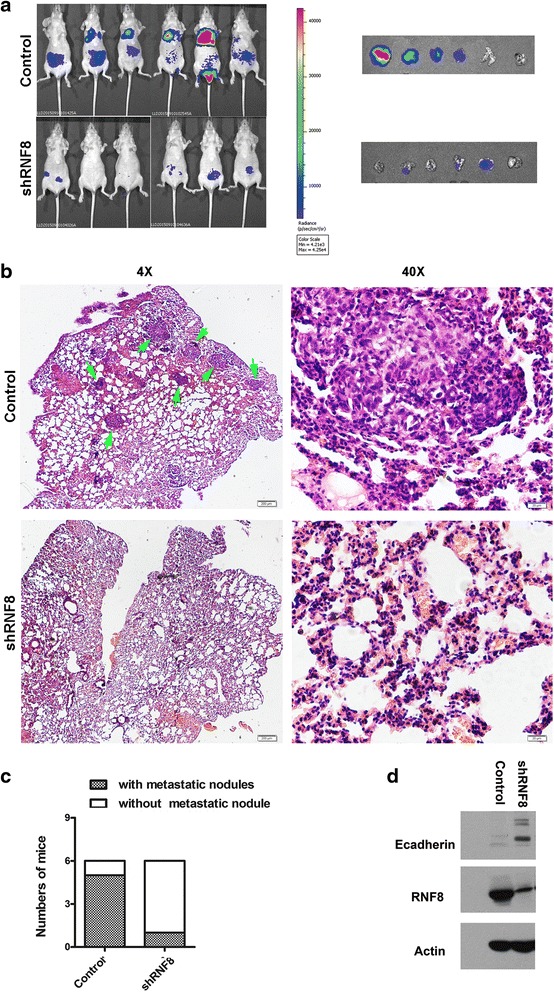
The expression of RNF8 was examined in different types of breast cell lines by Western Blotting. EMT associated markers were examined by Immunofluorescence and Western Blotting in MCF-7 when RNF8 was ectopically overexpressed, or in MDA-MB-231 when RNF8 was depleted. Transwell and wound healing assays were performed to assess the effect of RNF8 on cell mobility. The xenograft model was done with nude mice to investigate the role of RNF8 in tumor metastasis in vivo. Breast tissue arrays were used to examine the expression of RNF8 by immunohistochemistry. Kaplan-Meier survival analysis for the relationship between survival time and RNF8 signature in breast cancer was done with an online tool ( http://kmplot.com/analysis/ ).
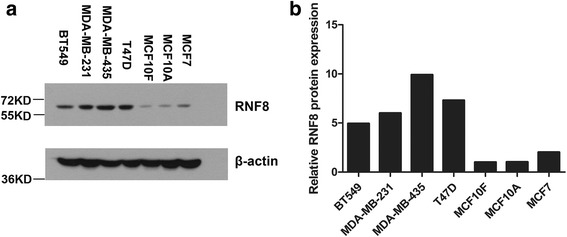
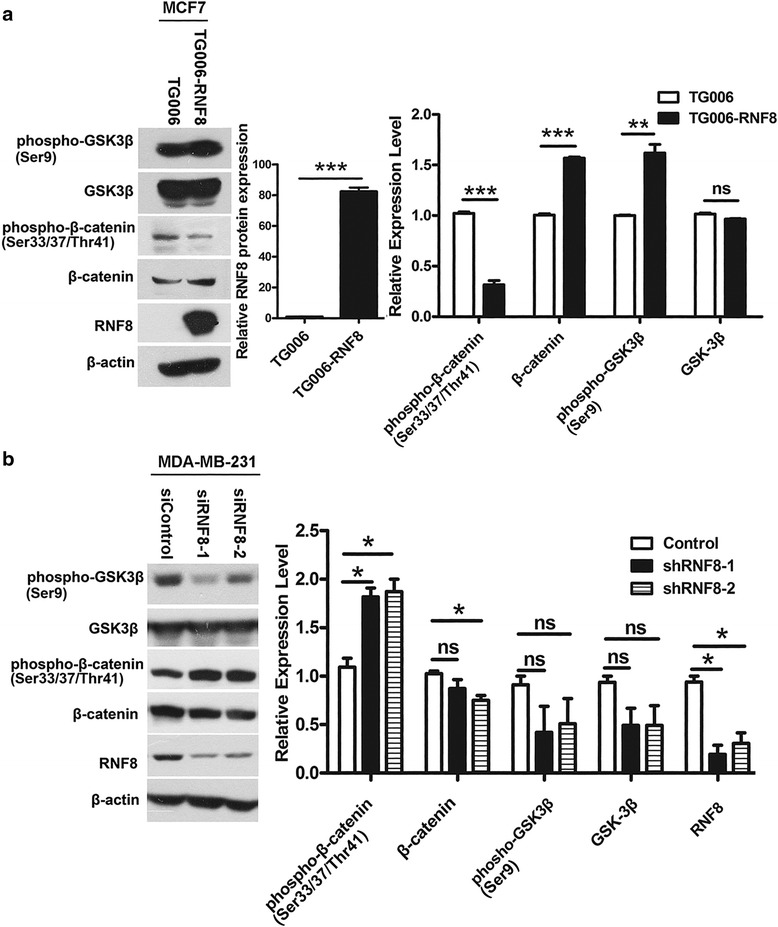
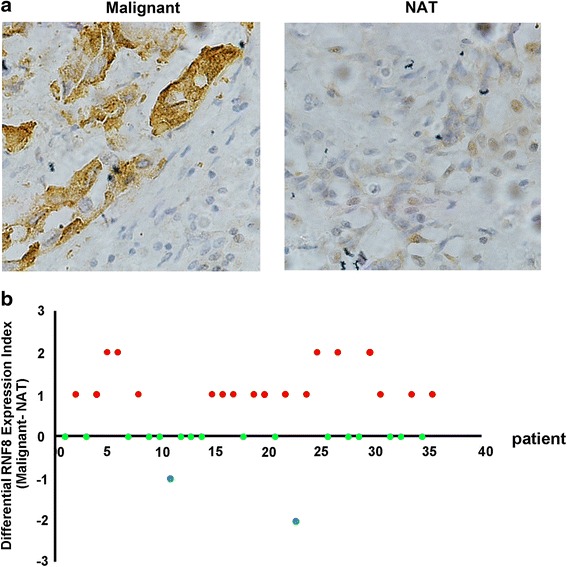
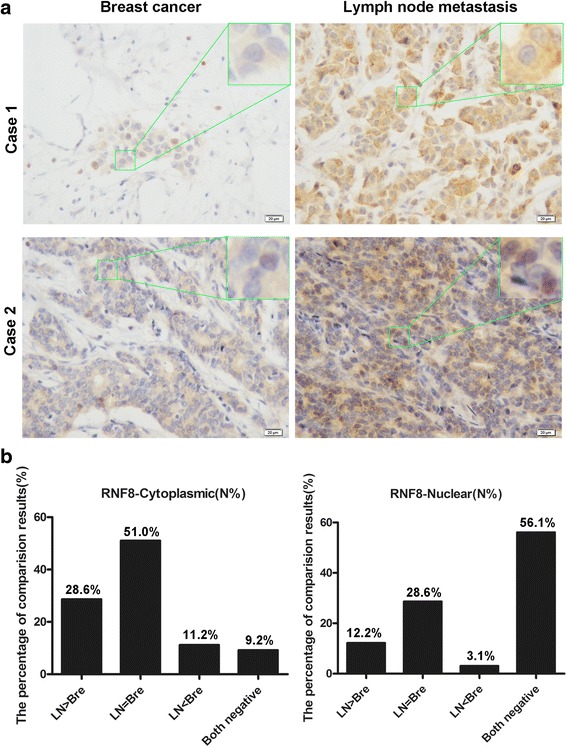
RNF8 is overexpressed in highly metastatic breast cancer cell lines. Overexpression of RNF8 in MCF-7 significantly promoted EMT phenotypes and facilitated cell migration. On the contrary, silencing of RNF8 in MDA-MB-231 induced MET phenotypes and inhibited cell migration. Furthermore, we proved that these metastatic behavior promoting effects of RNF8 in breast cancer was associated with the inactivation of GSK-3β and activation of β-catenin signaling. With nude mice xenograft model, we found that shRNA mediated-downregulation of RNF8 reduced tumor metastasis in vivo. In addition, we found that RNF8 expression was higher in malignant breast cancer than that of the paired normal breast tissues, and was positively correlated with lymph node metastases and poor survival time.
RNF8 induces EMT in the breast cancer cells and promotes breast cancer metastasis, suggesting that RNF8 could be used as a potential therapeutic target for the prevention and treatment of breast cancer.
上皮-间质转化(EMT)是实体瘤进展的关键步骤,在癌症侵袭和转移中起重要作用。RNF8是一种具有RING结构域的泛素E3连接酶,在DNA损伤反应和细胞周期调控中起重要作用。然而,RNF8在乳腺癌发病机制中的作用仍不清楚。
通过蛋白质免疫印迹法检测不同类型乳腺癌细胞系中RNF8的表达。当RNF8异位过表达时,在MCF-7中通过免疫荧光和蛋白质免疫印迹法检测EMT相关标志物;当RNF8被敲低时,在MDA-MB-231中进行检测。进行Transwell和伤口愈合试验以评估RNF8对细胞迁移的影响。用裸鼠建立异种移植模型,以研究RNF8在体内肿瘤转移中的作用。使用乳腺组织芯片通过免疫组织化学检测RNF8的表达。使用在线工具(http://kmplot.com/analysis/)对乳腺癌患者的生存时间与RNF8特征之间的关系进行Kaplan-Meier生存分析。
RNF8在高转移性乳腺癌细胞系中过表达。在MCF-7中过表达RNF8显著促进EMT表型并促进细胞迁移。相反,在MDA-MB-231中敲低RNF8诱导MET表型并抑制细胞迁移。此外,我们证明RNF8在乳腺癌中促进转移行为的作用与GSK-3β的失活和β-连环蛋白信号通路的激活有关。通过裸鼠异种移植模型,我们发现shRNA介导的RNF8下调可减少体内肿瘤转移。此外,我们发现恶性乳腺癌中RNF8的表达高于配对的正常乳腺组织,并且与淋巴结转移和不良生存时间呈正相关。
RNF8诱导乳腺癌细胞中的EMT并促进乳腺癌转移,提示RNF8可作为预防和治疗乳腺癌的潜在治疗靶点。